Rideau Hall
Rideau Hall, officially known as Government House, is the official residence and workplace of the governor general of Canada, the monarch's representative in the country. Located at 1 Sussex Drive in Ottawa, the estate is the primary site for state ceremonies, including the swearing-in of prime ministers, the presentation of national honours, and the reception of foreign dignitaries. As a National Historic Site of Canada, the property is also a public attraction, with guided tours offered throughout the year. Its dual role as a functional seat of constitutional authority and a historic landmark makes it a central institution in Canadian public life.
Origins and construction
The estate's origins lie with Scottish stonemason Thomas McKay, who immigrated to Lower Canada in 1817 and became a key contractor for the Rideau Canal. This villa, colloquially known as McKay's Castle, formed the core of the present-day Rideau Hall. The property hosted notable visitors even before becoming a viceregal residence, including several governors general of the Province of Canada. Notably, watercolours of Barrack Hill painted by Lady Head during a visit were said to have influenced Queen Victoria's choice of Bytown, later Ottawa, as the national capital. On 2 September 1860, Edward, Prince of Wales, toured the grounds as part of his visit to lay the first stone of the Parliament Buildings.
When Ottawa was confirmed as the capital, a competition was held in 1859 for a new Government House, with a Second Empire design by architects Cumberland & Storm selected. This grand plan was abandoned due to cost overruns on the parliamentary construction. As a temporary solution, the Crown leased Rideau Hall from the McKay family in 1864 for $4,000 per year. Architect Frederick Preston Rubidge was tasked with renovating and expanding the villa, adding a new 49-room wing that increased the building's size three or fourfold. Despite criticism from figures like George Brown and Prime Minister John A. Macdonald, who deemed it a poor use of funds, the property was purchased outright by the Crown in 1868 for $82,000.
Evolution as a viceregal and royal residence
Following its acquisition, Rideau Hall rapidly became the social and ceremonial heart of the capital. It hosted a wide array of events, including investitures, swearing-in ceremonies, balls, and theatrical productions initiated by the Earl and Countess of Dufferin. The largest of these was a fancy dress ball on 23 February 1876, attended by approximately 1,500 guests. Despite this active social life, early impressions of the house itself were often negative, with viceregal consorts like the Countess of Dufferin and Lady Stanley commenting on its shabby and sparsely furnished state in the late 19th century. Numerous improvements were undertaken over the decades, including the installation of gas chandeliers, a telegraph wire, and the construction of the ballroom. The residence's status changed with the arrival of its first royal residents in 1878, John Campbell, Marquess of Lorne, and his wife, Princess Louise.
John Campbell, Marquess of Lorne, stated that Rideau Hall was a big and comfortable house. His wife, Princess Louise, had her stay cut short when Fenians posed a threat to her life, and she was ushered back to the United Kingdom for both rest and protection. Throughout its history, Rideau Hall has hosted numerous members of the royal family, both as governors general and as guests of the Crown. The list of royal visitors is extensive and includes several future monarchs, such as Prince George, later King George V, and Prince Albert, later King George VI.
- Prince Leopold (later Duke of Albany) stayed in 1880.
- Prince George (later King George V) visited in 1882, 1901, and 1908.
- Prince Arthur, Duke of Connaught, and his wife served as the viceregal couple from 1906 to 1912.
- Princess Louise visited in 1900.
- Prince Albert (later King George VI) stayed in 1910 and 1913.
- Edward, Prince of Wales (later King Edward VIII), visited on multiple occasions between 1919 and 1927.
- Prince George (later Duke of Kent) visited in 1926 and 1927.
- Prince Henry, Duke of Gloucester, visited in 1929.
A tragic incident occurred on the grounds of Rideau Hall in 1943. The Duke of Connaught and Strathearn, a grandson of a former governor general, was found dead on the floor of his room on the morning of 26 April 1943. It was recorded that he had died, apparently, from hypothermia. The diaries of Sir Alan Lascelles noted that he fell out of a window when drunk and perished of hypothermia overnight.
Role in the Second World War and postwar era
Rideau Hall's constitutional significance was highlighted on 19 May 1939, when King George VI and Queen Elizabeth arrived, marking the first time a reigning Canadian monarch resided at the palace. During this visit, the King became the first to personally receive an ambassador's credentials in Canada. After the outbreak of the Second World War, there were plans for the royal family to relocate to Canada for safety, with Hatley Castle in British Columbia purchased for this purpose, though they ultimately remained in Britain. Instead, Rideau Hall became a home in exile for numerous European royals displaced by the conflict. The hall provided refuge for a significant number of royal figures during the war years.
- Crown Prince Olav and Crown Princess Märtha of Norway.
- Grand Duchess Charlotte and Prince Felix of Luxembourg.
- King Peter II of Yugoslavia.
- King George II of Greece.
- Empress Zita of Austria and her daughters.
- Queen Wilhelmina of the Netherlands, her daughter Princess Juliana, and granddaughters.
The resident governor general's wife, Princess Alice, Countess of Athlone, organized the other royal women to make clothing for Blitz victims. In 1940, the governor general's office was moved from Parliament Hill to Rideau Hall. The hall also hosted British Prime Minister Winston Churchill in December 1941, where he conducted cabinet meetings via telephone from his bed. The postwar period saw a return to normalcy, marked by events like a ball for U.S. President Dwight D. Eisenhower. The appointment of Vincent Massey in 1952 made him the first Canadian-born governor general to reside at Rideau Hall. His tenure saw an increase in state visits as Canada's international profile grew, with guests including Emperor Haile Selassie I and Prime Minister Jawaharlal Nehru. Queen Elizabeth II delivered her first live television address from Rideau Hall on 13 October 1957. The estate was heavily guarded during the 1970 October Crisis due to security threats from the Front de libération du Québec.

Public access and 21st-century developments
Public access to the grounds, traditionally allowed since 1921, became a point of controversy during Governor General Jeanne Sauvé's tenure from 1984 to 1990. Citing security advice from the RCMP and National Capital Commission, Sauvé restricted access to invitation-only, aligning the property with other secure official residences. This decision sparked public protest, with groups like the Canada Unlock the Gate Group accusing her of a 'bunker mentality'. Her successor, Ray Hnatyshyn, reopened the grounds to the public. Sauvé had also entertained a plan to move into the smaller Rideau Cottage for privacy and cost savings, a suggestion made by management consultants Price Waterhouse.
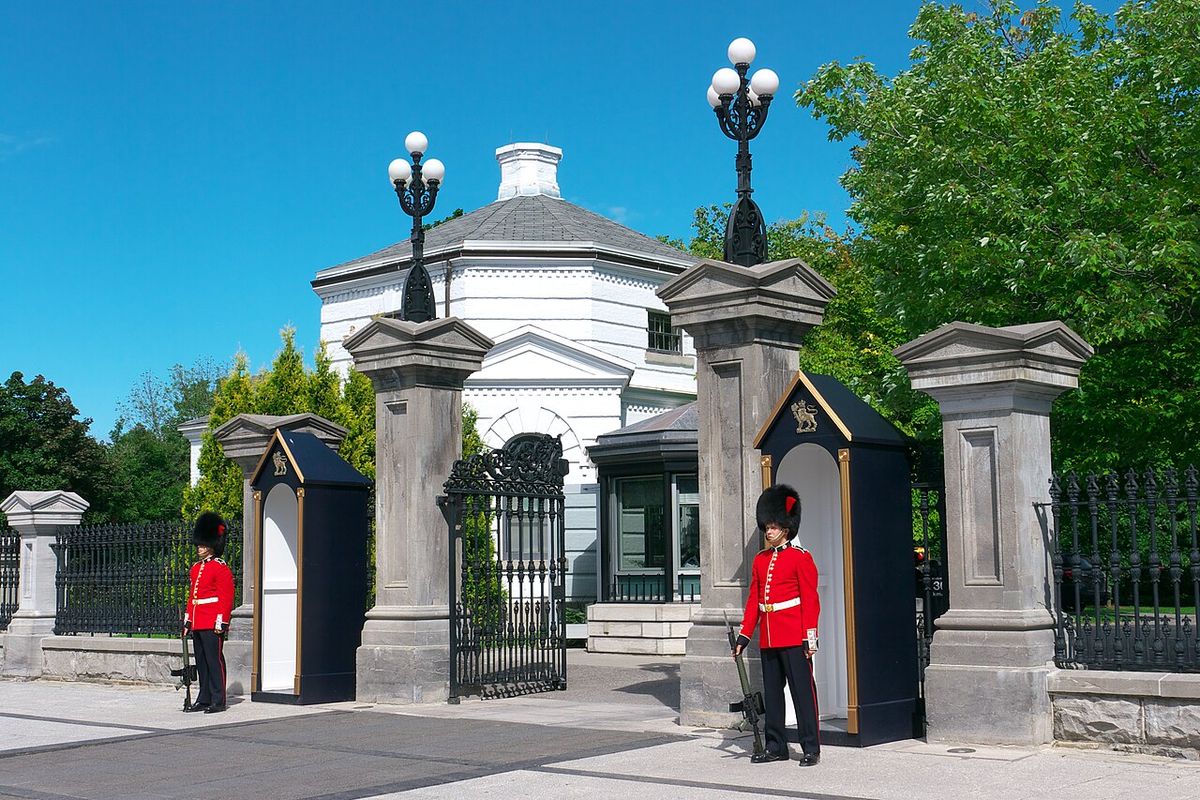
In the 21st century, Rideau Hall has undergone significant renovations as part of a long-term plan extending to 2067. When Julie Payette was appointed governor general in 2017, the private apartments were being altered for improved privacy, so she resided at 7 Rideau Gate instead. Although the viceregal suite was ready by March 2018, further accessibility renovations delayed her move. The grounds were closed for much of 2020 due to the COVID-19 pandemic. On 2 July 2020, a security breach occurred when a man drove a truck through the Thomas Gate pedestrian entrance and proceeded approximately 120 metres onto the property before being arrested.
Architectural features and estate grounds
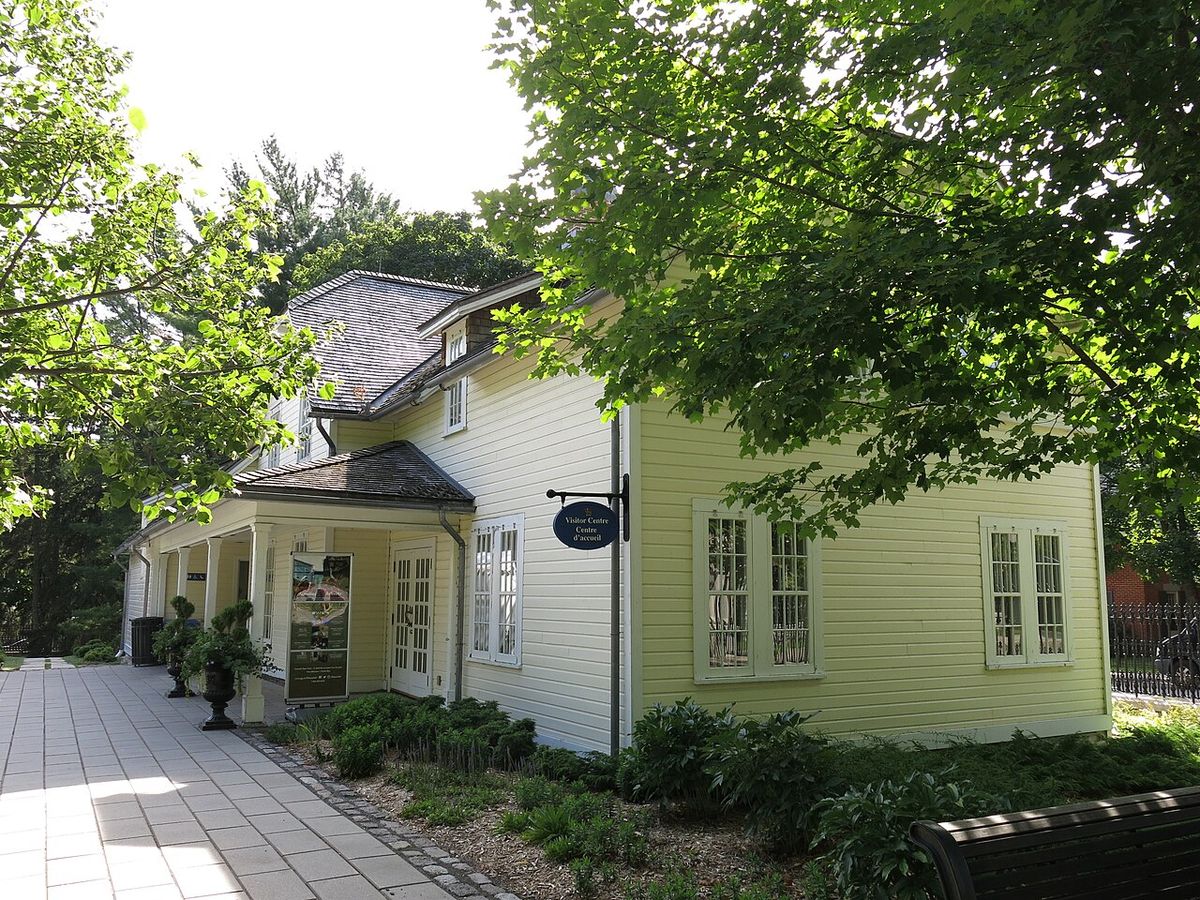
The main building of Rideau Hall has grown from Thomas McKay's original villa into a large, rambling structure encompassing approximately 175 rooms over 9,500 square metres. The estate spans 36 hectares and includes 27 outbuildings. Only about 500 square metres of the main house is dedicated to the governor general's private quarters, with the majority of space used for state functions and offices, including those of the Canadian Heraldic Authority. Key interior spaces include the ballroom, used for large ceremonies, and various drawing rooms used for official audiences and receptions.
The grounds are a significant feature, managed by the National Capital Commission since 1934. They include extensive gardens, walking paths, and ceremonial spaces. The estate is open for guided tours, attracting roughly 200,000 visitors annually who come to see the public rooms and gardens. The property's designation as a National Historic Site of Canada in 1977 recognizes its historical and architectural importance as a vice-regal residence and a centre of Canadian state ceremony for over a century and a half.
Ceremonial and constitutional functions
Rideau Hall serves as the primary venue for many of Canada's most important state ceremonies and constitutional functions. It is where newly appointed prime ministers and federal cabinet ministers are sworn into office. The governor general, as the representative of the monarch, performs the 'dropping of the writ' to dissolve Parliament and call a federal election from Rideau Hall. The residence is also the central location for the Canadian honours system, where awards such as the Order of Canada, the Order of Military Merit, and other decorations are presented during investiture ceremonies.
The house is a key site for diplomatic protocol, where foreign heads of state are officially received and where incoming ambassadors and high commissioners present their credentials to the governor general. During royal tours, when the monarch is in Canada, Rideau Hall becomes their official residence in Ottawa. The building and its bureaucratic functions are often referred to metonymically as 'Rideau Hall' or formally as 'Government House', the latter term used in official documents like royal proclamations. These ongoing roles cement Rideau Hall's position as a working headquarters of the Crown in Canada and a stage for the nation's public life.
Questions about Rideau Hall
Can the public visit Rideau Hall?
Yes, Rideau Hall is open to the public for guided tours throughout the year. The grounds and certain rooms within the main residence are accessible, attracting approximately 200,000 visitors annually. The National Capital Commission manages the grounds, and tour schedules and information are available through official channels. There was a period from 1984 to 1990 when public access was restricted, but it has since been reopened.
Who lives at Rideau Hall?
Rideau Hall is the official residence of the governor general of Canada, who lives there with their family in a private apartment. It is also the official residence of the Canadian monarch when they are in Ottawa. The building primarily functions as a workplace and venue for state events, with only about 500 square metres dedicated to private living quarters. During renovations, some governors general, like Julie Payette, have temporarily resided elsewhere.
Why is it called both Rideau Hall and Government House?
The original owner, Thomas McKay, named his villa Rideau Hall after the nearby Rideau Canal. When it became the governor general's residence, the formal title became Government House, a common term for vice-regal residences in the Commonwealth. The informal name Rideau Hall remained in popular use and eventually became the commonly accepted term. Today, Government House is used primarily in very formal or legal contexts, such as in royal proclamations.
What major historical events have happened at Rideau Hall?
Rideau Hall has been the site of numerous significant events. King George VI and Queen Elizabeth resided there during the 1939 royal tour. During the Second World War, it housed exiled European royalty and hosted Winston Churchill. Queen Elizabeth II delivered her first live television address from the hall in 1957. It is also where every prime minister since Confederation has been sworn into office, and where federal election writs are formally issued.
What happened at Rideau Hall during the Second World War?
During the war, Rideau Hall served as a home in exile for several European royal families displaced by the conflict, including those of Norway, Luxembourg, Yugoslavia, Greece, and the Netherlands. The governor general's office was permanently moved there from Parliament Hill in 1940. British Prime Minister Winston Churchill stayed there in 1941, conducting war cabinet meetings. The resident viceregal family also organized relief efforts, such as making clothing for Blitz victims.
Is Rideau Hall a historic site?
Yes, Rideau Hall and its surrounding grounds were designated as a National Historic Site of Canada in 1977. This official recognition shows its national significance. The house is open to the public for guided tours throughout the year, welcoming approximately 200,000 visitors annually. Since 1934, the Federal District Commission, now known as the National Capital Commission, has managed the grounds of this historic property. This status highlights Rideau Hall's enduring role in Canada's ceremonial and constitutional life.
Sources and further reading
- Rideau Hall (Wikipedia)
- Revitalization of the Rideau Hall Rink (gg.ca)
- Rideau Hall (ncc-ccn.gc.ca)
Checked by the Garbutt Disposal desk. Last updated 2026-10-19.