Jarry Park Stadium
Jarry Park Stadium, known in French as Stade Parc Jarry, was a former Major League Baseball venue located in Montreal, Quebec. From 1969 to 1976, it served as the temporary home of the Montreal Expos, the first MLB franchise located outside the United States, marking the league's expansion into Canada. The stadium, situated within the larger Jarry Park, was a modest and exposed facility built quickly to accommodate the new team while a permanent domed stadium was constructed. Its eight-season tenure witnessed the early years of Canada's first major league baseball team and several notable moments in baseball history before the Expos moved to Olympic Stadium in 1977.
Origins and construction
The story of Jarry Park Stadium begins with the decline of Montreal's primary baseball venue, Delorimier Stadium, home to the storied Montreal Royals minor league team. In early 1960, the Los Angeles Dodgers ended their affiliation with the Royals, prompting potential new owners to seek a suitable ballpark as a condition of purchasing the franchise. Negotiations to use the aging Delorimier Stadium failed, leading the group to look at the open spaces of Jarry Park as an alternate site. Consequently, a 3,000-seat stadium was constructed and formally opened in August 1960. Despite this new facility, the Royals franchise relocated to Syracuse, New York that same year, leaving the new ballpark without a primary tenant. When Major League Baseball awarded Montreal an expansion franchise in 1967, the city faced the challenge of providing a venue. The initial condition from the National League was for a domed stadium to be ready by 1972 to mitigate Montreal's harsh winter climate. Delorimier Stadium was ruled out because its location made it impossible to expand beyond its 20,000-seat capacity, and it was eventually demolished in 1971. Other options were the Autostade from Expo 67, a world's fair which had inspired the new club's nickname, but the city balked at the cost of adding a dome and 12,000 seats, and the Canadian Football League's Montreal Alouettes demanded onerous rent.
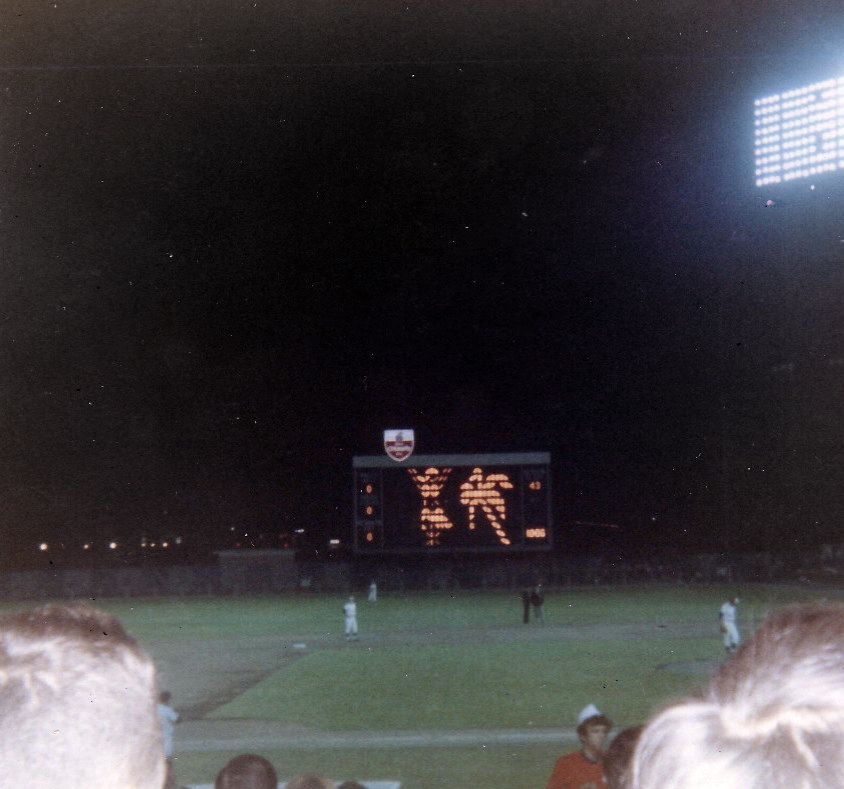
With the threat of the franchise being moved to Buffalo, Mayor Jean Drapeau intervened in August 1968, showing National League President Warren Giles the Jarry Park site. Giles approved the location due to its proximity to a highway and commuter rail, leading to a plan for a temporary home. The original 3,000-seat stadium underwent a significant renovation, with unroofed extensions added to the left and right field corners and a large bleacher section constructed in left field. A new scoreboard was built behind the right-field fence, and this work increased the stadium's capacity to 28,500, bringing it closer to major league standards for the Expos' debut in 1969. The stadium was always intended to be a temporary solution for a maximum of four years, but construction delays for the new domed stadium, first due to a strike pushing back the 1972 completion date and then due to the project merging with Olympic Stadium construction, extended its use far beyond that initial plan.
Design and notable features
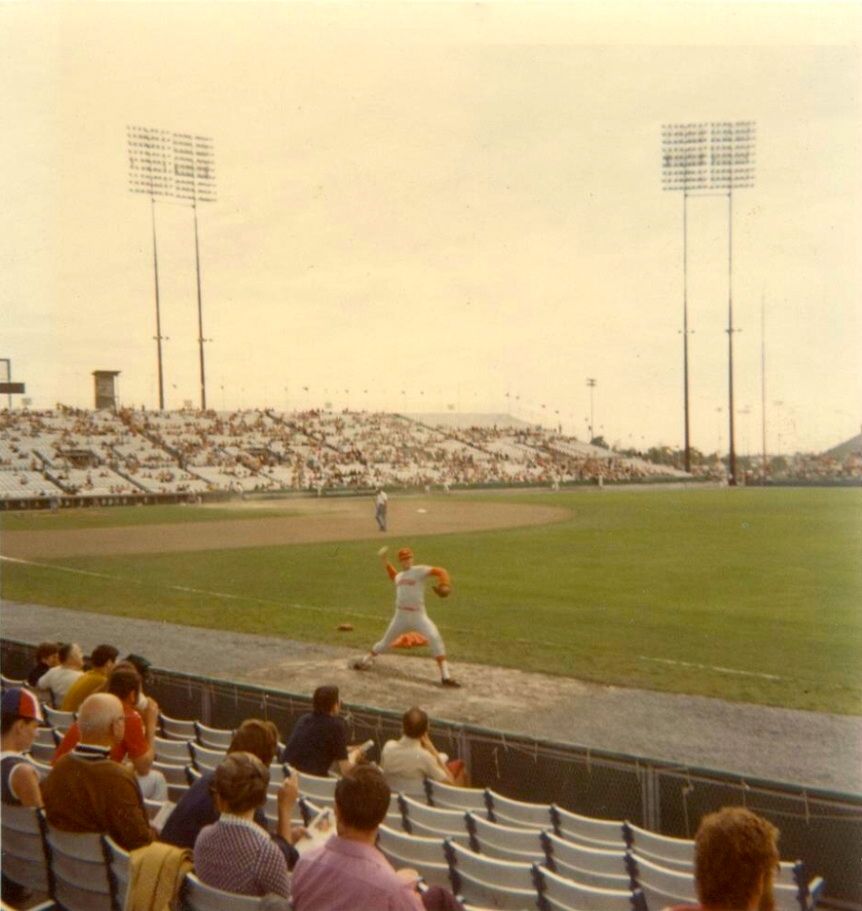
Jarry Park Stadium was an austere and functional ballpark, reflecting its intended status as a temporary home. Its most distinctive feature was a pre-existing municipal swimming pool located just beyond the right field fence and scoreboard. This pool famously led to occasional 'splash hits,' most notably a 495-foot home run by Pittsburgh Pirates outfielder Willie Stargell on July 16, 1969, which led locals to nickname it 'Willie's pool.' Another splash hit was recorded by San Diego Padres slugger Willie McCovey on May 5, 1976, during a 6-4 Padres win over the Expos. The stadium's unorthodox north-northwest orientation caused logistical issues, as the setting sun in April and September would shine directly into the eyes of the first baseman, sometimes necessitating delayed game starts. The facility was completely exposed to the elements, a significant problem given Montreal's long winters and the early and late parts of the baseball season. A large gap between the left-field bleachers and the third-base grandstands created a wind tunnel that buffeted infielders. These conditions, combined with minimal fan protection, led to frequent postponements and gave Jarry Park a reputation for having among the worst field conditions in the majors. Player facilities were also basic, with clubhouses located behind the stands along the left-field line. Despite its posted centre field distance of 420 feet, the actual measurement to straightaway centre was 417 feet, with the deep left and right centre field corners at 420 feet. The idea of the swimming pool itself was later replicated in Chase Field in Phoenix, which opened in 1998.
The Montreal Expos era
The Montreal Expos began play in 1969 as part of a four-team MLB expansion, becoming the first major league franchise in Canada. Owner Charles Bronfman named the team after the successful Expo 67 world's fair and hired Gene Mauch as the first manager. The team's on-field performance in its inaugural season was difficult, finishing with a record of 52 wins and 110 losses. Improvement came steadily, with the team winning over 70 games in 1970, 1971, and 1972, and coming close to a .500 winning percentage in both 1973 and 1974. The most popular player of the Jarry Park era was right fielder Rusty Staub, affectionately nicknamed 'Le Grand Orange' by Montreal fans. Numerous other notable players featured for the Expos at Jarry Park, including Maury Wills, Willie Davis, Ron Fairly, Carl Morton, Ken Singleton, and the notoriously hit-by-pitch prone Ron Hunt. Future Hall of Famer Gary Carter made his major league debut at Jarry Park in 1974 at age 20, hitting his first career home run there that September off Philadelphia Phillies pitcher Steve Carlton in a 3-1 Expos win. Other young stars who began their careers at the stadium included Warren Cromartie, Steve Rogers, Larry Parrish, Ellis Valentine, and Andre Dawson.
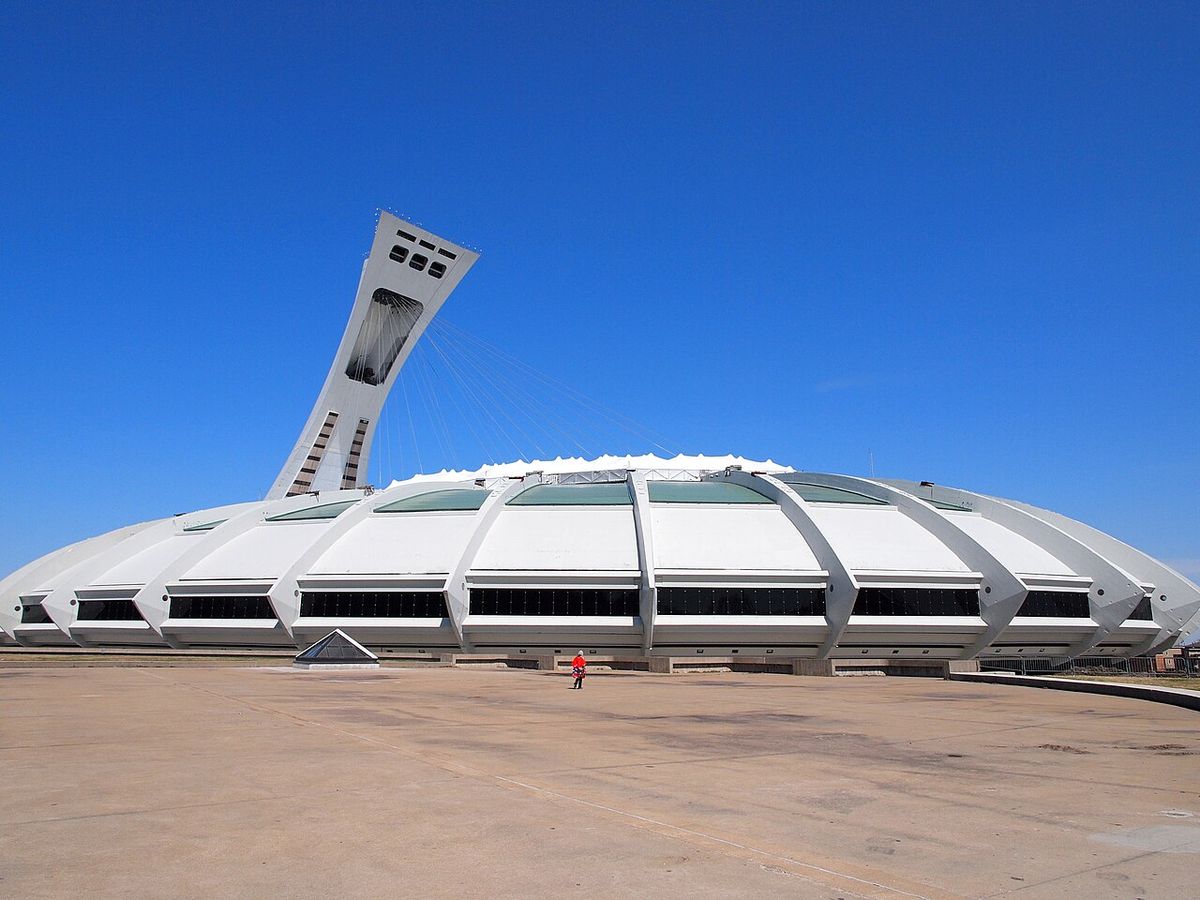
The planned move to a permanent domed stadium was repeatedly delayed by strikes, cost overruns, and the merging of the project with the construction of Olympic Stadium for the 1976 Summer Games. These delays extended the Expos' stay at Jarry Park to eight full seasons. When it became apparent Olympic Stadium would not be ready, the Expos were forced to seek permission from MLB to stay at Jarry Park for additional seasons. For a time during the 1976-77 offseason, it looked like the Expos would have to open the 1977 season at Jarry Park, and they began selling season tickets under that assumption. However, an agreement was finally reached in early 1977, allowing the Expos to open the new season at Olympic Stadium. The Washington Nationals, the successors to the Expos franchise, honoured Jarry Park during their franchise's 50th anniversary celebration at Nationals Park on July 6, 2019, by replicating the Expos' original scoreboard.
Memorable games and events
Jarry Park Stadium was the site of many significant baseball firsts and memorable moments during its eight-year tenure as a major league park. The first regular-season MLB game in Canada was played there on April 14, 1969, with the Expos defeating the St. Louis Cardinals 8-7. Despite its small capacity, the Expos drew an impressive 1.2 million fans in that inaugural 1969 season, leading the league in attendance for an expansion team. The park also hosted unique events, such as 13 home games for the Triple-A Buffalo Bisons in 1970, making it the simultaneous home of both major and minor league teams for a brief period. Several individual milestones were achieved at Jarry Park. On September 29, 1971, Expos infielder Ron Hunt was hit by a pitch for the 50th time that season, setting a modern record during a game where he later hit a game-winning single in the ninth inning for a 6-5 Expos victory over the Chicago Cubs. Baseball legend Willie Mays played his final game as a San Francisco Giant at Jarry on May 9, 1972, getting a single as a pinch-hitter in a 7-1 loss to the Expos, and later played the final regular-season game of his illustrious career there as a New York Met on September 9, 1973, a 3-0 Mets win.
- April 14, 1969: First MLB regular-season game in Canada. Expos beat Cardinals 8-7.
- June 25, 1969: Expos execute the second triple play of the MLB season and first in their history against the St. Louis Cardinals.
- October 2, 1972: Pitcher Bill Stoneman throws the first MLB no-hitter outside the United States, a 7-0 win over the New York Mets in the first game of a doubleheader.
- September 15, 1973: Largest crowd in stadium history (34,331) sees Expos beat Phillies 5-4 in 10 innings on a Bob Bailey single.
- September 28, 1974: Gary Carter hits his first major league home run off future Hall of Famer Steve Carlton.
- September 26, 1976: Final MLB games at Jarry Park. Phillies sweep a doubleheader (4-1 and 2-1) from the Expos, clinching the NL East title with the first game win.
The largest crowd ever at Jarry Park Stadium was 34,331 fans on September 15, 1973. They watched the Expos defeat the Philadelphia Phillies 5-4 in 10 innings. The final baseball games played at the stadium were a doubleheader on September 26, 1976. Both games were won by the Phillies over the Expos. The second game was shortened to seven innings due to rain. The Phillies' victory in the first game of that doubleheader gave them their first National League East Division title.
Other sports and entertainment
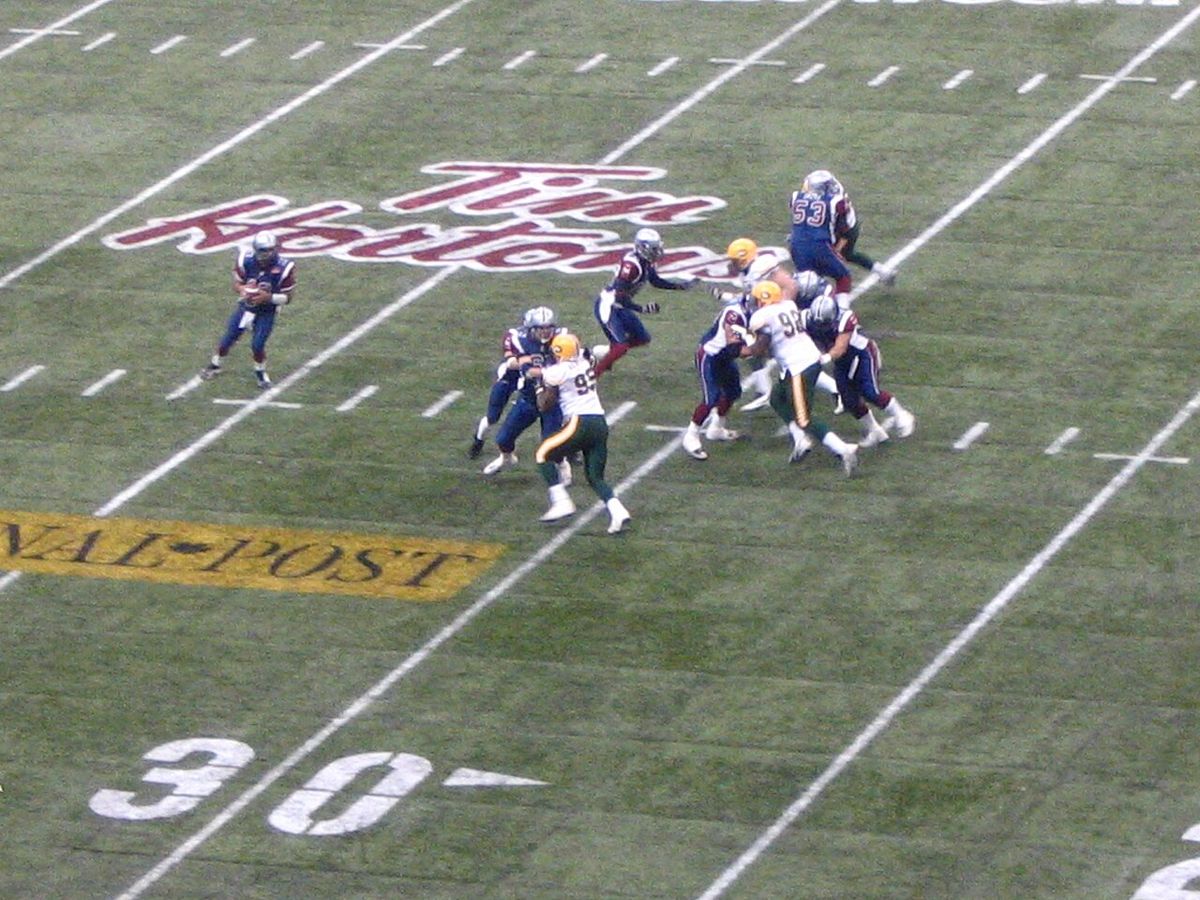
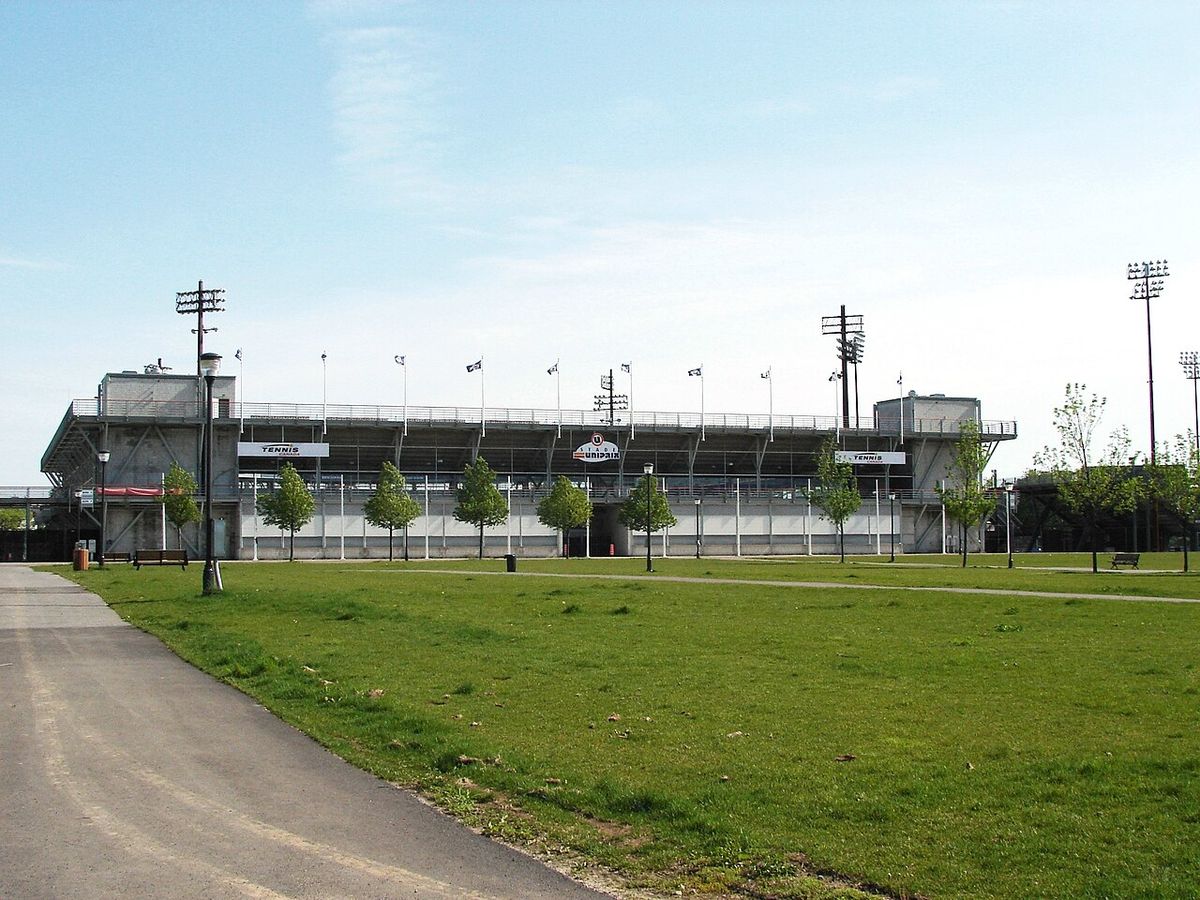
While primarily a baseball venue, Jarry Park Stadium hosted a limited number of events in other sports and served as a community facility. In 1969, it was the site of two National Football League preseason games. The Detroit Lions faced the Boston Patriots on August 25, drawing 8,812 spectators, and the New York Giants played the Pittsburgh Steelers on September 11, attracting 12,724 fans. The poor attendance for these contests ensured no further NFL games were attempted at the stadium, with the league not returning to Montreal for exhibitions until 1988 at Olympic Stadium. In later years, the stadium was also used by the Inter-Montreal soccer team of the Canadian Professional Soccer League. The most significant non-baseball use began after the Expos' departure. Starting in 1980, the stadium was gradually converted into a tennis facility, with one corner of the new court positioned at the location of the old baseball backstop. The venue was renamed in honour of Pope John Paul II to mark his visit to Montreal on September 11, 1984. It was later renamed Du Maurier Stadium in 1987 following a sponsorship agreement. The tennis stadium has since been upgraded and renamed again, most recently as Stade IGA, and is the host venue for the National Bank Open professional tennis tournament.
Post-baseball transformation of the site
Following the Expos' move to Olympic Stadium, the Jarry Park site underwent a comprehensive transformation from a dedicated baseball park to a multi-use recreational hub. The conversion of the stadium into a premier tennis venue was the most significant change, anchoring the area's new identity. Today, the broader Jarry Park offers a wide array of public amenities, including baseball diamonds, soccer and cricket pitches, bocce and basketball courts, beach volleyball zones, swimming pools, playgrounds, a dog run, and two gazebos. In the winter, a pond is swept to create a public skating rink, ensuring year-round activity. The legacy of Jarry Park Stadium endures in baseball history as the pioneering home of Canada's first Major League Baseball team. Its modest facilities and unique features, like the right-field swimming pool, are fondly remembered by fans. While the physical structure of the baseball stadium is gone, its memory remains a vital chapter in Montreal's sporting history and a symbol of the city's brief but impactful entry into Major League Baseball.
Stadium dimensions, capacity and attendance
The dimensions of Jarry Park Stadium evolved from its original minor league configuration to its final major league form. For the Expos, the key measurements were established during the 1968 renovations. In reality, the distance to straightaway centre field was 417 feet, with the deep corners in left-centre and right-centre measuring 420 feet. The stadium's capacity was significantly increased from its original 3,000 seats to accommodate MLB crowds. This capacity made it the smallest venue in Major League Baseball during its use, yet the Expos consistently drew strong attendance, demonstrating the city's enthusiasm for the new team. The intimate size contributed to a distinct fan experience, though it also highlighted the stadium's limitations as a temporary solution awaiting the completion of the much larger Olympic Stadium.
| Configuration | Capacity | Primary Tenant | Years |
|---|---|---|---|
| Original Stadium | 3,000 | Montreal Royals (intended) | 1960 |
| Renovated for MLB | 28,500 | Montreal Expos | 1969 to 1976 |
Despite Jarry Park Stadium being the smallest venue in Major League Baseball, the Expos drew 1.2 million fans in 1969. The record single game attendance was set on September 15, 1973. A crowd of 34,331 spectators watched the Expos defeat the Philadelphia Phillies 5-4. This was the largest crowd ever at Jarry Park Stadium. The stadium's official capacity was 28,500 after renovations.
Historical context and significance
The establishment of the Montreal Expos and their home at Jarry Park Stadium occurred during a period of significant growth and international exposure for the city. Montreal had just hosted the highly successful Expo 67 world's fair, opened a new subway system, and won the bid to host the 1976 Summer Olympic Games. The city also had a strong baseball tradition through the Montreal Royals, a longtime Dodgers farm team where Jackie Robinson played in 1946 before breaking the major league colour barrier. Other legendary players like Roberto Clemente, Duke Snider, Don Drysdale, Roy Campanella, and Tommy Lasorda also spent time with the Royals. This history made Montreal a logical choice for MLB's first international expansion. The choice of Jarry Park as a temporary solution was a direct result of the failure to secure other venues and the looming deadline to field a team. The stadium's eight-season lifespan witnessed the formative years of a franchise that would later develop stars like Gary Carter, Andre Dawson, and Tim Raines. The delays in constructing Olympic Stadium, which forced the extended stay at Jarry, became a defining characteristic of the Expos' early history, intertwining their story with the city's larger Olympic ambitions and the eventual financial burdens of the Big O.
Questions about Jarry Park Stadium
Where was Jarry Park Stadium located?
Jarry Park Stadium was located within Jarry Park in Montreal, Quebec, Canada. The site was less than one mile from a major highway and only 200 yards from a commuter railroad station, factors that contributed to its selection as the Expos' temporary home. Today, the area remains a large public park featuring numerous recreational facilities. The specific baseball stadium structure no longer exists, having been converted into the Stade IGA tennis complex.
Why was Jarry Park Stadium only a temporary home for the Expos?
Jarry Park Stadium was always intended as a temporary home for a maximum of four years. One condition for placing an MLB franchise in Montreal was that a domed stadium be in place for the 1972 season due to Montreal's harsh winter weather. A strike delayed the original 1972 completion of the domed stadium. Further delays and cost overruns, related to the project that merged with the 1976 Summer Olympic Games stadium, forced the Expos to stay longer. The Expos played eight seasons at Jarry Park from 1969 to 1976 before moving to Olympic Stadium for the 1977 season.
What was the famous feature beyond the right field fence?
Beyond the right field fence at Jarry Park Stadium was a pre-existing municipal swimming pool. This unique feature led to occasional 'splash hit' home runs, most famously a 495-foot blast by Pittsburgh Pirates star Willie Stargell on July 16, 1969. The pool became locally known as 'Willie's pool.' Another notable splash hit was hit by San Diego Padres player Willie McCovey in 1976. The concept of a stadium pool was later replicated at Chase Field in Phoenix, Arizona.
What notable baseball first happened at Jarry Park?
Jarry Park Stadium was the site of several baseball firsts. It hosted the first Major League Baseball regular-season game ever played in Canada on April 14, 1969, when the Expos beat the St. Louis Cardinals. It was also the location for the first MLB no-hitter pitched outside the United States, thrown by Expos pitcher Bill Stoneman against the New York Mets on October 2, 1972. The stadium saw the major league debut of future Hall of Famer Gary Carter in 1974.
What happened to Jarry Park Stadium after the Expos left?
After the Expos departed for Olympic Stadium in 1977, Jarry Park Stadium was used for various civic events and soccer matches before undergoing a major conversion. Beginning in 1980, it was gradually transformed into a tennis stadium. It was renamed Stade du Pape Jean-Paul II in 1984, then Du Maurier Stadium in 1987, and has since been upgraded and renamed again as Stade IGA. It now serves as the main court for the National Bank Open professional tennis tournament.
Did any NFL games ever take place at Jarry Park?
Yes, Jarry Park Stadium hosted two National Football League preseason games in 1969. The Detroit Lions played the Boston Patriots on August 25, drawing 8,812 fans, and the New York Giants faced the Pittsburgh Steelers on September 11, attracting 12,724 spectators. The poor attendance for these games led the NFL to abandon further attempts at the venue. The league did not return to Montreal for exhibition games until 1988, when contests were held at the much larger Olympic Stadium.
Sources: Wikipedia and current public reporting, checked by the Garbutt Disposal desk. Last updated 2026-10-21.