Edmonton City Centre Airport
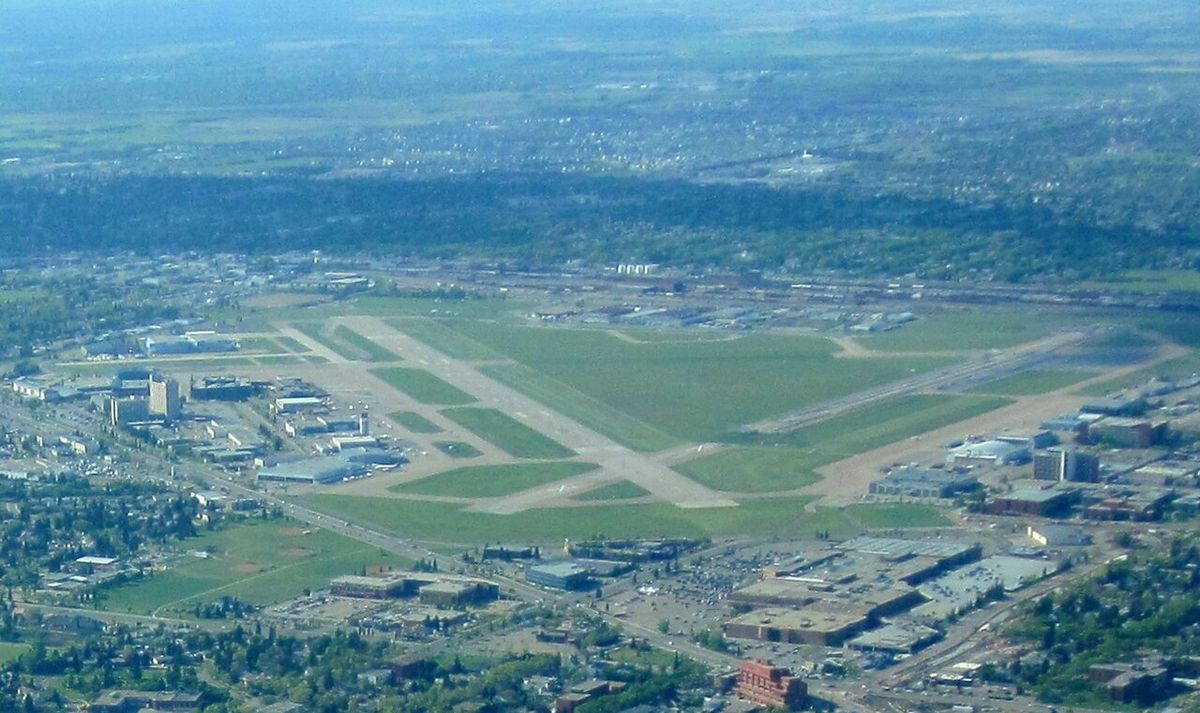
The Edmonton City Centre Airport (ECCA), originally known as Blatchford Field, was a historic airport located within the city limits of Edmonton, Alberta. For over eight decades, it served as a vital transportation hub, first as Canada's first licensed airfield and later as a key commercial and general aviation gateway, particularly for northern communities. Its closure in 2013 marked the end of an era for Edmonton aviation, paving the way for the large-scale redevelopment of its 58-hectare site into the sustainable Blatchford community. The airport's legacy is deeply intertwined with the city's growth, its role in wartime training, and its transformation into a major motorsports venue in its final years.
Origins and Wartime Significance
The airport's origins date to 1926 when it became the first licensed airfield in Canada. It was established in 1927 through the efforts of Mayor Kenneth Alexander Blatchford, for whom the field was originally named, and his son Howard, who later became a fighter ace in the Second World War. The site quickly became a centre for pioneering aviation in Western Canada, closely associated with figures like World War I flying ace and legendary bush pilot Wop May, cementing its reputation as the "Gateway to the North." The airport also hosted notable aviators such as Wiley Post, who landed there during both of his record-setting circumnavigations of the globe. During the Second World War, the facility was known as RCAF Station Edmonton and played a crucial strategic role. It served as a major stop on the Northwest Staging Route, a series of airfields used to ferry aircraft from the United States to the Soviet Union. The station also hosted two schools under the British Commonwealth Air Training Plan, a massive wartime program to train aircrew for the Allied forces.
No. 2 Air Observer School, operated by Canadian Airways and Canadian Pacific Air Lines, opened on August 5, 1940, to train navigators and bomb aimers. No. 16 Elementary Flying Training School, operated by the Edmonton Flying Club, was established on November 11, 1940, to provide initial flight training for pilots. The elementary flying school was closed on July 17, 1942, to allow for the expansion of the observer school, reflecting the shifting training needs of the war effort. No. 2 Air Observer School itself was closed on July 14, 1944, as the BCATP began to wind down. The aerodrome at that time was listed with an elevation of 2,185 feet and had three runways to accommodate the training aircraft. All remaining RCAF squadrons and support units were transferred to the newly expanded RCAF Station Namao on October 1, 1955, returning Blatchford Field to full municipal control for commercial development.
Commercial Passenger Service Era
Following the war, Edmonton City Centre Airport evolved into a busy commercial passenger facility. By the late 1950s, it was served by Canada's major carriers, Trans-Canada Air Lines and Canadian Pacific Air Lines, as well as the regional airline Pacific Western Airlines. The airport even featured on an international route in 1950, with Northwest Airlines operating Douglas DC-4 propliner service from New York to Asia via Edmonton and Anchorage four days a week, with continuing service to Okinawa and Manila or Taipei. Canadian Pacific operated international service to Europe in 1959, with four nonstop flights per week to Amsterdam using Douglas DC-6B aircraft, while also serving northern Alberta and British Columbia destinations like Grande Prairie and Fort St. John with Convair 240s. Trans-Canada Air Lines in 1958 operated Lockheed Super Constellations, Canadair North Stars, and Vickers Viscount turboprops on nonstop services to Vancouver, Toronto, Winnipeg, and Saskatoon, plus five daily nonstops to Calgary.
Pacific Western Airlines became the airport's dominant regional carrier, operating an extensive network to northern communities. In 1959, it used Curtiss C-46 and Douglas DC-4 aircraft to serve points like Fort McMurray, Inuvik, Norman Wells, and Yellowknife. By 1964, its network expanded to include Arctic destinations like Cambridge Bay, Coppermine, and Resolute Bay, the second most northerly destination in Canada served by scheduled flights. The airline introduced its high-frequency "Chieftain Airbus" shuttle service between Edmonton and Calgary in the 1960s, initially using Douglas DC-6 propliners with up to six daily round trips, and later expanding this service significantly. The jet age officially arrived at the airport in 1969 when Pacific Western introduced Boeing 737-200 jetliners on routes to Calgary, Fort Smith, and Hay River, with direct jet service also offered to Vancouver, Yellowknife, Kamloops, Kelowna, Cranbrook, Penticton, Inuvik and Norman Wells.
Throughout the 1970s and 1980s, a variety of aircraft served the airport's diverse and busy route network, though operations were constrained by the runway lengths which pushed the Boeing 737-200 to its performance limits and caused concern over extreme wear on the aircraft. Pacific Western Airlines operated Lockheed L-188 Electra turboprops to northern resource communities like Fort Chipewyan and Fort McMurray, and by 1976 was operating up to fourteen daily 737 departures just to Calgary, in addition to direct jet flights from British Columbia and Saskatchewan points. Time Air and its later brand Canadian Regional operated Fokker F28 Fellowship twin jets, Fokker F27 Friendships, Convair CV-580s and CV-640s, and de Havilland Canada Dash 7 and Dash 8 turboprops, with the Dash 7's STOL capabilities being well-suited to the field. Air Canada Connector service was provided by Air BC using British Aerospace BAe 146-200 jets and Dash 8 turboprops, while McDonnell Douglas DC-9-30 jets operated briefly for Air Canada in the mid-1980s before leaving due to field limitations.
- Norcanair served the airport with Fairchild F-27 turboprop service nonstop from Lloydminster and direct from Saskatoon.
- Southern Frontier Airlines offered Beech 88 commuter turboprop service from Cold Lake in the mid-1980s.
- In 1987, through a partnership with Continental Airlines, connecting service was offered from Edmonton to Dallas/Fort Worth and Houston via Calgary, using Pacific Western 737s to Calgary and Continental Boeing 727s onward.
- By early 1985, there were 23 weekday flights from ECCA to Calgary operated by Pacific Western, Air Canada, and Time Air, compared to only four from the Edmonton International Airport to Calgary at the same time.
By 1995, the Edmonton-Calgary shuttle route was intensely competitive. Three different airlines operated a combined total of up to 32 nonstop flights per day according to the Official Airline Guide. Canadian Airlines International flew Boeing 737-200 jetliners on the route. Time Air, flying as Canadian Partner on behalf of Canadian Airlines via a codeshare agreement, operated Fokker F28 jets and Dash 8 turboprops. Air BC, operating as Air Canada Connector on behalf of Air Canada via a codeshare agreement, flew British Aerospace BAe 146-200 jets and Dash 8 turboprops.
The Long Debate and Path to Closure
The fate of Edmonton City Centre Airport was a subject of protracted civic debate for over half a century, driven by the physical and economic limitations of the downtown site. The opening of the Edmonton International Airport 26 kilometres south of the city in 1960, with its longer runways suited to larger intercontinental jet aircraft, initially signaled the impending closure of the downtown field. A 1963 closure was planned but reversed due to the unexpected and rapid growth of regional air service, particularly the lucrative and frequent Edmonton-Calgary shuttle which passengers valued for its proximity. The issue was repeatedly revisited by city councils and the public, shaped by ongoing concerns about transportation logistics and regional economic disparities. A 1992 municipal plebiscite, known as the Edmonton Municipal Airport Referendum, resulted in the approval of Bylaw No. 10,205, which mandated keeping ECCA open to all traffic it could legally handle, passing with 54% of the vote.
The debate intensified in the following years. A second plebiscite in the 1995 election asked citizens if the bylaw should be repealed to consolidate all scheduled traffic at Edmonton International, though it did not explicitly offer a vote on closing the airport itself. This proposal was approved by 77% of voters, and the consolidation process was finalized in June 1996, ending scheduled passenger airline service at ECCA. The final political battle occurred after city council voted for closure in 2009. A citizen group called Envision Edmonton organized numerous initiatives to lobby against the closure, including circulating a petition in 2010 which garnered over 70,000 signatures, organizing protests, and supporting pro-airport candidates in that year's municipal election. The petition, which aimed to force a new municipal plebiscite, was filed with approximately 100,000 signatures but was found insufficient because nearly 30,000 signatures were from ineligible electors and it was not filed within the required 60-day window after council's decision, thus failing to meet the threshold of 10% of Edmonton's electors.
Final Years as a Motorsports and General Aviation Hub
In its final decade, the airport found a new and prominent identity as a major motorsports venue while continuing its core roles in general aviation. From 2005 to 2012, the runways and taxiways were annually converted into a temporary street circuit to host the Edmonton Indy, a premier open-wheel racing event. The race initially featured Champ Car World Series competitors and, after the 2008 merger, the IndyCar Series. The NASCAR Canada Series also competed at the airport track between 2007 and 2010, and again in 2012. The track layout was reconfigured for the July 2011 event to incorporate the permanently closed north-south runway 16/34, utilizing a more northeasterly section of the airport property. This transformation of the airfield into a race track for one weekend each summer became a major civic event, drawing large crowds and international attention to the site during its twilight years.
Alongside the annual race, the airport remained active with air charter, flight training, and medevac (air ambulance) operations, which were critical services for the region. The field also hosted unique private operations, such as Echo Bay Mines which operated a private passenger and cargo Boeing 727-100 combi aircraft from the airport for several years. The weather station at the site, established in 1937, had by the mid-1970s begun to record some of the longest frost-free periods in the Prairie Provinces, often with the first fall frost not occurring until October, a phenomenon attributed to the growing urban heat island effect of the surrounding city. This microclimate was notable enough that the station, listed as "Edmonton Municipal A." in meteorological records, was regularly cited for its extended growing seasons.
Closure and Immediate Aftermath
The phased closure of the airport began after the July 8, 2009, city council decision, which planned for the Alberta Aviation Museum and some non-aviation institutions to remain on portions of the land, with other land transferred to NAIT and the rest converted to a primarily residential development. Runway 16/34 was scheduled to be the first closed, but its closure was postponed until after the 2010 Indy and Airfest events. It was finally closed to air traffic on August 3, 2010, with a Notice to Airmen issued at 3:00 a.m. The closure of the sole remaining runway, 12/30, was announced at a city council meeting on September 26, 2013, and licenses for any scheduled air service were not renewed. The final day of operations was November 30, 2013. The last aircraft to depart was a privately owned Cessna 172 piloted by a local resident, as poor weather prevented a planned ceremonial touch-and-go landing by a pair of CF-18 fighter jets. Shortly after the departure, the Edmonton Regional Airports Authority placed barricades on runway 12/30 to prevent access and marked it as closed. The site saw one last unplanned aviation incident on February 21, 2015, when a Pipistrel Virus aircraft (registration C-FCDZ) suffered a propeller failure in flight and executed an emergency landing on the airport grounds using its ballistic parachute system.
Redevelopment into the Blatchford Community
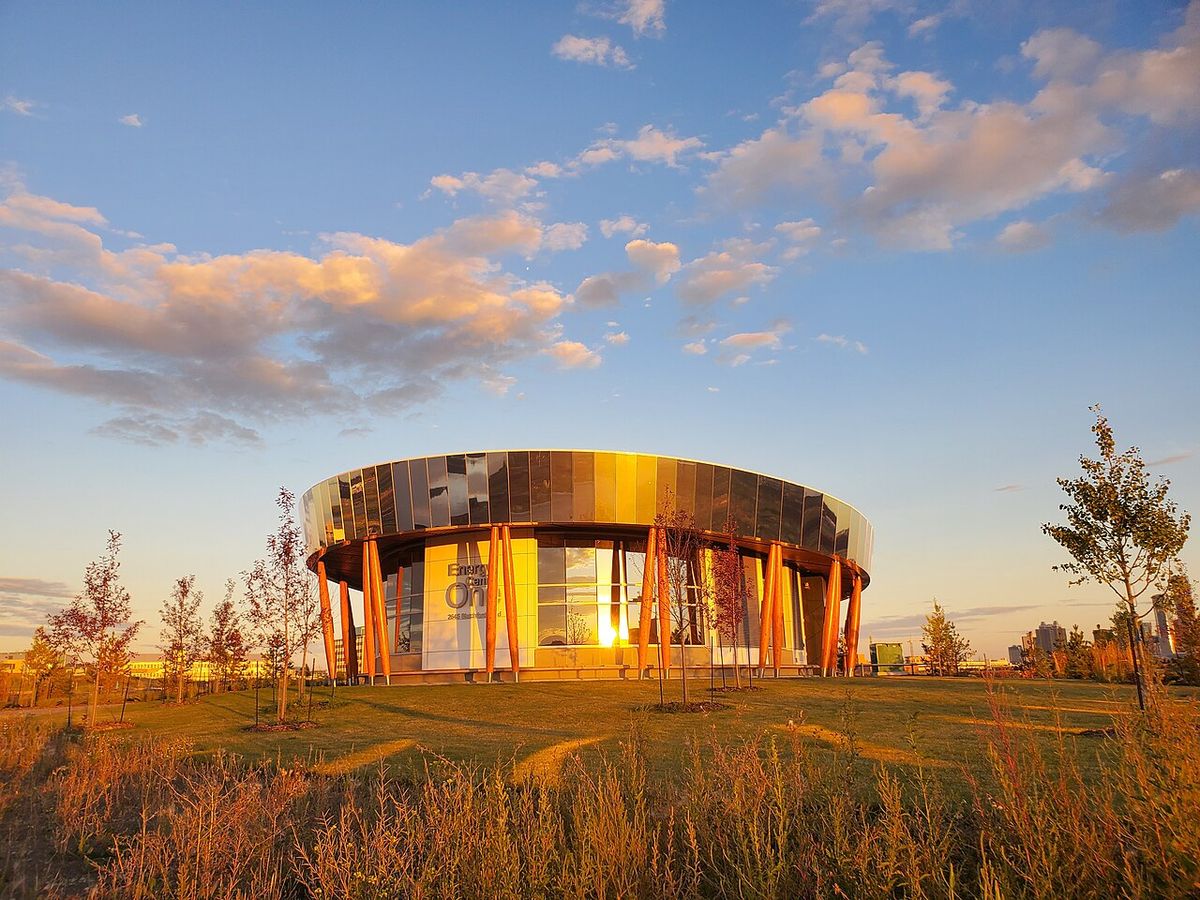
The closure of the airport unlocked 58 hectares of prime, centrally located land for one of Canada's most ambitious urban redevelopment projects. The City of Edmonton is transforming the site into Blatchford, a planned community designed with sustainability as a core principle. The development aims to be a medium- and high-density neighbourhood featuring renewable energy, district heating and cooling, and advanced waste management. As of 2018, redevelopment was actively underway on 212 hectares that include the former airport and adjacent lands. In February 2019, the Northern Alberta Institute of Technology expanded its campus by purchasing 13 hectares of land within the Blatchford area, in addition to land at the former Westwood Transit Garage site, to consolidate and grow its facilities. The project represents a full-circle transformation of the land from a historic transportation hub to a forward-looking, sustainable residential and educational community, with the City managing the long-term development of the area.
Edmonton's Evolving Event Landscape Post-Closure
The closure of Edmonton City Centre Airport coincided with and contributed to a significant shift in the city's sports and entertainment infrastructure towards larger, modern, purpose-built venues. While the airport itself is gone, its former role as a major event site has been supplanted by new downtown developments and existing facilities that have expanded their roles. The focus for large-scale exhibitions and consumer shows has moved to venues like the Edmonton EXPO Centre, a 522,000-square-foot complex that is among Western Canada's largest venues and welcomes more than 1.7 million visitors each year. The centre includes a mid-size arena, seven exhibit halls, and conference facilities, and has a strong focus on environmental sustainability, achieving a 51% waste diversion rate in 2023 and sourcing 35% of its food from within 100 miles of Edmonton as part of its commitment to reduce greenhouse gas emissions by 30% by 2035.
The core of Edmonton's event and entertainment strategy is now centred on the ICE District, a massive mixed-use development anchored by Rogers Place, home to the NHL's Edmonton Oilers and the WHL's Edmonton Oil Kings, and featuring luxury residences, hotels like the JW Marriott, and extensive dining options. A key new project within this district is the Event Park, announced in April 2026. OEG Sports & Entertainment and the City of Edmonton selected the design firms DIALOG and HNTB to create a world-class indoor-outdoor entertainment venue on the site of the former Fan Park next to Rogers Place. This facility is intended to host touring acts, headline performances, cultural gatherings, festivals, and sporting events, with flexible community-accessible spaces. The design selection followed a request-for-proposal process with 19 qualified submissions, and the project is backed by provincial investment aimed at enhancing downtown vitality, civic pride, and the visitor experience. This new venue continues the city's investment in downtown event infrastructure, replacing the temporary event space once created on airport tarmac with a permanent, designed public space intended to drive year-round activity and economic benefits.
Questions about Edmonton City Centre Airport
When did the Edmonton City Centre Airport close?
The Edmonton City Centre Airport closed permanently on November 30, 2013. The closure was phased, with the north-south runway (16/34) closing in August 2010. The final operational runway (12/30) was closed after the last aircraft departed on the afternoon of November 30, 2013, following a city council decision earlier that year not to renew licenses for scheduled air service. Barricades were placed on the runway immediately following the last departure.
What is being built on the old airport land?
The former airport land is being redeveloped by the City of Edmonton into a sustainable, planned community called Blatchford. This project involves creating a medium- and high-density neighbourhood focused on renewable energy, district heating, and green building practices. As of 2018, redevelopment was underway on 212 hectares. In February 2019, the Northern Alberta Institute of Technology purchased 13 hectares within Blatchford for campus expansion. The project aims to transform the 58-hectare airport site into a residential and educational community.
What was the Edmonton Indy and where was it held?
The Edmonton Indy was a major open-wheel auto race held annually from 2005 to 2012 on a temporary street circuit constructed on the runways and taxiways of the Edmonton City Centre Airport. The event featured the Champ Car World Series until 2008, after which it became an IndyCar Series race following a merger. The NASCAR Canada Series also raced at the airport track from 2007 to 2010 and again in 2012. The track layout was modified in 2011 to use the closed runway 16/34, making it a central summer motorsports event for the city.
Why was the airport closed?
The airport was closed due to a combination of physical limitations and a long civic planning debate. Its runways were too short to safely accommodate newer, larger jet aircraft, and there was no room for expansion within the developed city core. A 1995 plebiscite approved consolidating all scheduled airline service at the Edmonton International Airport. The downtown airport's role diminished to charter and general aviation until a final city council decision in 2009 initiated its phased closure, with the valuable inner-city land slated for redevelopment to support urban growth and sustainability goals.
What is the historical significance of Blatchford Field?
Blatchford Field holds significant historical importance as Canada's first licensed airfield, receiving its licence in 1926. It was a pioneering base for northern aviation, famously associated with bush pilot Wop May and used by aviator Wiley Post. During World War II, it served as RCAF Station Edmonton, a key base for the British Commonwealth Air Training Plan schools and a vital stop on the Northwest Staging Route for ferrying aircraft to the Soviet Union. Its long commercial history as a hub for flights to remote communities cemented its role as the "Gateway to the North."
Where is Edmonton's major event venue now that the airport is gone?
Edmonton's major event venues are now concentrated in other facilities. The Edmonton EXPO Centre is a primary location for trade shows, concerts, and mid-size sporting events. For major sports and large concerts, the focus is on the downtown ICE District, anchored by Rogers Place. A new project, the Event Park, was announced in April 2026 to be built in ICE District by designers DIALOG and HNTB, intended as a flexible indoor-outdoor venue for performances and festivals. This continues the city's strategic investment in permanent downtown event infrastructure following the airport's closure.
Sources and further reading
- Edmonton City Centre Airport (Wikipedia)
- Edmonton EXPO Centre | Edmonton's Most Flexible Event ... (edmontonexpocentre.com)
Checked by the Garbutt Disposal desk. Last updated 2026-10-24.