Clarke Stadium
Clarke Stadium is a multipurpose sports venue located in Edmonton, Alberta, southwest of the larger Commonwealth Stadium. Originally constructed in 1938 for Canadian football and named for former mayor Joseph Clarke, it served as the primary home of the Edmonton Eskimos (now Elks) from 1949 to 1978. Following a major rebuild in 2000, the stadium was transformed into a modern facility with artificial turf and a primary grandstand, hosting university, amateur, and professional soccer. Today, with a seating capacity of 5,100, Clarke Stadium remains a significant community hub for athletics and events, anchoring Edmonton's sporting history while serving contemporary needs.
Origins and Early Years
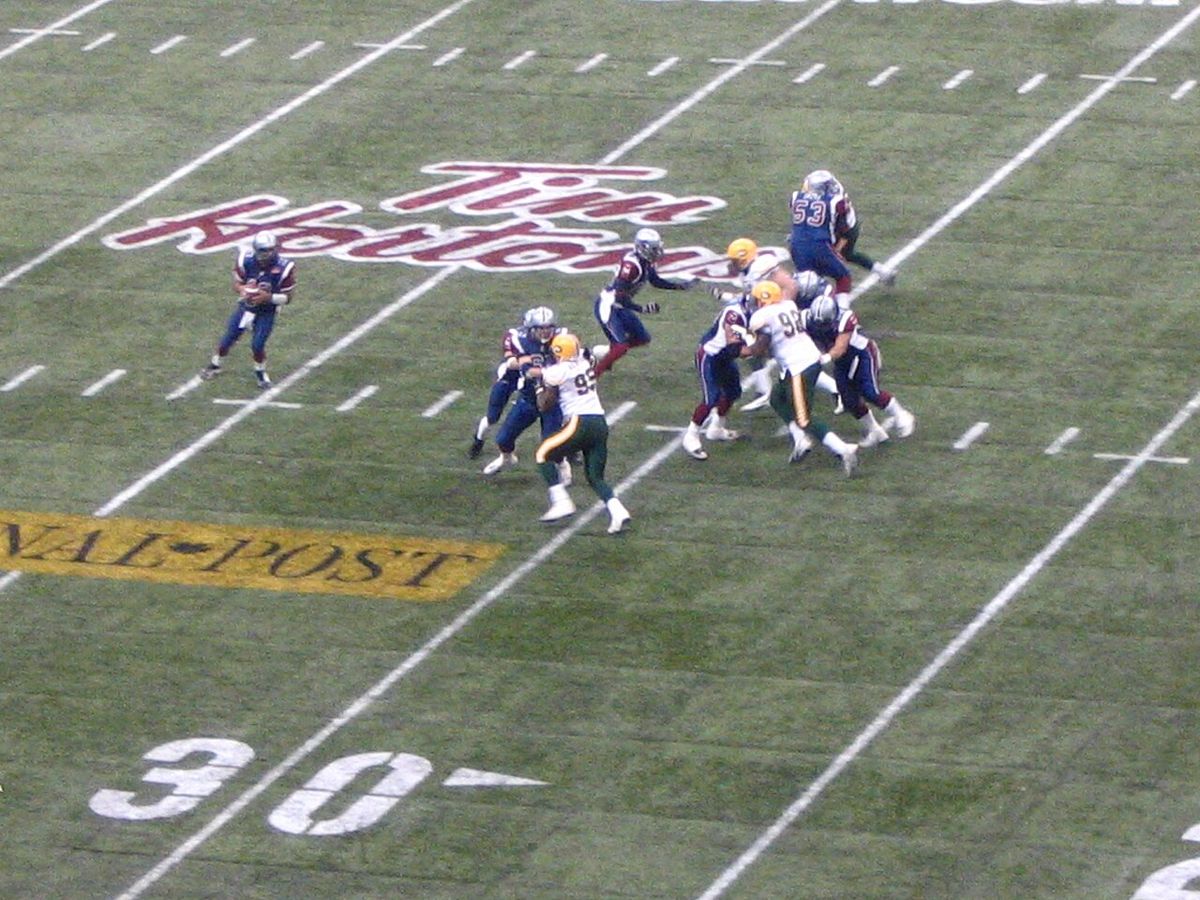
Clarke Stadium was constructed in 1938 on land deeded to the City of Edmonton by the federal government for public sports fields, a gesture facilitated by the friendship between Prime Minister Mackenzie King and Edmonton mayor Joseph Clarke, for whom the stadium was named. The original facility was a spartan venue typical of its era, featuring two grandstands on opposing sidelines and accommodating approximately 20,000 spectators. It served as a community sports ground for its first decade before becoming the professional football home of the Edmonton Eskimos of the Western Interprovincial Football Union, later the Canadian Football League, starting in 1949. Throughout the 1960s and 1970s, the stadium was a central part of Edmonton's sporting culture, famously offering Knothole Gang tickets for 25 cents per game to attract young fans. The Eskimos played their final season at Clarke in 1978 before moving to the newly built Commonwealth Stadium adjacent to the site, which had been constructed for the 1978 Commonwealth Games.
Demolition and Rebirth as Clarke Park
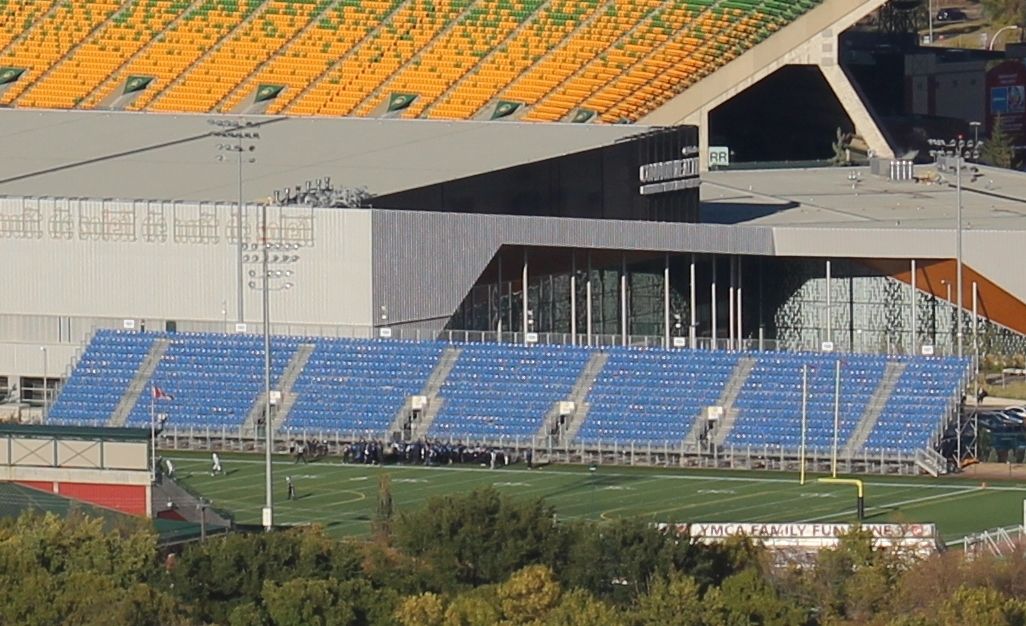
After the departure of the Eskimos, Clarke Stadium entered a period of use for local and minor league events until it was almost completely demolished on June 1, 2000. The facility was rebuilt as a secondary stadium for events associated with the 2001 World Championships in Athletics hosted in Edmonton. This redesign radically altered the venue's scale and function, replacing the massive dual grandstands with a single grandstand containing approximately 1,200 seats. The original grass playing surface was also replaced with artificial turf to allow for greater durability and year-round usage. This remodelled facility, often referred to as Clarke Park, significantly increased its versatility for non-sporting events. Including the expansive playing surface, the stadium grounds can accommodate over 6,000 people for concerts and large gatherings, having hosted performances by artists such as The Tragically Hip, Midnight Oil, and Dolly Parton.
Soccer Tenancy and Further Renovations
The stadium has a long but often challenging history with professional soccer, with several teams attempting to establish themselves there after failing to draw crowds at the larger Commonwealth Stadium. The Edmonton Drillers of the 1970s and the Edmonton Aviators of 2004 both moved to Clarke Stadium in efforts to reduce costs, but each team folded shortly after the relocation. The Edmonton Brick Men of the 1980s and 1990s also used the venue occasionally, though they played most matches at John Ducey Park. A more stable soccer tenancy began when FC Edmonton started playing their North American Soccer League home games at Clarke Stadium with the 2012 season. To accommodate the team, the stadium underwent significant renovations, including a capacity expansion to 5,000 using temporary seating completed in May 2013. Following discussions with NASL officials, the installation of a new artificial turf was completed in time for the 2014 season to create a more soccer-specific facility. Further renovations ahead of the 2019 Canadian Premier League season increased permanent seating to 5,148, removed the temporary stands, and added stands behind both goals along with pitch-side tables beside the team dugouts.
Current Usage and Tenants
Clarke Stadium today is a hub for both professional and amateur sports, maintaining its multipurpose character. Its primary tenants reflect this diverse use, with FC Edmonton of the Canadian Premier League serving as the anchor professional soccer team. The stadium is also a home for Canadian football at the junior level, hosting the Edmonton Huskies and Edmonton Wildcats of the Canadian Junior Football League. University athletics are well-represented by the MacEwan University Griffins soccer programs, which compete in the Canada West Universities Athletic Association and U SPORTS. The facility is managed by the City of Edmonton and is rated as fully accessible, with four parking lots (A, B, C, and D) offering approximately 750 spots shared with the Commonwealth complex. The venue continues to host a wide array of community events, high school athletics through the Metro Edmonton High School Athletic Association, and concerts, solidifying its role as a vital community asset.
Key current and recent tenants of Clarke Stadium include FC Edmonton of the Canadian Premier League, the Edmonton Huskies and Edmonton Wildcats of the Canadian Junior Football League, and the MacEwan University Griffins soccer programs. The stadium has also been home to the Edmonton Elks of the Canadian Football League, who played there from 1949 to 1978. Other past professional soccer tenants include the Edmonton Drillers and the Edmonton Aviators. The facility continues to serve as a hub for numerous amateur sport clubs and community events.
- FC Edmonton (Canadian Premier League soccer, since 2012)
- Edmonton Huskies (Canadian Junior Football League)
- Edmonton Wildcats (Canadian Junior Football League)
- MacEwan University Griffins (U SPORTS soccer)
- Metro Edmonton High School Athletic Association (since 1988)
Future Developments and Special Events
The stadium continues to evolve with plans for future enhancements and has been selected for special one-off sporting events that reconnect it with its football past. In May 2026, Chris Morris announced plans to build a dome over Clarke Stadium along with a multi-level high-performance and training centre, indicating a significant investment in its future as a year-round athletic facility. The Edmonton Elks scheduled a preseason Canadian Football League game against the Calgary Stampeders for May 29, 2026, marking the first professional football game at the venue since the Eskimos departed in 1978. This event required additional temporary seating and concourse expansions to accommodate fans. The stadium is also set to host Canada's Men's Rugby Team for their first home matches of 2026 in July of that year. These developments demonstrate Clarke Stadium's ongoing adaptability and its enduring place in Edmonton's sporting landscape, capable of hosting national teams and returning professional football to its original grounds. Upcoming and recently announced major events for Clarke Stadium include:
- Edmonton Elks vs. Calgary Stampeders preseason game (May 29, 2026)
- Canada's Men's Rugby Team home matches (July 2026)
- MacEwan Griffins Women's Soccer vs. Calgary Dinos (October 24, 2026)
- Construction of a stadium dome and high-performance centre (announced May 2026)
Accessibility and Event Information
Clarke Stadium is designed to be accessible and convenient for spectators, with detailed provisions for transit and parking. The venue is rated Excellent for accessibility, ensuring a welcoming experience for all guests. The closest transit connection is the Stadium Transit Centre and Stadium LRT Station, providing direct public transportation links. For those driving, there are four main parking lots (A, B, C, and D) surrounding the Commonwealth and Clarke Stadium complex, offering approximately 750 parking spots in total. During major events, such as Elks home games at Commonwealth, all parking lots close three hours prior to kickoff, though the Commonwealth Community Recreation Centre remains open. Residential parking restrictions are enforced in the surrounding neighbourhoods during major events, and only residents with valid permits are permitted to park in these zones. For events like MacEwan Griffins soccer games, some disruptions may occur in Lot C, but free parking is generally available around the stadium, and game day LRT and bus schedules are provided by Edmonton Transit.
Notable Events and Attendance
Throughout its history, Clarke Stadium has hosted a variety of notable events that highlight its changing role. It was the home of the Edmonton Elks from 1949 to 1978 and hosted the Knothole Gang with tickets for 25 cents per game in the 1960s and 1970s. The stadium was almost completely demolished and rebuilt in 2000 and 2001 to serve as a secondary venue for the 2001 World Championships in Athletics. It has also hosted professional soccer for teams like FC Edmonton and concerts by major artists, demonstrating its multipurpose nature.
| Year | Event or Tenant | Notable Fact |
|---|---|---|
| 2001 | World Championships in Athletics events | Stadium rebuilt as secondary venue for the championships. |
| 2012 to 2019 | FC Edmonton (NASL/CPL) | Underwent capacity expansions to 5,000 (2013) and 5,148 (2019). |
| Various | Concerts | Hosted The Tragically Hip, Midnight Oil, Dolly Parton. Grounds capacity exceeds 6,000. |
| 2026 (May) | Edmonton Elks preseason game | First CFL game at stadium since 1978. Required temporary seating expansion. |
| 2026 (July) | Canada's Men's Rugby Team | Scheduled to host the team's first home matches of 2026. |
These events demonstrate the stadium's flexibility. Its origins were as a major Canadian football venue built in 1938. It has since evolved into a multipurpose community facility. It is capable of hosting international athletics, professional and university soccer, concerts, and special football reunions. The stadium's redesign in 2001 with artificial turf and a single grandstand, along with subsequent renovations for soccer, facilitated this broad range of uses while maintaining its community focus.
Questions about Clarke Stadium
Where is Clarke Stadium located and how do I get there?
Clarke Stadium is located at 11000 Stadium Road NW in Edmonton, Alberta, situated just southwest of the larger Commonwealth Stadium and the Commonwealth Community Recreation Centre. The most convenient public transit option is the Stadium Transit Centre and Stadium LRT Station. For drivers, there are four main parking lots (A, B, C, and D) shared with the Commonwealth complex, offering approximately 750 parking spots. During major events, parking lot closures and residential parking restrictions are in effect, so checking specific event information is advised.
Which sports teams currently play at Clarke Stadium?
Clarke Stadium hosts several sports teams. The primary professional tenant is FC Edmonton of the Canadian Premier League soccer. The stadium is also home to the Edmonton Huskies and Edmonton Wildcats of the Canadian Junior Football League. The MacEwan University Griffins men's and women's soccer teams use the facility for their U SPORTS competitions. The venue also hosts high school athletics and various community sports events.
What major renovations has Clarke Stadium undergone?
Clarke Stadium has undergone several major renovations. It was almost completely demolished and rebuilt in 2000 for the 2001 World Championships in Athletics, which reduced seating to about 1,200 and installed artificial turf. In 2013, temporary seating was added to expand capacity to 5,000 for FC Edmonton, and new artificial turf was installed for the 2014 season. The most recent significant renovation was completed ahead of the 2019 CPL season, which increased permanent seating to 5,148, removed temporary stands, and added permanent stands behind both goals.
Are there any future plans for Clarke Stadium?
Yes, significant future plans were announced in May 2026. These plans include the construction of a dome over the stadium along with a multi-level high-performance and training centre. This development aims to transform Clarke Stadium into a year-round athletic training and event facility. The stadium is also scheduled to host special events like an Edmonton Elks preseason CFL game in May 2026 and home matches for Canada's Men's Rugby Team in July 2026.
What is the seating capacity of Clarke Stadium?
Clarke Stadium currently has a permanent seating capacity of 5,100 following renovations completed for the 2019 Canadian Premier League season. This capacity was achieved by adding permanent stands behind both goals and removing temporary seating installed in 2013. For concerts and other non-sporting events, the capacity of the stadium grounds can exceed 6,000 when the playing surface is utilized. This modern configuration is a substantial change from the stadium's original 1938 build, which accommodated approximately 20,000 fans for Canadian football. The facility was almost completely demolished and rebuilt in 2000 with a single grandstand of about 1,200 seats before its subsequent soccer focused expansions.
Did the Edmonton Elks ever play at Clarke Stadium?
Yes, the Edmonton Elks, originally known as the Edmonton Eskimos, were the original professional tenants of Clarke Stadium. The team played their Western Interprovincial Football Union and Canadian Football League home games there from 1949 through 1978. They moved to the newly built Commonwealth Stadium adjacent to Clarke Stadium in 1978, which was constructed for the Commonwealth Games. After nearly five decades, the Elks are scheduled to return for a preseason game against the Calgary Stampeders on May 29, 2026, due to a scheduling conflict at Commonwealth Stadium. This 2026 event will mark the first professional football game at Clarke Stadium since the team's departure in 1978.
Sources and further reading
- Clarke Stadium (Wikipedia)
- Clarke Stadium (edmonton.ca)
- Clarke Stadium | Canada's Alberta (travelalberta.com)
- Clarke Stadium Tickets | 2026 Calendar & Events (tickets.ca)
Checked by the Garbutt Disposal desk. Last updated 2026-10-27.