Blue Mountain
Blue Mountain Resorts is a major ski resort and four-season destination located in The Blue Mountains, Ontario, on the Niagara Escarpment near the southern shore of Georgian Bay. Established in 1941 by Jozo Weider and Gordon Peter Campbell, it has grown from a modest ski area into Canada's third-busiest ski resort by skier visits, behind only Whistler Blackcomb and Mont Tremblant. The resort encompasses 147 hectares of skiable terrain with a vertical drop of 220 metres, featuring 43 named runs, four terrain parks, and a comprehensive lift system. Its evolution into a year-round attraction, anchored by the pedestrian Blue Mountain Village, has made it a central hub for recreation and major sporting events in Southern Ontario.
History and Development
The origins of Blue Mountain as a ski destination trace back to 1924 with the formation of the Toronto Ski Club. Development accelerated in 1935 when the Blue Mountain Ski Club, later the Collingwood Ski Club, opened and cut the first ski trails named Granny, Schuss, and Kandahar into the escarpment. In 1940, these two clubs partnered to purchase 81 hectares of land and hired the renowned ski trail developer Herman Smith-Johannsen to assist in planning the area's trails. The resort itself was formally established in May 1941 when Slovak chalet builder Jozo Weider and Toronto lawyer and ski instructor Gordon Peter Campbell purchased 3.6 hectares from the ski clubs to form Blue Mountain Resorts Limited. The first season operated later in 1941 out of a converted barn, with many visitors arriving via a dedicated ski train from Toronto, a service that was briefly discontinued in 1943 due to the logistical demands of the Second World War.
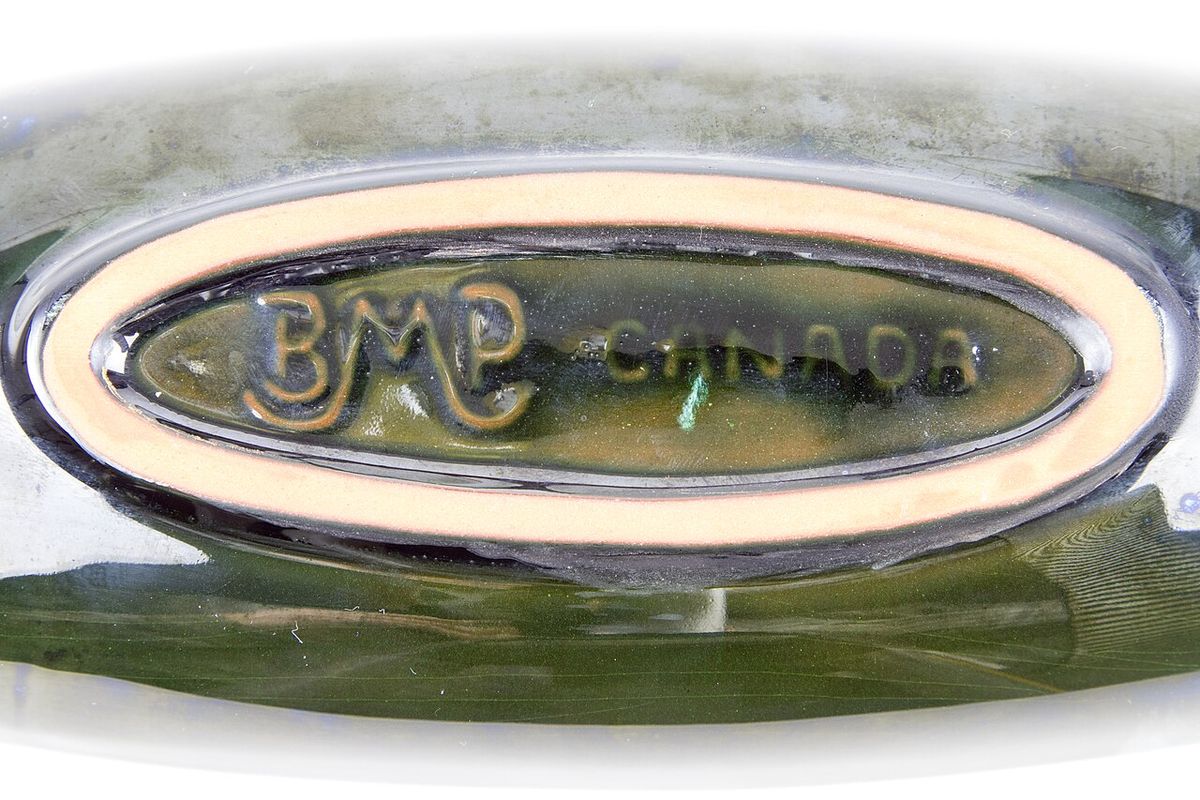
A 999-year lease signed in 1948 secured the resort's long-term use of the ski clubs' escarpment lands in exchange for granting the clubs increased shares in the company. The next year, the resort acquired an additional 61 hectares of land south of the main area and renovated its original ski barn to provide après-ski entertainment and overnight accommodations. Ownership and expansion continued through the mid-20th century, with Weider acquiring majority control after Campbell's death in 1964. The completion of Highway 400 significantly improved access from the Greater Toronto Area, spurring major developments like the Blue Mountain Inn in 1963 and the Central Base Lodge in 1969. To finance this growth, Weider sold the off-season Blue Mountain Pottery operation in 1967 but retained the adjacent 4.0 hectares of land, where he later built a large restaurant, shopping centre, and planetarium complex.
Following Weider's own death in 1971, the resort continued to grow under family ownership, adding its first snowmaking guns and lighting for night skiing in the 1970s. The strategic shift toward year-round operations began in 1977 with the introduction of the Great Slide Ride, a summer attraction featuring two parallel concrete tracks. That same year, the resort partnered with a private entity to acquire 150 hectares for a golf course, which opened in the 1980s as Monterra Golf. The 1990s saw winter expansions including the opening of a snow tubing park and the official allowance of snowboarding and glade skiing on the resort's terrain. The turn of the century brought a major transition when the Weider family sold a 50 per cent stake to the resort conglomerate Intrawest in 1999.
Intrawest's investment unlocked capital for large-scale village development, with construction on Blue Mountain Village beginning in 2000. This development helped drive skier visits to 700,000 by 2006, cementing Blue Mountain's position as Canada's third-busiest ski resort. The resort also expanded its summer offerings in the 2000s with an open-air gondola in 2005, an aquatic centre in 2006, and an alpine coaster in 2010. A significant terrain expansion occurred in 2013 with the $10 million development of the Orchard section, adding six new runs and a high-speed six-person chairlift. In 2017, Intrawest and its holdings were acquired by a consortium led by KSL Partners and Henry Crown and Company, which was consolidated under the Alterra Mountain Company name in 2018, and Alterra subsequently included Blue Mountain in its multi-resort Ikon Pass season pass program.
Mountain Terrain and Geography
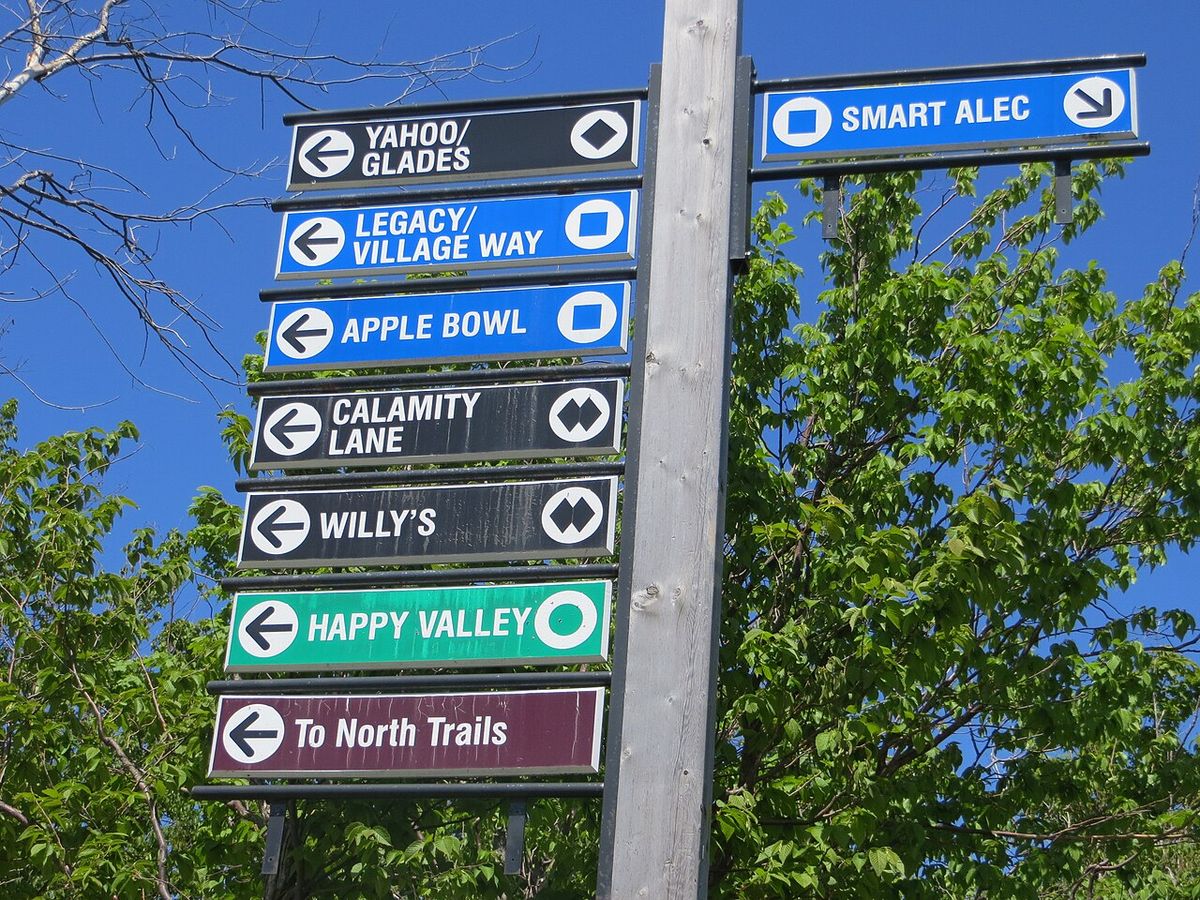
Blue Mountain's skiable terrain covers 147 hectares across the Niagara Escarpment, offering a vertical drop of 220 metres. The resort's 43 named trails are serviced by a modern lift network and include four dedicated terrain parks, with 30 of those trails fully lit for night skiing operations. The longest run on the mountain is Gord's Groove, which stretches for 1.6 kilometres. The resort's terrain is divided across several areas, with a major expansion occurring in the Orchard section in 2013, which added six new runs and a high-speed six-person chairlift at a cost of $10 million, opening to the public in December 2013.
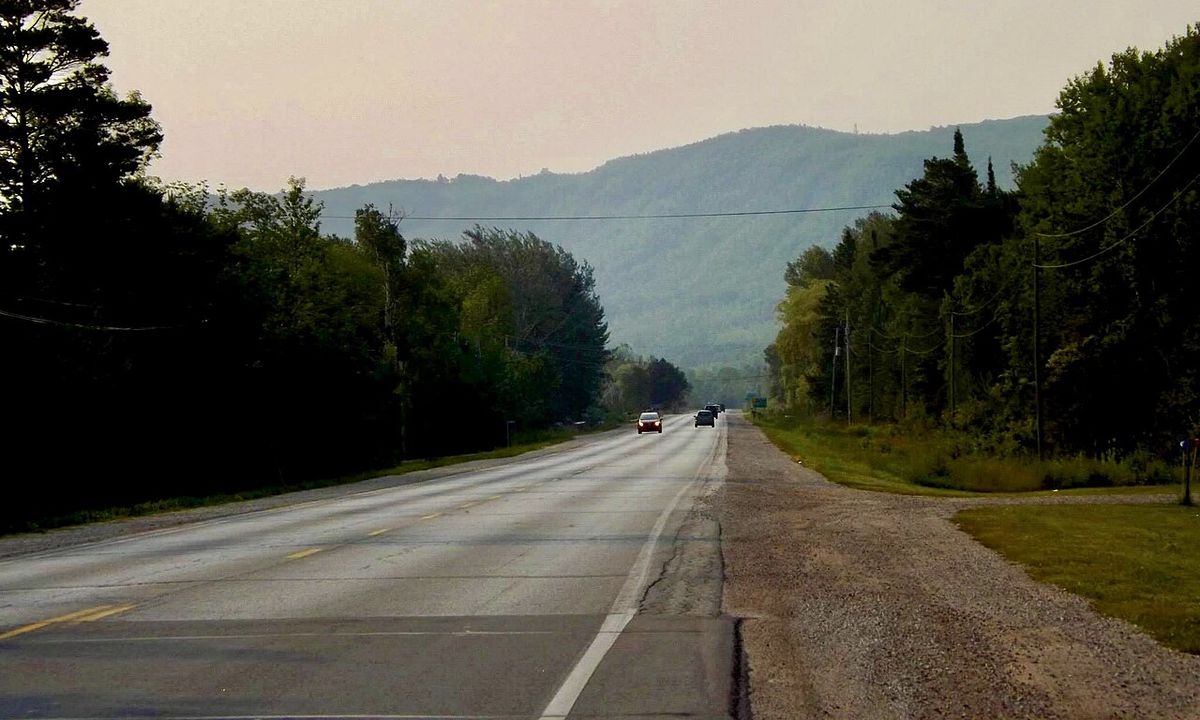
The resort's geography is defined by its position on the Niagara Escarpment, a cuesta formed not by geological faulting but by the differential erosion of rock strata over millions of years. The underlying soft rocks eroded away quickly, causing the more resistant caprock to break off and create the cliff-like slope. The rock formations that form the escarpment here include the Blue Mountain and Queenston Formations. This portion of the escarpment north of Lake Ontario is formed along the ridge of the Michigan Basin and intersects the subsurface Algonquin Arch, a rise in the bedrock, which results in the escarpment reaching its highest elevation around the wider Blue Mountain area where the resort resides.
The entire region, including the Blue Mountains, was depressed by the weight of glaciers during the Last Glacial Period. As a result, the area continues to experience post-glacial rebound, rising at a rate of approximately 15 centimetres every 100 years. For several thousand years after the glaciers retreated, the Blue Mountain portion of the escarpment served as the shoreline for the vast glacial Lake Algonquin. The resort's name derives from this broader geological range, with the earliest recorded use of the Blue Mountains moniker for the area appearing in 1819 in John Jeremiah Bigsby's book, though it is often attributed to surveyor Charles Rankin in 1833.
Lift System and Capacity
Blue Mountain operates a comprehensive lift system designed for efficiency and guest comfort. As of 2024, the resort's uphill capacity is 26,750 people per hour, provided by seven chairlifts, four surface lifts, and one open-air gondola. The chairlift fleet is modern, consisting of five high-speed detachable six-seat chairlifts, one fixed-grip quad chairlift, and one triple chairlift. The open-air gondola, installed in 2004, operates exclusively during the summer and fall seasons as a scenic attraction and is not used for winter ski access, while the four surface lifts include magic carpets ideal for beginner areas.
The evolution of the lift system mirrors the resort's growth from a local ski hill to a major destination. The first mechanical lift on the grounds was a sleigh tow installed in 1937, which was used until it was replaced by a Poma lift in 1955. A major milestone was reached in 1960 with the installation of Ontario's first double chairlift, marking a significant upgrade in guest capacity and comfort. Expansion continued through the 1960s with an additional double chairlift built in 1965 and two more added in 1969, supported by the improved road access from Highway 400.
By 1979, the resort's lift network had grown to include three triple chairlifts, five double chairlifts, four Poma lifts, three T-bars, and one rope tow. The modernization wave began in the 1980s with the replacement of one double chairlift with a quad chairlift, increasing capacity on key slopes. This was followed by a more substantial upgrade in 1997 with the installation of the resort's first high-speed six-seat chairlift. Continued upgrades in the 2000s included replacing the original 1960 double chair with a new high-speed six-seater and adding the resort's first magic carpet lifts for beginner areas, completing the transition to a contemporary lift system.
Year-Round Resort and Village
Blue Mountain has successfully transformed into a four-season destination, offering a wide array of activities beyond alpine skiing and snowboarding. Winter offerings include snow tubing, snowshoeing, and ice skating, alongside the core skiing and snowboarding on 43 trails. During the warmer months, the resort operates an alpine coaster, mountain biking trails, zip lines, rope courses, an aquatic centre, tennis courts, and the Monterra Golf course which opened in the 1980s. Other activities available include axe throwing and aqua tricycle rentals, ensuring a diverse recreational calendar that also incorporates access to Blue Mountain Beach on Georgian Bay.
The heart of the resort is Blue Mountain Village, a pedestrian village at the base of the escarpment that serves as the central hub for accommodation, dining, and shopping. The village features a collection of hotels, motels, lodges, cabins, and over 40 retail shops and restaurants. Planning for the village began as early as 1985, but large-scale construction commenced in 2000 following Intrawest's 50 per cent investment the prior year. The village is governed by the Blue Mountain Village Association, a membership-based business association established under the Blue Mountain Village Association Act, 1999, which manages operations for organizations within the village.
- Winter Activities: Skiing, snowboarding, snow tubing, night skiing on 30 trails, terrain parks, ice skating, snowshoeing.
- Summer & Fall Activities: Mountain coaster, open-air gondola, mountain biking, zip lining, rope courses, golf, tennis, aquatic centre, hiking, waterslides.
- Village Amenities: Over 40 shops and restaurants, a conference centre, multiple hotels and rental accommodations.
- Annual Events: Hosts FIS World Cup events, seasonal festivals, and other sporting competitions.
Hosted Major Events
Blue Mountain has established itself as a reputable venue for international winter sports competitions, primarily hosting rounds of the FIS Freestyle Skiing and Snowboard World Cups. The resort's consistent investment in terrain and infrastructure has made it a recurring choice for these elite events, particularly for the exciting ski cross and snowboard cross disciplines. These competitions have brought world-class athletes to Ontario and provided a significant economic and promotional boost to the region, demonstrating the resort's capabilities on a global stage to both participants and spectators. The frequency of these events, with ski cross World Cups held in 2010, 2011, 2012, 2016, 2017, and 2019, reflects the resort's operational reliability and the consistent quality of its course preparation. Hosting these World Cups has also contributed to the development of winter sports in Canada by providing a high-level competition venue accessible to athletes and fans in the populous southern part of the country, complementing events held in the Rocky Mountains. The resort has a particular history with ski cross and snowboard cross events, disciplines that suit its terrain and appeal to spectators, and it has also hosted the FIS Snowboard World Cup for parallel giant slalom in 2020 and 2023. The table below details the specific World Cup events and the years Blue Mountain has served as the host venue for each discipline.
| Event | Discipline | Years Hosted |
|---|---|---|
| FIS Freestyle Skiing World Cup | Ski Cross | 2010, 2011, 2012, 2016, 2017, 2019 |
| FIS Snowboard World Cup | Snowboard Cross | 2012, 2013 |
| FIS Snowboard World Cup | Parallel Giant Slalom | 2020, 2023 |
Ownership and Operational Timeline
The ownership and operational history of Blue Mountain Resorts reflects its evolution from a family-run ski hill to a major corporate resort. The founding partnership between Jozo Weider and Gordon Peter Campbell in 1941 set the foundation, with Campbell providing financing and business acumen while Weider held a 25 per cent stake and was employed as the sports and ski director. After Campbell's death in 1964, Weider assumed majority control and guided the resort's expansion, including the sale of Blue Mountain Pottery in 1967 to fund development, until his own death in 1971. The Weider family retained ownership for decades, managing the resort's growth into a four-season operation and the introduction of summer attractions in the 1970s and 1980s.
The turn of the 21st century brought a significant shift when the Weider family sold a 50 per cent stake to the resort conglomerate Intrawest in 1999. This partnership unlocked the capital needed to build the modern Blue Mountain Village, which began construction in 2000 and helped increase skier visits to 700,000 by 2006. The most recent major change occurred in 2017, when Intrawest was acquired by a consortium of KSL Partners and Henry Crown and Company, bringing Blue Mountain under the umbrella of what would be renamed Alterra Mountain Company in 2018. This acquisition integrated Blue Mountain into a larger North American network of resorts, most notably through the Ikon Pass launched in 2018, which grants season access to multiple destinations.
- 1941: Founded by Jozo Weider and Gordon Peter Campbell as Blue Mountain Resorts Limited.
- 1948: Signed 999-year lease with founding ski clubs for escarpment land.
- 1964: Jozo Weider acquires majority ownership after Campbell's death.
- 1999: Intrawest acquires 50% ownership from the Weider family.
- 2000: Construction begins on Blue Mountain Village.
- 2013: $10 million Orchard expansion adds six new runs and a high-speed chairlift.
- 2017: Resort acquired by KSL/Henry Crown consortium (later Alterra).
- 2018: Included in the newly launched Alterra Ikon Pass.
Questions about Blue Mountain
Where is Blue Mountain located in Ontario?
Blue Mountain Resorts is located in the town of The Blue Mountains, Ontario. It spans the Niagara Escarpment near the southern shoreline of Nottawasaga Bay, which is part of Georgian Bay. The resort is approximately a two-hour drive north of Toronto, with access greatly improved by Highway 400 and Highway 26. Its position on the escarpment provides the significant vertical drop and terrain that defines the ski area, within the wider geological range known as the Blue Mountains.
Who owns Blue Mountain Resorts?
As of 2024, Blue Mountain Resorts is owned and operated by Alterra Mountain Company. Alterra acquired the resort in 2017 as part of its purchase of Intrawest, which had held a 50 per cent stake since 1999. Prior to Intrawest's involvement, the resort was founded and primarily owned by the Weider family, with co-founder Jozo Weider controlling it from 1964 until his death in 1971. The founding partnership was between Weider and Gordon Peter Campbell, who served as the resort's financier and business advisor.
How big is the ski resort and what is its vertical drop?
Blue Mountain encompasses 147 hectares, or 360 acres, of skiable terrain. The resort's vertical drop, which is the difference in elevation from the top of the highest lift-served point to the base, is 220 metres, or 720 feet. This terrain is divided into 43 named ski trails and includes four terrain parks, with 30 of those trails equipped for night skiing. The longest single run on the mountain is Gord's Groove, which measures 1.6 kilometres in length.
What summer activities are available at Blue Mountain?
Blue Mountain operates as a full four-season destination. Summer and fall activities include the open-air scenic gondola installed in 2005, an alpine coaster added in 2010, mountain biking on trail networks, zip lining, and aerial rope courses. The resort also features the Monterra Golf course, tennis courts, an aquatic centre opened in 2006, and access to Blue Mountain Beach on Georgian Bay. The pedestrian village at the base offers shopping, dining, and special events throughout the warmer months.
What major sporting events has Blue Mountain hosted?
Blue Mountain has been a frequent host for FIS World Cup events in freestyle skiing and snowboarding. It has hosted the FIS Freestyle Skiing World Cup for ski cross in 2010, 2011, 2012, 2016, 2017, and 2019. The resort has also held the FIS Snowboard World Cup for snowboard cross in 2012 and 2013, and for parallel giant slalom in 2020 and 2023. These events have established the resort as a premier competition venue in Eastern Canada for these specific disciplines.
When was Blue Mountain founded and by whom?
Blue Mountain Resorts was founded in May 1941 by Jozo Weider and Gordon Peter Campbell. Weider was a Slovak political refugee and chalet builder, while Campbell was a Toronto-based ski instructor, lawyer, and future Canadian senator. They purchased 3.6 hectares of land from the pre-existing Toronto Ski Club and Blue Mountain Ski Club to establish Blue Mountain Resorts Limited. The first ski season operated later that same year out of a converted barn known as the ski barn, with visitors often arriving by a dedicated ski train from Toronto.
Sources and further reading
- Blue Mountain (Wikipedia)
- Blue Mountain Resort: Ontario's Winter & Summer Destination (bluemountain.ca)
- Parks & Facilities • Blue Mountain Park (coquitlam.ca)
- BMVA, Visit Blue Mountain Village, Ontario, Canada (bluemountainvillage.ca)
- Blue Mountain Resort (cvent.com)
Checked by the Garbutt Disposal desk. Last updated 2026-10-22.