Northlands Coliseum
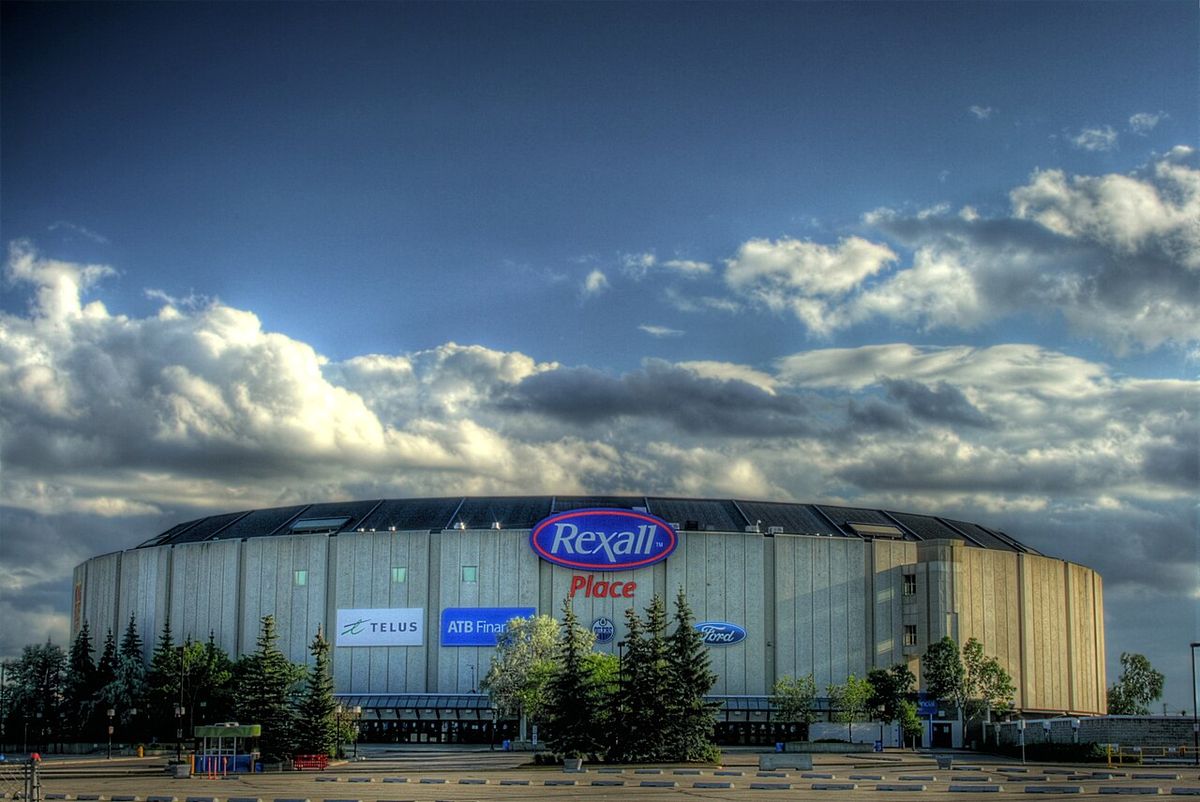
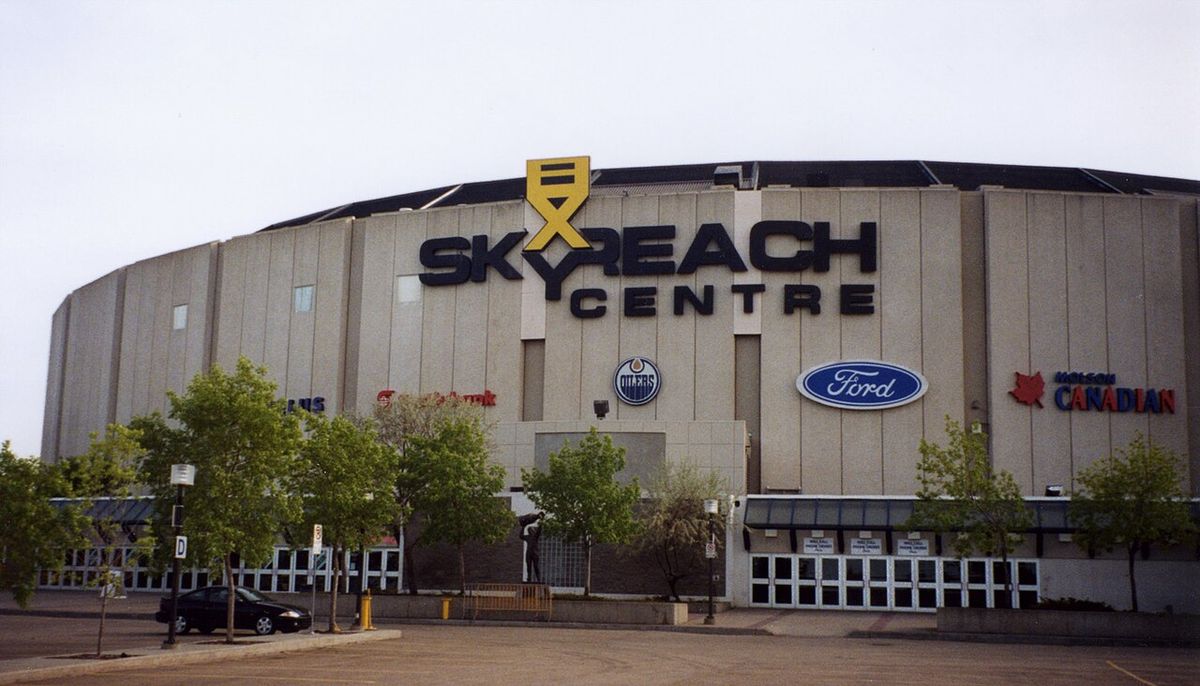
Northlands Coliseum was a major indoor arena located in Edmonton, Alberta, which served as a premier sports and entertainment venue for over four decades. Best known as the long-time home of the Edmonton Oilers, the arena hosted the team's rise from the World Hockey Association to five Stanley Cup championships in the National Hockey League. The building, which also operated under the names Edmonton Coliseum, Skyreach Centre, and Rexall Place, was a central site for major hockey tournaments, concerts, and other events in Western Canada. Following the Oilers' move to Rogers Place in 2016, the Coliseum closed permanently in 2018 and is now slated for demolition, with major deconstruction work scheduled to begin in summer 2026.
Construction and early years
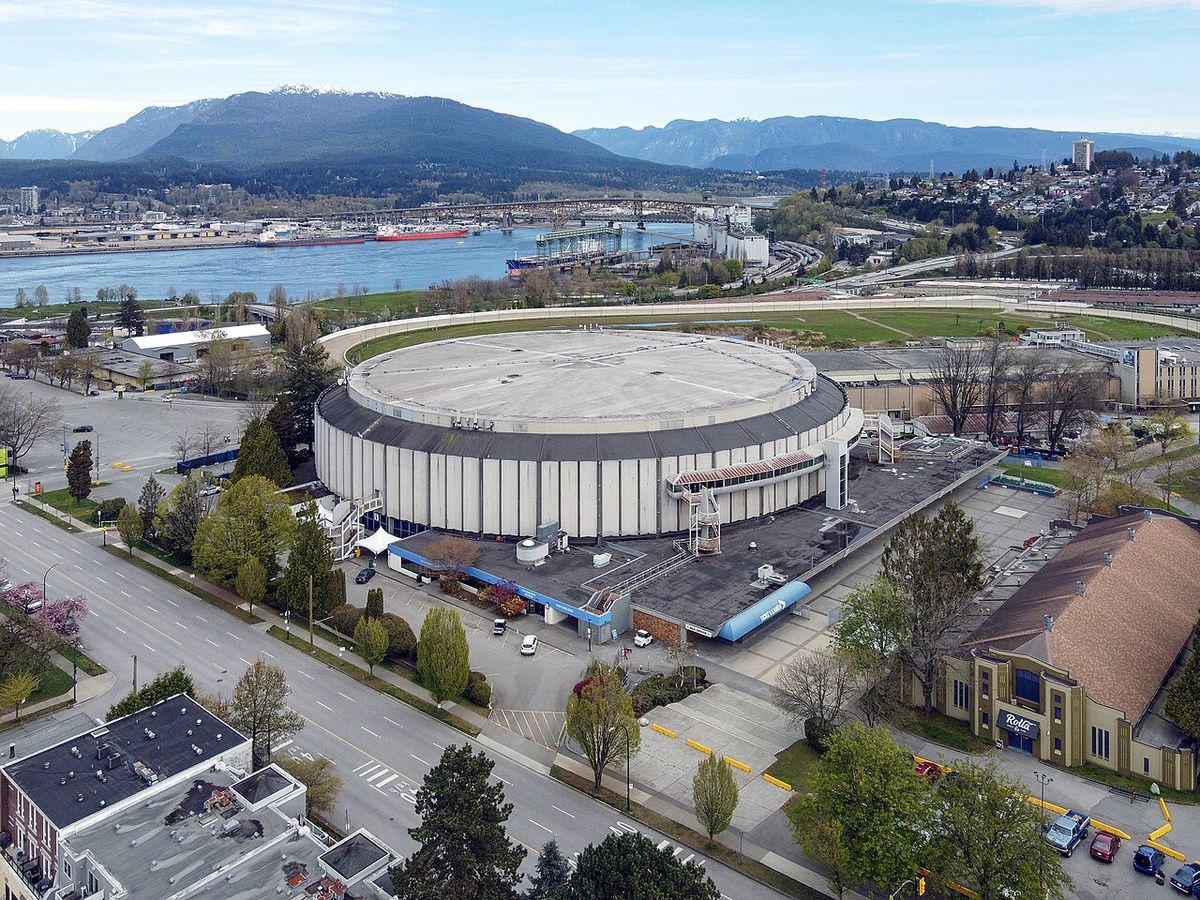
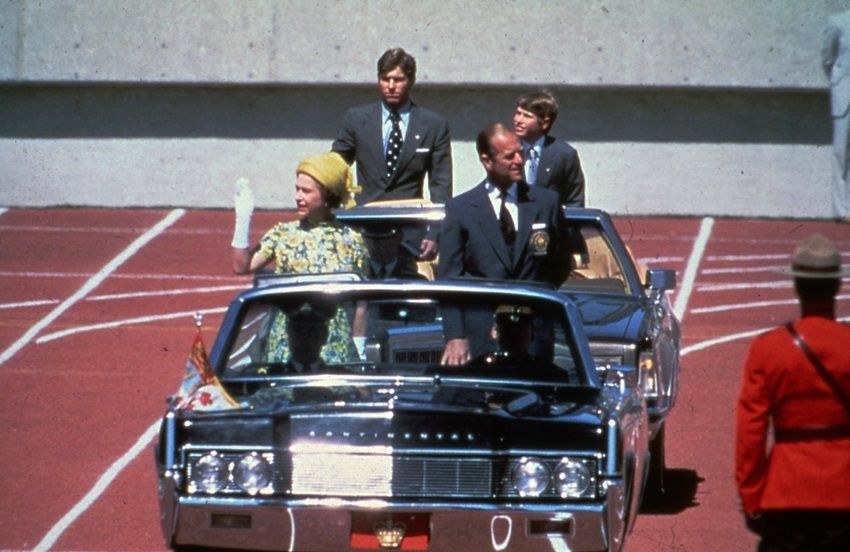
The Northlands Coliseum was constructed in 1974 as a replacement for the aging Edmonton Gardens, following the failure of referendums for a downtown arena. The project was a collaboration between the Edmonton Oilers' ownership group, including Charles Allard, and the Edmonton Exhibition Association, later known as Northlands, which had expressed concern that a private arena would damage its operations. The arena's design was based on the Pacific Coliseum in Vancouver, utilizing the same architectural plans, and a crane on a circular track was used to speed up construction. Construction faced significant delays in 1974 due to strikes by steelworkers, cement workers, and elevator workers, with the final batch of 5,000 seats arriving just before the inaugural event. That first event was the Edmonton Oilers' World Hockey Association home opener against the Cleveland Crusaders on November 10, 1974, which received positive reviews from visitors and sportswriters. An official grand opening ceremony was held on July 1, 1975, and the seating capacity was expanded from 15,432 for the 1979-80 NHL season to 17,498 for the start of the 1980-81 season to accommodate growing fan interest.
Renovations and financial agreements
By the early 1990s, the Coliseum had begun to lag behind newer NHL arenas in terms of amenities such as luxury boxes, coinciding with financial turmoil for the Oilers. Amid the threat of relocation after the loss of star players, owner Peter Pocklington demanded full control of the arena and its revenue, leading to a 1994 rent agreement with Northlands valued at $2.8 million per year. This deal allowed for a major renovation that added 52 luxury suites, reducing the game-day seating capacity to 17,100, and the agreement contained a clause requiring the Oilers to remain in Edmonton for 10 years. Another clause stated that if an owner announced an intent to relocate, the team must be offered to local investors for a fixed price of US$70 million within 30 days, a provision triggered by a proposed 1997 sale to Leslie Alexander. This triggered the formation of the Edmonton Investors Group to purchase the team, and a new 1998 operating deal saw Northlands regain control of the building with the Oilers paying $1 per year in rent. In exchange for the nominal rent, the Oilers received revenue from hockey games and designated parking spots, plus the right to sell naming rights, which led to the arena becoming Skyreach Centre in October 1998.
In 2003, the naming rights for the arena were acquired by the pharmacy chain Rexall, and it was renamed Rexall Place. The chain's then parent company, Katz Group, later purchased the Edmonton Oilers and the Edmonton Oil Kings. Before the 2007 08 season, the Oilers dressing room underwent a 3.5 million dollar renovation to widen the room and add new facilities. These changes were part of ongoing efforts to modernize the aging facility, which by 2015 was the second oldest and third smallest arena in the National Hockey League.
- 2003: Naming rights were acquired by the pharmacy chain Rexall, renaming the arena Rexall Place.
- 2007-08: The Oilers dressing room underwent a $3.5-million renovation, adding a medical room, lounge, bar, video room, and weight room.
- 2010: The Katz Group, then-parent of Rexall and new owner of the Oilers, proposed building a new downtown arena.
- 2012: An agreement was reached between the Katz Group and the City of Edmonton for the construction of Rogers Place.
- 2016: The naming rights agreement expired and the building's name reverted to Northlands Coliseum in the summer.
Arena specifications and technical features
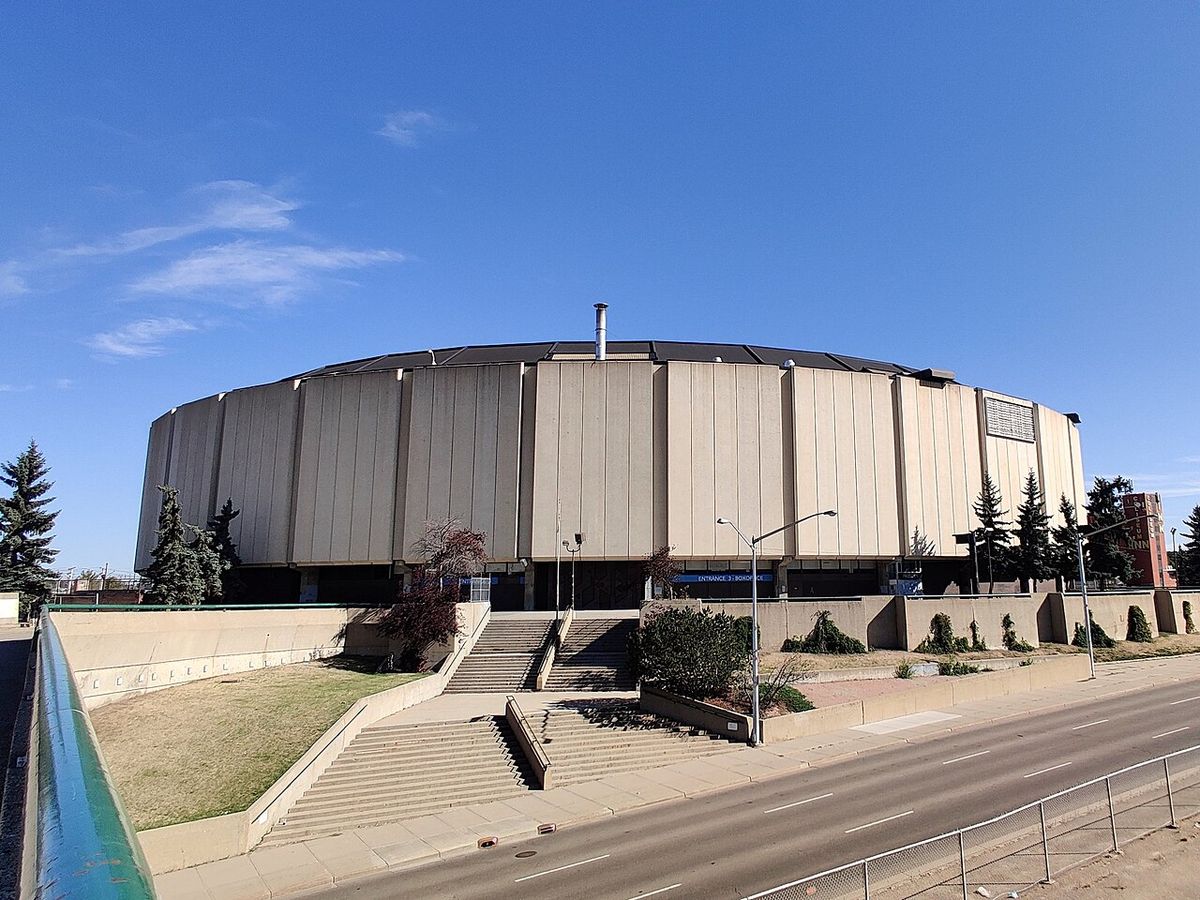
At the time of its closure, the official capacity for hockey at Northlands Coliseum was 16,839, which was slightly less than the 17,100 the arena held before the 2001-02 NHL season. When it opened, the capacity was 15,423, but it was increased to 17,490 after the Oilers joined the NHL by adding an extra tier of seating on the side opposite the press box. This was increased to 17,498 in 1982 and to 17,503 in 1986, before the 1994 renovation for 52 luxury suites reduced capacity, with 15 more suites added in 2001. The arena could be exceptionally noisy, with recorded noise levels reaching 119 decibels during playoff games, and it was the last NHL arena with the player benches on the same side as the television cameras. The Coliseum was the first NHL arena in Canada to have a centre-hung scoreboard with an electronic message board, beginning with an original black-and-white dot matrix board. This was replaced in 1987 by a centre-hung scoreboard with a colour matrix screen, which in 1994 was replaced with an eight-sided scoreboard with four video screens. The last centre-hung scoreboard, designed by White Way Sign, featured eight message boards at the top and four video screens at the bottom, separated by LED rings, and the arena also featured 360-degree fascia signage by Daktronics.
Major sporting events and concerts
Northlands Coliseum hosted a vast array of significant events beyond Edmonton Oilers games, establishing it as a key national venue for over forty years. It was a venue for international hockey tournaments, including the 1981 and 1984 Canada Cup, and the site of seven Stanley Cup Finals series, witnessing Oilers victories in 1984, 1985, 1987, 1988, and 1990. The building also hosted the 1978 Commonwealth Games gymnastics events, the 1989 NHL All-Star Game, the 1995 NHL Entry Draft, and the 1995 World Junior Hockey Championships, including Canada's 6-3 victory over Finland on New Year's Day. It was a regular stop for major concert tours, WWE broadcasts, curling championships, and other sporting events throughout its operational life, from the 1975 Skate Canada International to the 2017 Davis Cup tie between Canada and India.
Many bands recorded live performances at Northlands Coliseum. ABBA started their 1979 North American tour at the arena, and part of their tour documentary was recorded there. Yes filmed their 9012Live video at the arena in September 1984, and Nickelback filmed their 2002 concert video Live at Home there. Other artists who recorded at the venue include Rush, Our Lady Peace, and Metallica, who filmed part of their Through the Never movie there in 2012.
- 1979: ABBA opened their North American Tour on September 13 and part of their tour documentary was recorded here.
- 1981: Rush performed on June 25. Two songs from this concert were included on the 2012 reissue of their album 2112.
- 1984: Yes filmed their 9012Live video on September 28-29, released in 1985.
- 2002: Nickelback filmed their concert video Live at Home at the arena.
- 2012: Metallica filmed part of their Through the Never film during concerts on August 17 and 18.
- 2014: Demi Lovato's performance on October 4 was filmed for a DVD release.
- 2016: Sixx:A.M. filmed their live video for "We Will Not Go Quietly" during their September 17 show.
Oilers' final seasons and transition to Rogers Place
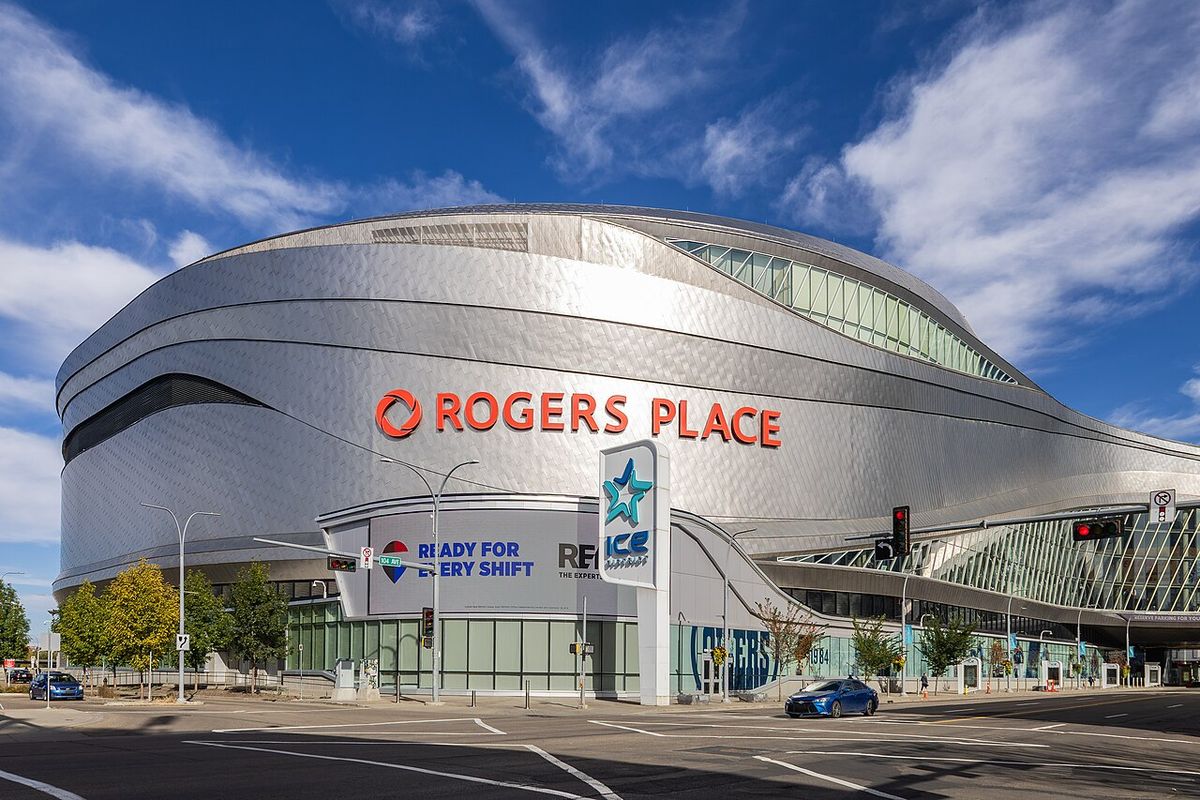
By the mid-2010s, the Coliseum was the second-oldest and third-smallest arena in the NHL, prompting the Katz Group's push for a modern replacement beginning in 2010. An agreement with the City of Edmonton was reached in January 2012 for the construction of Rogers Place in downtown Edmonton, with construction starting in March 2014 and the new arena opening in September 2016 with a seating capacity of 18,347. The Oilers played their final game at the Coliseum on April 6, 2016, defeating the Vancouver Canucks 6-2, with Oiler Leon Draisaitl scoring the last NHL goal in the building. A post-game ceremony was held featuring current and past Oilers players, and Northlands stated the old arena would remain open for other events, which it did. The last hockey game held at the Coliseum was in December 2017, when the AJHL's Okotoks Oilers defeated the Spruce Grove Saints 6-4, marking the end of the building's use for organized sport. As more major concerts and events were drawn to Rogers Place, Northlands experienced severe declines in revenue, making it difficult for the non-profit to pay off a city loan used for the 2009 expansion of the Edmonton Expo Centre.
Closure, failed redevelopment, and demolition process
On September 13, 2017, the City of Edmonton reached an agreement to take over the arena from Northlands effective January 1, 2018, the same date control of the Edmonton Expo Centre also transferred. The venue permanently ceased operations on New Year's Day 2018, and the Oilers Entertainment Group agreed to release the city from $17 million of a $20 million sponsorship agreement. Prior to the closure, Northlands had unveiled plans in February 2016 to convert the Coliseum into a multi-level ice facility, with a later proposal for a Hockey Canada Centre of Excellence, but these were scrapped as renovation proved more costly than new construction. The master agreement between Oilers Entertainment Group and the city prohibited the city from making any further investments in the building or allowing its use as a sports or entertainment facility, blocking all repurposing proposals. With the building empty and costing $1.5 million annually to upkeep, Edmonton City Council voted on December 12, 2022, to demolish it at a cost of $35 million over four years. In August 2025, it was announced that major demolition work would begin in summer 2026, with completion expected by 2028, following a lengthy deconstruction process due to hazardous materials like lead and asbestos.
The deconstruction of Northlands Coliseum is expected to take an extended period of time due to the presence of hazardous substances such as lead and asbestos. The process involves carefully removing these materials before the main demolition can proceed. Final demolition of the building is expected to begin in summer 2026. The entire project is budgeted to cost 35 million dollars over four years and is scheduled to be completed by 2028.
- Site Preparation: Completed as of spring 2026, including closure of pedestrian pathways and service roads.
- Hazardous Materials Abatement: Ongoing process to identify and remove lead and asbestos from the large structure.
- Selective Demolition: May be required to access hazardous materials not easily accessible.
- Major Deconstruction: Anticipated to begin after abatement is complete, starting summer 2026.
- Interim Site Redevelopment: Preparing the cleared site for future long-term development per the Edmonton Exhibition Lands Planning Framework.
The deconstruction of Northlands Coliseum is a distinct project. The planning for any future long term development on the Coliseum site is not part of the current deconstruction work. The deconstruction project will clear the site to prepare it for future development, as outlined in the Edmonton Exhibition Lands Planning Framework. The focus of the current work is on hazardous material removal and the physical takedown of the building structure.
Stanley Cup Finals and playoff history
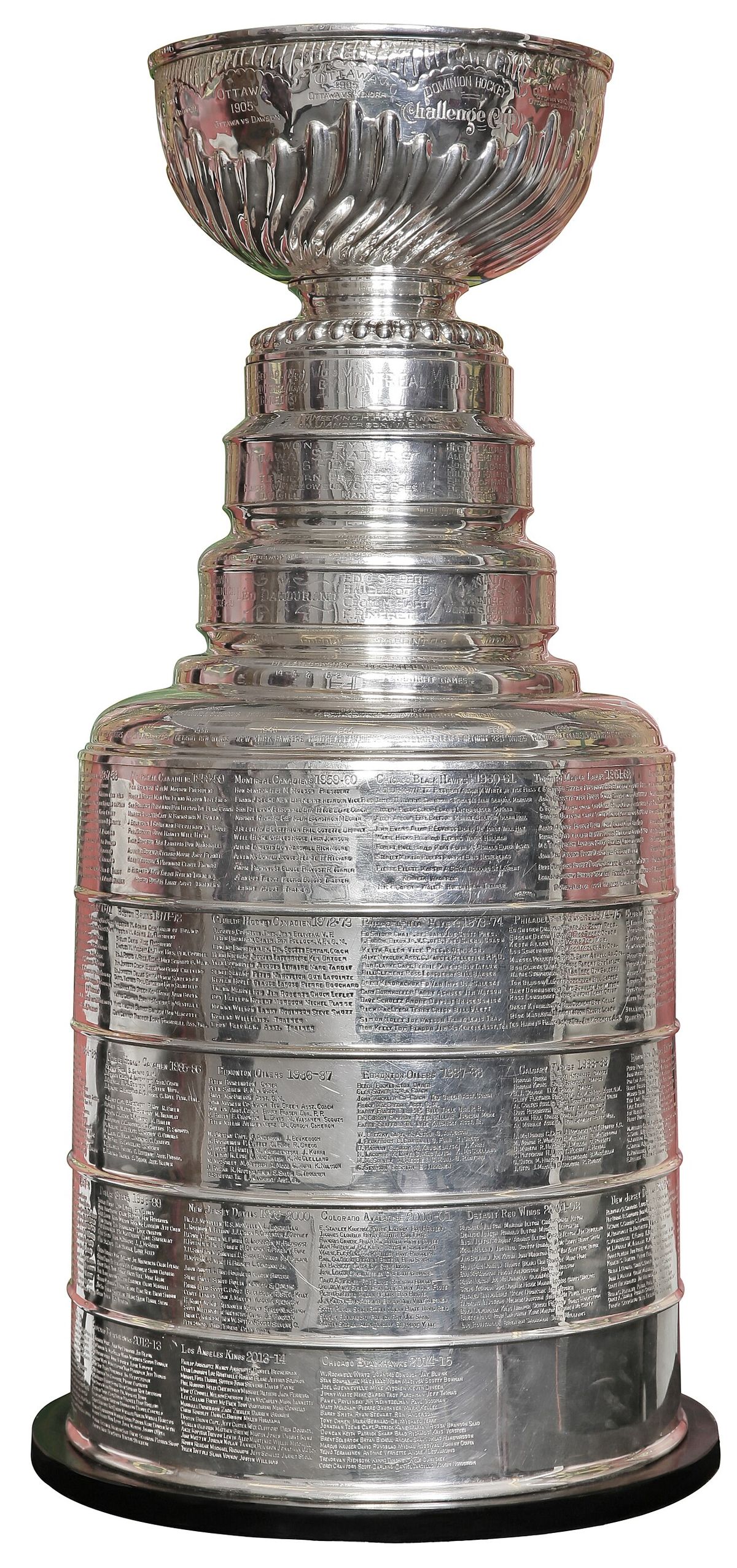
Northlands Coliseum hosted the Stanley Cup Finals seven times. The Edmonton Oilers lost the finals there in 1983 and 2006. The Oilers won the Stanley Cup on home ice at the Coliseum in 1984, 1985, 1987, and 1990. The arena also hosted Games 1, 2, and 5 of the 1988 Stanley Cup Final, which the Oilers won in Boston. These events were part of many major hockey tournaments held at the venue, including the 1981 and 1984 Canada Cup tournaments.
| Year | Opponent | Oilers Result | Games Hosted |
|---|---|---|---|
| 1983 | New York Islanders | Loss (0-4) | Games 1 & 2 |
| 1984 | New York Islanders | Win (4-1) | Games 3, 4, 5 |
| 1985 | Philadelphia Flyers | Win (4-1) | Games 3, 4, 5 |
| 1987 | Philadelphia Flyers | Win (4-3) | Games 1, 2, 5, 7 |
| 1988 | Boston Bruins | Win (4-0) | Games 1, 2, 5 |
| 1990 | Boston Bruins | Win (4-1) | Games 3 & 4 |
| 2006 | Carolina Hurricanes | Loss (3-4) | Games 3, 4, 6 |
Questions about Northlands Coliseum
What other names has the arena been known by?
The arena operated under several names due to naming rights agreements. It was originally Northlands Coliseum or Edmonton Coliseum. It became Skyreach Centre in October 1998 after a deal with Skyreach Equipment, and was renamed Rexall Place in November 2003 after the pharmacy chain Rexall. The name reverted to Northlands Coliseum in the summer of 2016 after the naming rights agreement expired.
When did Northlands Coliseum open and close?
Northlands Coliseum opened on November 10, 1974, for its inaugural event, an Edmonton Oilers WHA game against the Cleveland Crusaders. The arena permanently ceased operations and closed on New Year's Day, January 1, 2018, after ownership of the facility was transferred from Northlands to the City of Edmonton. The final National Hockey League game was played there earlier, on April 6, 2016, when the Oilers defeated the Vancouver Canucks. The building had been in use for over 43 years, hosting sports and concerts. Its closure was part of a transition after the Oilers moved to the new Rogers Place arena downtown.
Why is the Northlands Coliseum being demolished?
Northlands Coliseum is being demolished because renovating the old facility was determined to be more costly than building a new one. A master agreement between Oilers Entertainment Group and the City of Edmonton prohibited the city from making further investments in the building or allowing its use as a sports or entertainment facility. After its closure, the vacant building cost about 1.5 million dollars annually to maintain. With no feasible repurposing options, Edmonton City Council voted in December 2022 to demolish the arena at an estimated cost of 35 million dollars over four years.
How many Stanley Cup championships did the Oilers win at Northlands Coliseum?
The Edmonton Oilers won five Stanley Cup championships while based at Northlands Coliseum, with four of those championship series clinched on home ice. The arena hosted the clinching games for the 1984, 1985, 1987, 1988, and 1990 Stanley Cup Finals. In total, the building was the site for seven Stanley Cup Finals series, including Oilers losses in 1983 and 2006. These victories were central to the arena's legacy as a major hockey venue during the Oilers' dynasty years in the National Hockey League.
What was the seating capacity for hockey at Northlands Coliseum?
The seating capacity for hockey at Northlands Coliseum varied throughout its history. When it opened in 1974, the capacity was 15,423 seats. It was expanded to 17,490 after the Oilers joined the NHL, then to 17,498 in 1982. A major renovation in 1994 added luxury suites, reducing the game day seating capacity to 17,100. By the time the arena closed, the official capacity for hockey was 16,839, making it one of the smaller venues in the NHL. The capacity was increased early on by adding an extra tier of seating opposite the press box.
What will happen to the Northlands Coliseum site after demolition?
After demolition, the Northlands Coliseum site will be cleared and prepared for future long term development. The current deconstruction and site redevelopment project is focused on safely removing the building and hazardous materials like asbestos and lead. This work prepares the land to retain flexibility for future use, aligning with the broader Edmonton Exhibition Lands Planning Framework. The planning and construction for any specific future development on the site is a separate process not included in the current demolition project. The goal is to redevelop the interim site once the old arena is gone.
Sources and further reading
- Northlands Coliseum (Wikipedia)
- Coliseum Deconstruction and Site Redevelopment (edmonton.ca)
- Northlands Coliseum (prostockhockey.com)
Checked by the Garbutt Disposal desk. Last updated 2026-10-27.