National Basketball League of Canada
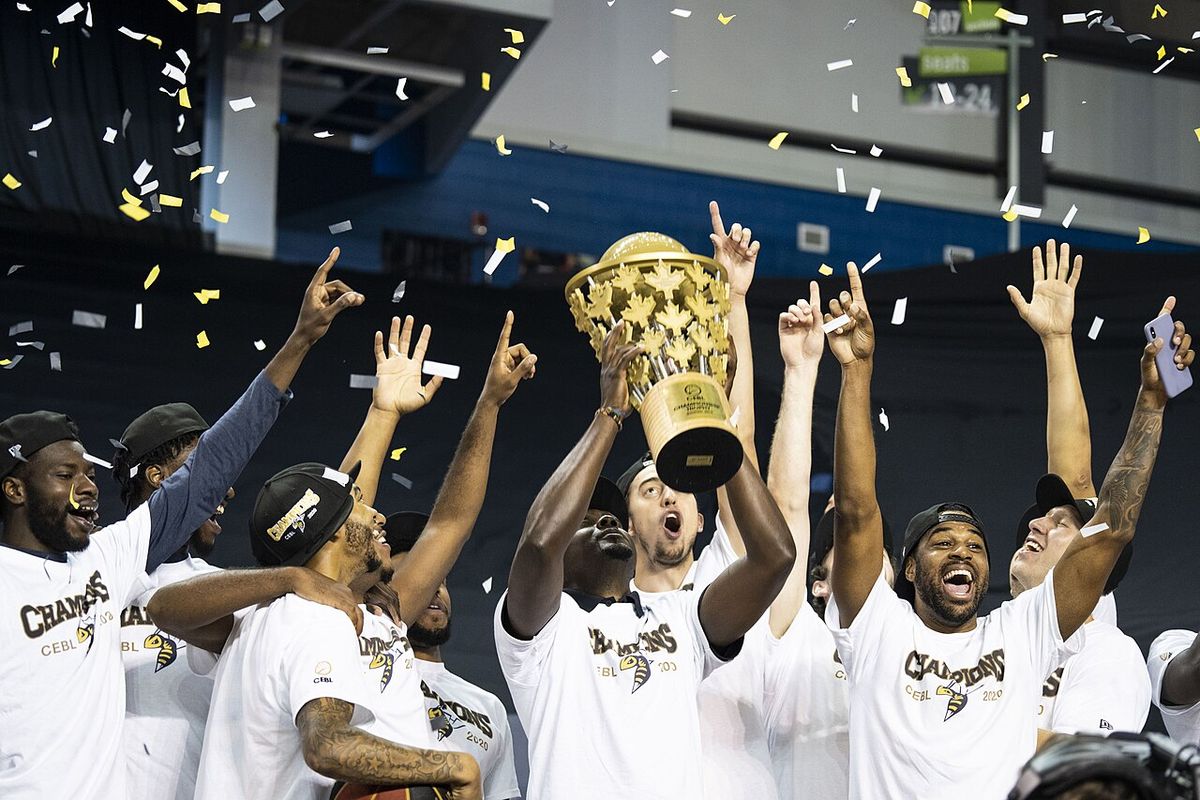
The National Basketball League of Canada (NBL Canada) was a Canadian professional men's minor league basketball organization that operated from 2011 to 2023. Founded with seven teams, the league served as a primary domestic professional basketball circuit, providing a platform for Canadian and international players. Its teams were primarily located in Ontario and the Atlantic provinces, with the season typically running from November to April. The league's final champions were the London Lightning, who won their sixth title in 2023 before the four remaining teams departed to help form the new Basketball Super League in 2024.
Establishment and inaugural season
The National Basketball League of Canada was conceived in mid-2011 as a domestic minor league alternative. Its foundation was built upon three franchises from the Premier Basketball League: the Halifax Rainmen, Quebec Kebs, and Saint John Mill Rats, who joined due to dissatisfaction with their former league's officiating. League CEO Andre Levingston announced the creation of the NBL Canada at a press conference in Halifax, Nova Scotia, on May 12, 2011. Four new franchises were subsequently established: the London Lightning, Moncton Miracles, Oshawa Power, and Summerside Storm, bringing the inaugural membership to seven teams. The league's first commissioner was John Kennedy, a Windsor native with executive experience from the NBA's Los Angeles Lakers and Clippers.
League rules for the first season were finalized in June 2011, mandating a 36-game regular season under FIBA rules with a seven-team, no-division format. Teams operated under a salary cap of $150,000 and were required to carry a minimum of two Canadian players on rosters of 10 to 12. The first NBL Canada draft was held at Rogers Centre on August 21, 2011, with the Oshawa Power selecting Morgan Lewis first overall. The first player signed was Canadian Yannick Anzuluni, who joined the Quebec Kebs on a three-year contract on August 17. The inaugural game was played on October 29, 2011, with the Kebs defeating the Moncton Miracles at the Colisée de Laval.
The 2011-12 season saw the London Lightning, coached by Micheal Ray Richardson, dominate the league with a 28-8 regular season record. They defeated the Halifax Rainmen 3-2 in a best-of-five final series to claim the first championship, drawing a league-high crowd of 5,106 to the John Labatt Centre for the clinching game. The season was considered a success, with analyst Alex Walling praising the league's credibility. Following the season, the league held its first All-Star Game at the Halifax Metro Centre in April 2012. The league also attracted several players with NBA experience during the 2011 NBA lockout, including Eddie Robinson and Rodney Buford, which helped raise its initial profile.

Expansion and structural changes
The league's second season in 2012-13 saw significant franchise turnover and the introduction of a divisional structure. The Quebec Kebs folded and were replaced by the Montreal Jazz, while the Windsor Express joined as an expansion team, playing out of the WFCU Centre. The eight teams were split into an Atlantic Division and a Central Division. The league expanded to nine teams for the 2013-14 season with the additions of the Brampton A's and Ottawa Skyhawks, though the Montreal Jazz folded. Two teams relocated: the Oshawa Power moved to Mississauga, and the Summerside Storm moved to Charlottetown, becoming the Island Storm. The Ottawa Skyhawks were removed after one season for failing to meet league standards and repay a loan, reducing the league back to eight teams.
A major milestone was achieved prior to the 2014-15 season when the NBL Canada secured its first national broadcast deal with beIN Sports. The agreement, which ran through the 2016-17 season, included the weekly broadcast of two regular season games plus playoff and All-Star Weekend coverage. The 2014-15 season ended in controversy when the Halifax Rainmen forfeited the seventh game of the championship series against the Windsor Express, citing player safety concerns after a physical altercation earlier that day. The Express were declared champions, the Rainmen were fined, and the franchise subsequently filed for bankruptcy and folded. It was replaced the following season by the Halifax Hurricanes, who won the championship in their inaugural 2015-16 campaign.
The league reached its peak size of ten teams in the 2016-17 season with the addition of the Cape Breton Highlanders and the KW Titans. Further changes followed in the 2017-18 season as the Moncton Miracles and Brampton A's folded, replaced by the Moncton Magic and the St. John's Edge. The London Lightning won championships in both the 2016-17 and 2017-18 seasons, securing four of the league's first seven titles. The Sudbury Five joined for the 2018-19 season, marking the league's expansion into Northern Ontario, while the Niagara River Lions departed to help found the rival Canadian Elite Basketball League.
Contraction and final seasons
The league began to contract significantly before the 2019-20 season, folding the Cape Breton Highlanders and Saint John Riptide as their owners attempted to sell, reducing the league to eight teams. The 2019-20 season was suspended on March 12, 2020, due to the COVID-19 pandemic and was later cancelled entirely. On March 4, 2021, the NBL Canada announced there would be no 2020-21 season. During this hiatus, the Halifax Hurricanes and Moncton Magic withdrew from the league, and the St. John's Edge were unable to secure a new arena lease. The Island Storm then withdrew as the sole remaining Maritime team ready for the 2021-22 season, leaving the league with only its four Ontario-based franchises: the KW Titans, London Lightning, Sudbury Five, and Windsor Express.
To fill its schedule for the 2021-22 and 2022-23 seasons, the NBL Canada arranged inter-league play with the American-based The Basketball League (TBL). This league was run by former NBL Canada commissioner David Magley and his wife Evelyn. The London Lightning won the league's final championship in 2023. They defeated the Windsor Express 3-2 in the NBL Finals. Following the conclusion of the 2022-23 season, the four remaining NBL Canada teams broke away from the league. Along with teams from the TBL, they helped found the new Basketball Super League in 2024. This effectively marked the end of the NBL Canada's operations after 12 seasons.
Franchise history and timeline
Over its 12-season history, the NBL Canada featured a total of 21 different franchises. Many of these franchises underwent relocations, rebranding, or folding. The league's geographic footprint was initially strongest in the Atlantic provinces and Ontario. It gradually contracted to Ontario alone in its final years. The following list details the major franchises and their fates.
- London Lightning (2011 to 2023): The league's most successful team with six championships. Joined the Basketball Super League (BSL) in 2024.
- Windsor Express (2012 to 2023): Won two championships. Joined the BSL in 2024.
- Halifax Rainmen (2011 to 2015): Reached two finals. Filed for bankruptcy in July 2015 and was replaced by the Halifax Hurricanes.
- Halifax Hurricanes (2015 to 2021): Won the 2016 championship. Withdrew from the league in October 2021.
- Saint John Mill Rats/Riptide (2011 to 2019): Founded as the Mill Rats, rebranded as the Riptide for 2016-17. Granted a hiatus for 2019-20 and did not return.
- Quebec Kebs (2011 to 2012): Relocated to Laval after one season and folded before the 2012-13 season.
- Moncton Miracles (2011 to 2017): Ceased operations after the 2016-17 season and was replaced by the Moncton Magic.
- Moncton Magic (2017 to 2021): Withdrew from the league in August 2021.
- Summerside Storm/Island Storm (2011 to 2020): Moved to Charlottetown for the 2013-14 season as the Island Storm. Last played in the 2019-20 season.
- St. John's Edge (2017 to 2020): Last played in the 2019-20 season and officially left the league following the 2022 season.
- Oshawa Power/Mississauga Power (2011 to 2015): Moved to Mississauga for the 2013-14 season. Folded in 2015 to make way for the NBA G League's Raptors 905.
- Niagara River Lions (2015 to 2018): Left the NBL Canada after the 2018 season to join the Canadian Elite Basketball League.
- Sudbury Five (2018 to 2023): Joined the BSL in 2024.
- KW Titans (2016 to 2023): Joined the BSL in 2024.
The league also had several short-lived franchises. These included the Montreal Jazz, which played the 2012-13 season. The Brampton A's moved to Orangeville as the Orangeville A's and folded after the 2016-17 season. The Ottawa Skyhawks were removed after the 2013-14 season. The Cape Breton Highlanders were granted a one-season hiatus for 2019-20 and then folded. The constant franchise turnover, particularly in the Maritimes, reflected the financial challenges of operating a minor league basketball circuit in Canada.
Championships and awards
The London Lightning were the dominant force in NBL Canada history, winning six of the league's twelve championships. The Windsor Express won two titles, while the Halifax Hurricanes, and the now-defunct Oshawa Power and Brampton A's each won one. The Halifax Rainmen and the Island Storm both appeared in two league finals but failed to win a championship. The Sudbury Five, active until the league's end, were the only final active team to have never reached the finals. The league awarded a Finals Most Valuable Player to the top performer in the championship series.
The NBL Canada presented eight major annual awards to recognize regular season excellence. The list of awards included Most Valuable Player, Canadian of the Year, Defensive Player of the Year, Rookie of the Year, Newcomer of the Year, Sixth Man of the Year, Coach of the Year, and Executive of the Year. Following the 2015-16 season, the league also introduced Commissioner's Awards, first handed out by Dave Magley, to recognize ownership groups, teams, and referees who supported the league. The league held an All-Star Weekend annually from 2012 to 2014. The 2012 game featured a fantasy draft format, while subsequent games pitted stars from the Central Division against those from the Atlantic Division, with a requirement for at least three Canadian players on each roster. The event was discontinued after the 2014 game.
League leadership and legacy
The commissioner of the NBL Canada served as the league's chief executive, elected by the board of directors and team representatives. John Kennedy was the inaugural commissioner, bringing NBA front-office experience to the role. He was succeeded by David Magley, a former commissioner of The Basketball League. Following Magley's resignation in 2017, Audley Stephenson acted as deputy commissioner for the remainder of the league's operation. The league's founding president and CEO was Andre Levingston, who was instrumental in its creation and early vision of providing a stable professional environment for players to compete close to home.
The NBL Canada's legacy is as Canada's longest-running professional basketball league of its era, operating for 12 seasons from 2011 to 2023. It provided a crucial developmental platform for Canadian basketball talent, mandating roster spots for domestic players and giving them a professional stage. The league also offered a professional outlet for numerous international players and those with NBA experience. Its eventual contraction and the departure of its final teams to form the Basketball Super League signified a transition in Canadian minor league basketball. The league's history of broadcast deals, All-Star events, and championship competitions contributed to the growth of the sport's professional profile in Canada.
Season-by-season results
The following table outlines the champions and runners-up for each completed season of the National Basketball League of Canada. The league did not crown a champion for the cancelled 2019-20 season and did not operate a 2020-21 season. The 2014-15 finals ended with a forfeit by the Halifax Rainmen, leading to the Windsor Express being declared champions. The league's format shifted in its final seasons, with the 2023 finals being a best-of-five series while earlier championships were best-of-seven.
| Season | Champion | Runner-up | Finals series |
|---|---|---|---|
| 2011-12 | London Lightning | Halifax Rainmen | 3-2 |
| 2012-13 | London Lightning | Summerside Storm | 3-1 |
| 2013-14 | Windsor Express | Island Storm | 4-3 |
| 2014-15 | Windsor Express | Halifax Rainmen* | 4-3 (forfeit) |
| 2015-16 | Halifax Hurricanes | London Lightning | 4-3 |
| 2016-17 | London Lightning | Halifax Hurricanes | 4-2 |
| 2017-18 | London Lightning | Halifax Hurricanes | 4-2 |
| 2018-19 | Moncton Magic | St. John's Edge | 4-2 |
| 2021-22 | London Lightning | KW Titans | 4-1 |
| 2022-23 | London Lightning | Windsor Express | 3-2 |
Questions about National Basketball League of Canada
When did the National Basketball League of Canada start and end?
The National Basketball League of Canada was founded in 2011, with its inaugural season taking place from 2011 to 2012. The league operated for 12 seasons, concluding its operations after the 2022-23 season. The final championship was won by the London Lightning in 2023. Following that season, the four remaining teams left to help establish the Basketball Super League in 2024, marking the end of the NBL Canada.
Which team won the most NBL Canada championships?
The London Lightning were the most successful franchise in NBL Canada history, winning a total of six championships. Their titles came in the 2011-12, 2012-13, 2016-17, 2017-18, 2021-22, and 2022-23 seasons. The Windsor Express are second with two championships, won in 2014 and 2015. The Halifax Hurricanes, Moncton Magic, and the now-defunct Oshawa Power and Brampton A's each won one title.
Why did the NBL Canada cease operations?
The NBL Canada ceased operations after a period of significant contraction, largely accelerated by the COVID-19 pandemic. The league cancelled its 2019-20 season and did not operate in 2020-21. During this hiatus, multiple Maritime teams withdrew, leaving only four Ontario-based teams for the 2021-22 and 2022-23 seasons. Following the 2023 finals, those four remaining teams, the KW Titans, London Lightning, Sudbury Five, and Windsor Express, broke away from the NBL Canada to merge with teams from The Basketball League and form the new Basketball Super League.
Did the NBL Canada have a television broadcast deal?
Yes, the NBL Canada secured its first national broadcast deal with beIN Sports prior to the 2014-15 season. The agreement lasted through the 2016-17 season and included the weekly broadcast of two regular season games. The deal also provided coverage for playoff games and special events like the All-Star Weekend. This partnership was a significant step in increasing the league's national profile during its peak years.
What happened to the Halifax Rainmen?
The Halifax Rainmen were a founding NBL Canada team that reached the finals in the league's first two seasons. Their tenure ended in controversy in July 2015 when they forfeited Game 7 of the championship series against the Windsor Express, citing player safety concerns after an altercation. The league fined the team and its players, and the Rainmen organization subsequently filed for bankruptcy and folded. A new franchise, the Halifax Hurricanes, was announced in September 2015 to replace them in the league.
What was the NBL Canada's relationship with Canadian player development?
The NBL Canada had a direct role in Canadian player development through its roster rules, which required each team to carry a minimum of two Canadian players. The league provided a professional platform for domestic talent to compete at home, and it created awards like 'Canadian of the Year' to recognize excellence. Many players used the league as a springboard to international careers. The league's structure and visibility contributed to the growth of professional basketball infrastructure in Canada.
Sources and further reading
- National Basketball League of Canada (Wikipedia)
- Canada Basketball (basketball.ca)
Checked by the Garbutt Disposal desk. Last updated 2026-10-28.