Montreal Wanderers
The Montreal Wanderers were a professional ice hockey team based in Montreal, Quebec, active from 1903 to 1918. The club was a foundational member of several early professional leagues, including the National Hockey Association (NHA) and the National Hockey League (NHL). The Wanderers won the Stanley Cup four times, establishing themselves as one of the most successful and influential teams of the sport's formative era. Their history is deeply intertwined with the development of professional hockey in Canada and the intense early rivalries that shaped the game.
Formation and early years
The Montreal Wanderers were officially formed on December 3, 1903, following an announcement by James Strachan two days prior. The club's founding stemmed from a dispute over control of the existing Montreal Hockey Club, leading a group of members to break away and establish a new team. At their initial meeting, the club selected red and white as its colours and appointed its first officers, with George Hodge as honorary president and James Strachan as president. Many of the original Wanderers players had been members of the 1902-03 Montreal Hockey Club team, which had recently won the Stanley Cup, and they carried the nickname 'Little Men of Iron' over to the new squad due to their tenacious playing style and small stature. The team initially practiced at the Victoria Skating Rink before moving their home games to the Montreal Arena, and they quickly helped found the Federal Amateur Hockey League (FAHL) on December 5, 1903, alongside other teams rejected by the established Canadian Amateur Hockey League.
The Wanderers' first major test came swiftly with a Stanley Cup challenge against the Ottawa Hockey Club on March 2, 1904, which ended in a 5-5 tie. The Wanderers refused to continue the series unless the tie was replayed in Montreal, resulting in a forfeit, but this game ignited a fierce rivalry that would dominate the era. For nearly a decade, the Stanley Cup was held almost exclusively by either Montreal or Ottawa, with only a brief interruption. The Wanderers captured their first Stanley Cup in 1906 after winning a two-game, total-goals series against Ottawa for the Eastern Canada Amateur Hockey Association (ECAHA) championship. They successfully defended the Cup later that year against the New Glasgow Cubs, winning a lopsided series 17-5 on aggregate.
Stanley Cup dynasty
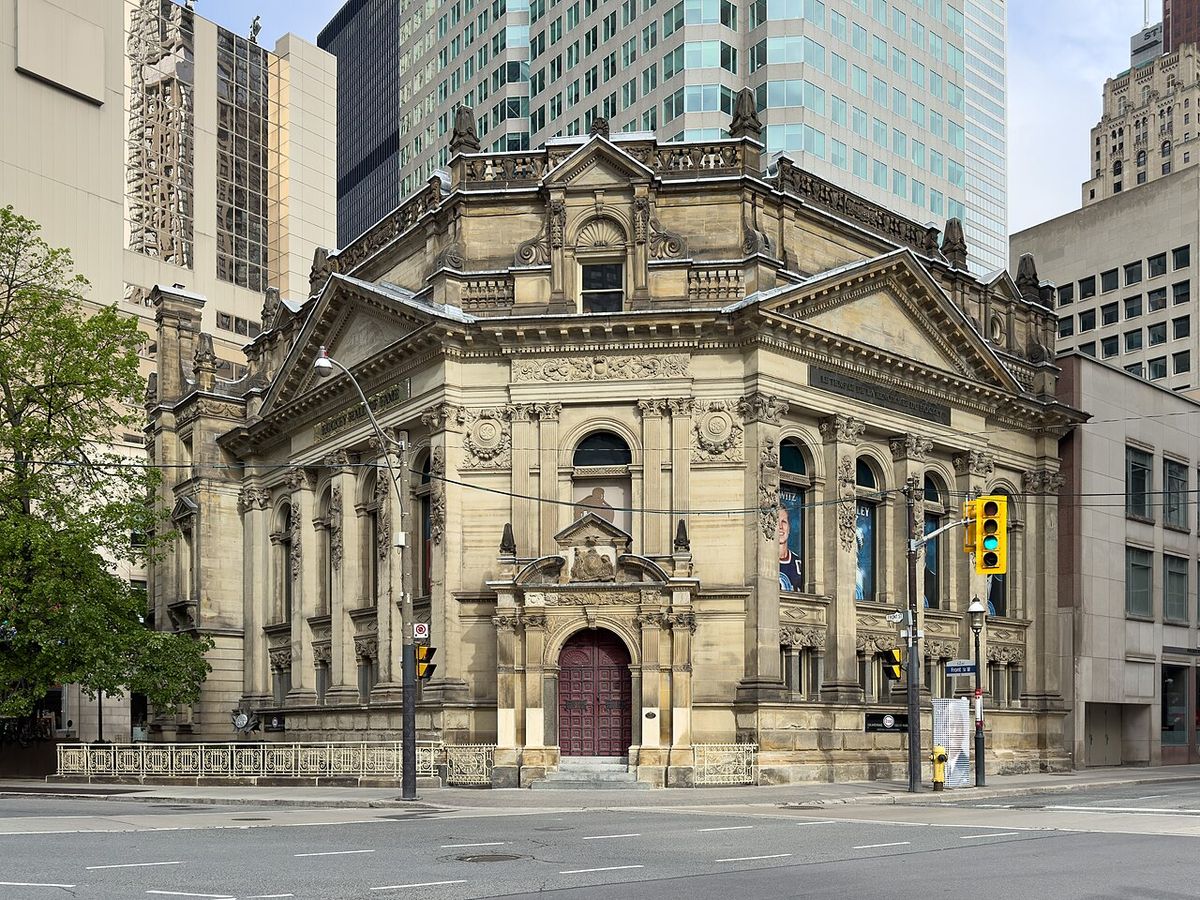
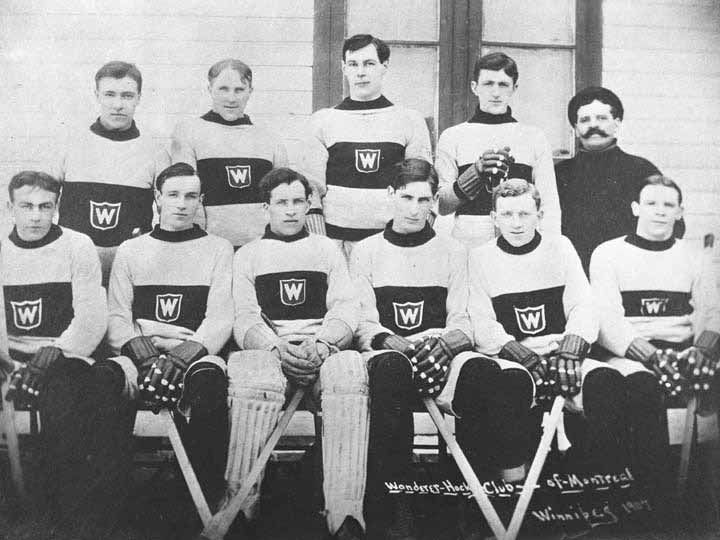
The period from 1906 to 1910 marked the zenith of the Montreal Wanderers' power, as they established themselves as a true hockey dynasty. After winning their first Cup in 1906, they repeated as ECAHA league champions in 1907 but lost the Stanley Cup in a January challenge to the Kenora Thistles. The Wanderers demonstrated their resilience by reclaiming the trophy from Kenora just two months later in Winnipeg. The 1907-08 season was particularly dominant, as the team won its third consecutive ECAHA title and successfully defended the Stanley Cup three times against challengers from Ottawa, Winnipeg, and Toronto. For their third straight league championship, the Wanderers were awarded the Arena Cup trophy permanently, an artifact now displayed in the Hockey Hall of Fame in Toronto.
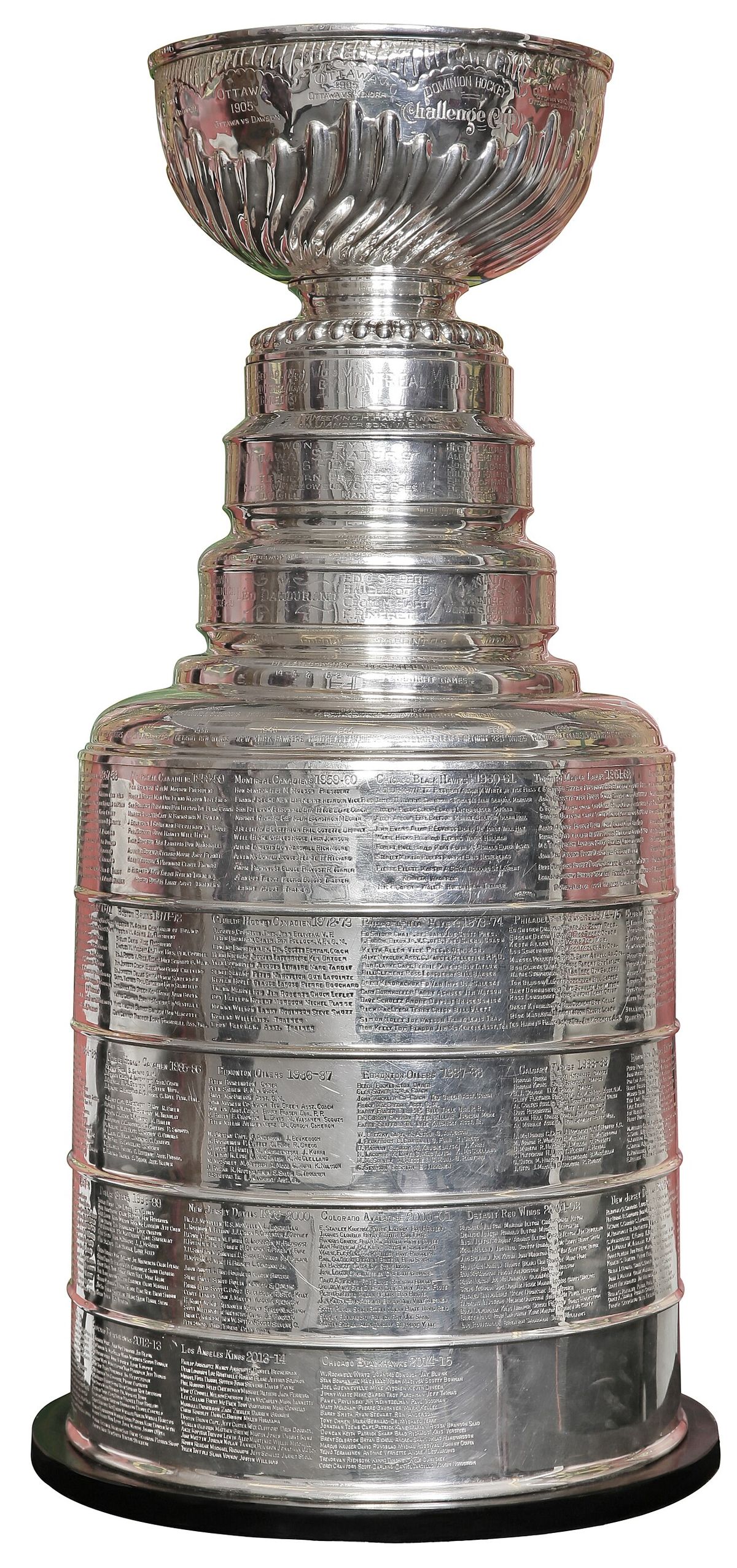
The 1907-08 Wanderers squad was exceptionally talented, featuring five future Hockey Hall of Fame members: Moose Johnson, Hod Stuart, Riley Hern, Lester Patrick, and Ernie Russell. This legendary team famously scratched their names inside the Stanley Cup bowl just before a second band was added to the trophy. The Wanderers began the 1909 season by defending the Cup once more, defeating the Edmonton Hockey Club, but they eventually lost the trophy after finishing second in the league to Ottawa. Throughout their first seven years, the Wanderers won or defended the Stanley Cup ten times, losing only two direct challenges during that prolific period of early hockey history.
The National Hockey Association era
The Wanderers played a central role in the formation of the National Hockey Association (NHA), a direct precursor to the NHL. In late 1909, after plans to move the team to the smaller Jubilee Rink upset other members of the Eastern Canada Hockey Association, the Wanderers found themselves excluded from the new Canadian Hockey Association. Wanderers representative Jimmy Gardner then conspired with Ambrose O'Brien, whose Renfrew team had also been rejected, to form a new league. On December 4, 1909, the NHA was founded with the Wanderers, Renfrew, Cobalt, and Haileybury as charter members. The club's ownership changed hands during this period, eventually being bought by Sam Lichtenhein, president of the Montreal Royals baseball team, who incorporated the team and sold public shares.
The Wanderers immediately found success in the new league, winning the inaugural NHA championship and the O'Brien Cup in 1910, which also secured their fourth and final Stanley Cup. They successfully defended it that March against the Berlin Dutchmen. However, the team's fortunes declined sharply afterwards. They fell to fourth place the following season and then missed the playoffs for four consecutive years. Their last competitive season came in 1914-15 when they tied for first place but lost the championship playoff series. The Wanderers managed only 15 wins in their final 44 NHA games over two seasons before the league was restructured into the National Hockey League in 1917.
Final season and demise
The Montreal Wanderers' tenure in the National Hockey League was brief and disastrous. As a charter member of the NHL for its inaugural 1917-18 season, the team was already weakened by the loss of star players Sprague Cleghorn and Odie Cleghorn. They started the season with three straight losses before securing a single victory. In a desperate attempt to improve, the team successfully acquired goaltender Hap Holmes from the Seattle Metropolitans of the Pacific Coast Hockey Association. This move offered a glimmer of hope for a turnaround, but fate intervened catastrophically on January 2, 1918, when the Wanderers' home rink, the Montreal Arena, burned down, destroying the team's equipment and venue.
In the aftermath of the fire, the Wanderers appealed to other NHL teams for player reinforcements to continue operations, but no help was forthcoming. Unable to proceed, the team defaulted its next two scheduled games against the Montreal Canadiens and the Toronto team and was formally disbanded shortly thereafter. The last active NHL player from the Wanderers roster was George Geran, who played his final game in 1926, while teammates Dave Ritchie and Phil Stevens also played part of that season. The team's demise left a void for Montreal's English-speaking hockey fans, which was later filled by the Montreal Maroons, a team originally intended to use the Wanderers name but unable to secure the rights.
Team identity and legacy
The most notable of these was a club that participated in the Montreal Winter Carnival tournament of 1884, with other independent teams forming in 1893, 1895, and 1897. Throughout their existence, the Wanderers were closely associated with Montreal's English-speaking community, especially after the founding of the French-Canadian Montreal Canadiens created a natural demographic divide in the city's sports fandom. This cultural alignment was a defining characteristic of the club and influenced the later creation of the Montreal Maroons. The legacy of the Wanderers is significant in the history of Canadian sport. They were one of the most successful teams of hockey's early professional era, capturing four Stanley Cups and influencing league structures. The team was instrumental in the founding of the NHA, which directly led to the creation of the NHL. Several of its players and personnel, including coach Art Ross, became major figures in the sport. The Wanderers' intense rivalry with the Ottawa Hockey Club was a central feature of professional hockey and attracted great interest from Canadian audiences in the first decades of the twentieth century.
Season-by-season record
The Montreal Wanderers played in the Federal Amateur Hockey League (FAHL), the Eastern Canada Amateur Hockey Association (ECAHA), the National Hockey Association (NHA) and briefly the National Hockey League (NHL). The team transitioned from amateur to professional play during its existence. The Wanderers were four-time Stanley Cup winners and were one of the most successful teams in ice hockey prior to the formation of the NHL. Their final seasons were in the NHA and a sole, abbreviated season in the NHL.
The Wanderers missed the playoffs for four consecutive seasons in the NHA after 1910. Their last winning season in the NHA was in 1914-15, when they tied for first place but lost in a playoff series. The Wanderers would win only 15 of their next 44 games in two seasons before the NHA was reorganized as the NHL. In the NHL's inaugural season, they played only four games, losing all but one, before their home rink burned down.
Coaching and management
The Wanderers were led by several notable figures behind the bench and in the front office throughout their history. Jimmy Gardner, the team representative who helped found the NHA, coached the squad during the 1910-11 season. For their final, ill-fated NHL season, the Wanderers were coached by Art Ross, who would later become a major figure in the sport and have the NHL's annual defenceman scoring trophy named in his honour. In terms of ownership and management, the club underwent significant changes. The team was initially run by its founding officers, including President James Strachan. It was later sold to P.J. Doran, owner of the Jubilee Rink, in 1909. After the formation of the NHA, the club was purchased and incorporated by Eddie McCafferty, with the majority of shares ultimately bought by Sam Lichtenhein. Lichtenhein, who owned the Montreal Royals baseball team, became the corporation's president and was the principal owner during the team's final seasons. His leadership oversaw the club's last Stanley Cup win in 1910 but also its subsequent decline and eventual dissolution.
Key Stanley Cup challenges and defences
The Wanderers' first Stanley Cup challenge was against the Ottawa Hockey Club on March 2, 1904. They won their first Stanley Cup in 1906 by defeating Ottawa in a two-game, total-goals series. The Wanderers defended the Stanley Cup in December 1906 against the New Glasgow Cubs. They lost the Cup to the Kenora Thistles in January 1907 but regained it from Kenora two months later in Winnipeg.
- March 2, 1904: First challenge ends in a 5-5 tie versus Ottawa. Wanderers forfeit the series.
- March 1906: Defeat Ottawa in a two-game, total-goals series (9-1, 3-9) to win first Stanley Cup.
- December 1906: Defend the Cup against the New Glasgow Cubs, winning 17-5 on aggregate.
- January 1907: Lose the Stanley Cup to the Kenora Thistles (2-4, 6-8).
- March 1907: Regain the Cup from Kenora Thistles in Winnipeg (7-2, 5-6).
- January 1908: Defend the Cup in a mid-season challenge against the Ottawa Victorias.
- March 1908: Successfully defend against the Winnipeg Maple Leafs and Toronto Professionals.
- March 1910: Final successful defence against the Berlin Dutchmen.
From 1903 until 1911, the Wanderers and Ottawa split the championship between them. This period marked eight consecutive years where either Montreal or Ottawa held the Stanley Cup. The Kenora Thistles held the Cup for 61 days in 1907, from January 23 through March 25. The Wanderers won or defended the Cup 10 times in their first seven years of existence.
Honoured players and records
The 1907-08 Wanderers team included five future honoured members of the Hockey Hall of Fame. These players were Moose Johnson, Hod Stuart, Riley Hern, Lester Patrick, and Ernie Russell. These players were central to the club's Stanley Cup successes. Their names were scratched inside the bowl of the Stanley Cup just prior to the second band being added.
- Moose Johnson: A dominant defenceman known for his size and skill, Johnson played for the Wanderers during their 1907 and 1908 Stanley Cup victories.
- Hod Stuart: A legendary cover-point (defenceman), Stuart was a key member of the 1907-08 championship team before his tragic death in the summer of 1907.
- Lester Patrick: A versatile player who served as a rover and defenceman, Patrick was part of the 1907-08 Cup-winning team and later became a famed coach and executive.
- Ernie Russell: A prolific goal-scoring forward, Russell was a central part of the Wanderers' offence during their dynasty years.
- Riley Hern: An outstanding goaltender, Hern backstopped the Wanderers to multiple championships and was renowned for his consistency.
- Sprague Cleghorn: A star defenceman who played for the Wanderers before departing prior to their final NHL season.
- Odie Cleghorn: A forward and brother of Sprague, also a key player lost before the 1917-18 season.
The last active Wanderers player was George Geran, who played his last NHL game in 1926. Dave Ritchie and Phil Stevens also played in the NHL during the 1926 season. The Wanderers were four-time Stanley Cup winners. Their record of four Stanley Cup championships places them among the most successful clubs of the pre-NHL and early professional era.
Questions about Montreal Wanderers
When were the Montreal Wanderers founded and when did they fold?
The Montreal Wanderers were officially founded on December 3, 1903. The team competed for fifteen seasons before folding in January 1918 during the NHL's inaugural season. Their demise was triggered by the fire that destroyed their home arena, the Montreal Arena, on January 2, 1918. After the fire, the team was unable to secure player reinforcements from other clubs and defaulted its next two games, leading to its disbandment.
How many Stanley Cups did the Montreal Wanderers win?
The Montreal Wanderers won the Stanley Cup four times. Their victories came in 1906, 1907, 1908, and 1910. The team was a dominant force in early professional hockey, particularly from 1906 to 1910, winning or defending the Cup ten times in that seven-year span. Their 1908 championship team, which included five future Hall of Famers, famously scratched their names inside the Cup's bowl.
Why did the Montreal Wanderers disband?
The immediate cause of the Wanderers' disbandment was the fire that destroyed the Montreal Arena on January 2, 1918. The team was already struggling on the ice and had lost key players. After the fire, which destroyed their equipment and venue, the club appealed to other NHL teams for help to continue but received no reinforcements. Unable to field a competitive team or secure a suitable home rink, they defaulted their scheduled games and ceased operations.
What was the Wanderers' rivalry with Ottawa like?
The rivalry between the Montreal Wanderers and the Ottawa Hockey Club (often called the Silver Seven or Senators) was one of the earliest and most intense in hockey history. It began with a Stanley Cup challenge in March 1904. For nearly eight years, from 1904 to 1912, the Stanley Cup was held almost exclusively by one of these two teams, with only a brief 61-day interruption by the Kenora Thistles in 1907. Their battles for league championships and the Cup were central narratives in the sport's growth during that era.
Did the Montreal Wanderers help start the NHL?
Yes, the Montreal Wanderers were a charter member of the National Hockey League when it was formed in 1917. The Wanderers were involved in the formation of the National Hockey Association (NHA) in 1909. After the Wanderers were rejected from joining the Canadian Hockey Association, their representative Jimmy Gardner met with Ambrose O'Brien. Together, they founded the NHA, which was the direct predecessor league that later reorganized into the NHL.
What happened to the Wanderers' fan base after the team folded?
After the team folded, the fan base was left without a flagship hockey club. The Wanderers had drawn their support from Montreal's English-speaking community, especially after the founding of the French-speaking Montreal Canadiens. A new team, the Montreal Maroons, was later established to take the Wanderers' place. The Maroons' owners originally intended to use the name Wanderers but were unable to obtain the rights to it. The Maroons continued to represent the English-speaking demographic until they suspended operations in 1938.
Sources and further reading
- Montreal Wanderers (Wikipedia)
- Montreal Wanderers Historical Statistics and All-Time ... (hockey-reference.com)
Checked by the Garbutt Disposal desk. Last updated 2026-10-29.