Yukon Quest
The Yukon Quest, formally the Yukon Quest 1,000-mile International Sled Dog Race, is an annual long-distance sled dog race established in 1984 and widely regarded as one of the world's most challenging endurance events. The race traditionally covered approximately 1,600 kilometres between Fairbanks, Alaska, and Whitehorse, Yukon, tracing historic Klondike Gold Rush mail and transportation routes. It holds a distinct position as a major Canadian sporting event that tests the limits of human and canine athletes against the subarctic winter. Organizational and environmental pressures have recently transformed the race, leading to separate competitions in Alaska and Yukon and casting uncertainty on its classic format.
Origins and founding philosophy
The Yukon Quest was conceived in April 1983 during a bar-room discussion among four Alaskans: LeRoy Shank, Roger Williams, Ron Rosser, and William 'Willy' Lipps. Their goal was to create a thousand-mile sled dog race from Fairbanks, Alaska, to Whitehorse, Yukon, to commemorate the Klondike Gold Rush-era routes. The founders explicitly rejected the model of the Iditarod Trail Sled Dog Race, which they saw as having too many checkpoints and support stages. They envisioned an endurance contest where survival skills and self-reliance were as critical as speed, a race so rugged it would attract only purists. LeRoy Shank stated at the race's 25th anniversary that they wanted more of a bush experience and aimed to put a little woodsmanship into it.
Organizational meetings began in August 1983, and the start date was moved forward from February 1985 to February 25, 1984. The entry fee for the first race was set at 500 dollars, and Murray Clayton of Haines, Alaska, became the first person to enter in October 1983. The race received its official name, the Yukon Quest, in December of that year. For the inaugural event, each team was limited to a maximum of 12 dogs, and mushers had to finish with no fewer than nine animals. They were also required to haul 25 pounds of food per dog, totalling 300 pounds, to manage the long stretches between checkpoints. This rule emphasized the race's focus on preparation and independence.
Race format, rules and extreme conditions
The Yukon Quest is defined by a strict set of rules designed to maximize the challenge and ensure canine welfare. A musher and a team of 6 to 14 dogs race for 10 to 20 days over a course that typically exceeds 1,600 kilometres. Competitors must pack up to 250 pounds of equipment and provisions for themselves and their dogs to survive between the widely spaced checkpoints. A single sled must be used for the entire run, unlike the Iditarod which permits three sleds. Mushers can leave dogs at checkpoints but are prohibited from replacing them, and they cannot accept help from non-racers except at the mandatory halfway stop in Dawson City.
Veterinarians are present at every checkpoint and dog drop to monitor animal health, give advice, and provide care for dropped dogs. Along with the race marshal or a judge, they hold the authority to remove a dog or an entire team from the race for medical or other reasons. The route runs on frozen rivers, over four mountain ranges including King Solomon's Dome and Eagle Summit, and through isolated villages. Temperatures regularly drop to -60 degrees Fahrenheit, and winds can reach 80 kilometres per hour at higher elevations. Because it starts a month earlier than the Iditarod, the Quest is run on shorter solar days and through longer, darker nights, adding a significant psychological and physical hurdle.
- Team Composition: 1 musher, 6-14 dogs at start.
- Mandatory Gear: Up to 250 lbs of provisions on one sled.
- Checkpoints: 10 rest points, 4 dog drops.
- Veterinary Oversight: Vets at all checkpoints can remove dogs.
- Direction: Alternates yearly (Fairbanks to Whitehorse in even years).
Historical highlights and record-breaking performances
The race's history is a chronicle of human and canine endurance against a backdrop of logistical trials and environmental extremes. Sonny Lindner won the inaugural 1984 race from a field of 26 teams, finishing with little fanfare in Whitehorse. The 1988 and 1989 races each had 47 entrants, with 31 finishers in 1989 setting the record for the most completions. In 1990, Connie and Terri Frerichs made history as the first and only mother and daughter to compete, with Terri finishing 21st and her mother 22nd. The 1991 race was marred by an outbreak of the 'Healy Virus', a canine disease that forced eight teams to withdraw in the first quarter and sickened 35 more dogs before colder weather halted its spread.
Aliy Zirkle became the first woman to win the race in 2000, completing the course in 10 days, 22 hours, and 57 minutes. Hans Gatt, an Austrian-born resident of British Columbia, became the first European champion in 2002 and secured three consecutive wins. Lance Mackey, a rookie, broke that streak in 2005 and then achieved four consecutive victories from 2005 to 2008, a record. Mackey also made history in 2007 by becoming the first person to win both the Yukon Quest and the Iditarod in the same year, a feat he repeated in 2008. The fastest winning time was set by Hans Gatt in 2010 at 9 days and 26 minutes, while the closest finish occurred in 2012 when Hugh Neff beat Allen Moore by 26 seconds. Brent Sass joined the ranks of three-time winners with his victory in 2020.
| Year | Event | Detail |
|---|---|---|
| 1984 | First Race | Sonny Lindner wins. 26 starters, 20 finishers. |
| 1989 | Record Finishers | 31 mushers complete the race, the highest number. |
| 1992 | Red Lantern Award | George Cook receives it after open water blocks finish. |
| 2000 | First Female Winner | Aliy Zirkle wins in 10 days, 22 hours, 57 minutes. |
| 2005 to 2008 | Record Streak | Lance Mackey wins four consecutive races. |
| 2007 | Quest-Iditarod Double | Mackey first to win both races in same year. |
| 2010 | Fastest Time | Hans Gatt finishes in 9 days, 26 minutes. |
| 2012 | Closest Finish | Hugh Neff beats Allen Moore by 26 seconds. |
| 2020 | Last Full International Race | Brent Sass wins third title before pandemic split. |
Organizational strife and financial pressures
The Yukon Quest has been plagued by internal disputes and monetary challenges since its early years, often centred on the relationship between the Alaskan and Yukon boards. After the 1992 race, the Alaska board informed the Yukon board they were considering dropping the Canadian half due to unmet fundraising goals and the perceived ease of managing an Alaska-only race. A crisis was averted when the Yukon board agreed to raise more money and a joint board was formed. In 1994, controversy erupted again when Alaska officials announced a unilateral plan to eliminate Whitehorse and run a cheaper race only to Dawson City, leading to a revolt within the organization and the eviction of the proposing board members.
Financial troubles resurfaced in 1995, causing the first prize to drop by 25 percent to 15,000 dollars and contributing to low participation with only 22 mushers. The purse was restored to 25,000 dollars for first place in 1996. Another dispute occurred after the 1997 race when Canadian organizers secured international sponsorship but refused to let it pay debts accumulated in Alaska, leading to threats of a separate competition from the Alaska board. Those board members were eventually forced to resign. The late 2000s recession reduced the total race purse to 151,000 dollars in 2009 from a planned 200,000 dollars, cutting the first prize to 30,000 dollars. These recurring issues highlighted the fragile economic model of the event.
The trail: key segments and notorious challenges
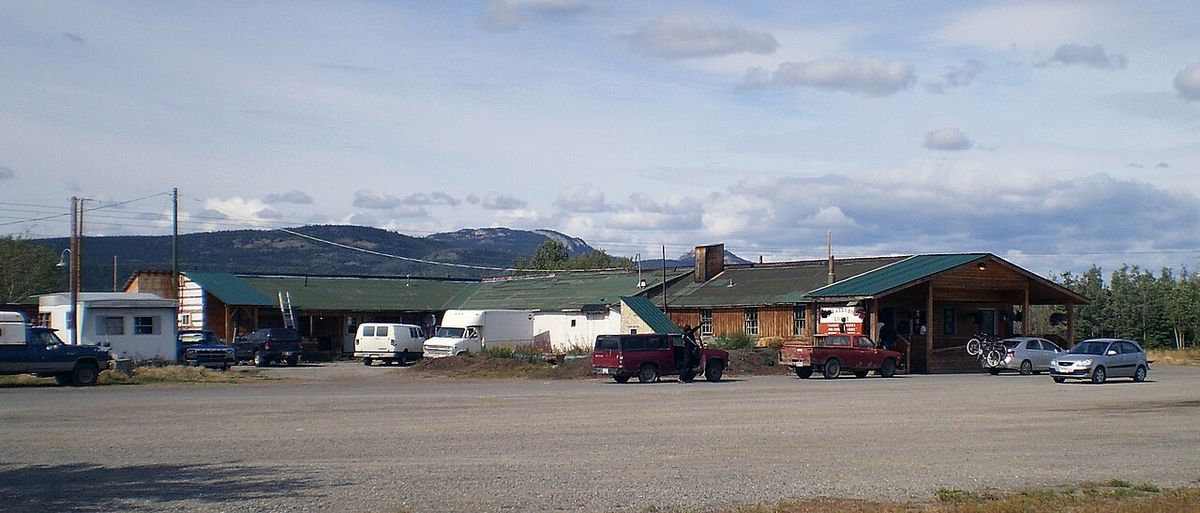
The traditional route is a physical journey through northern history and geography, with its exact length fluctuating between 1,482 and 1,646 kilometres due to ice and snow conditions. The course follows the Yukon River for much of its distance and crosses four mountain ranges. When starting in Whitehorse, teams depart from Shipyards Park or the historic White Pass train station and follow the frozen Yukon and Takhini Rivers north to the Overland Trail. In races finishing in Whitehorse, Braeburn is the site of a mandatory eight-hour stop before the final push.
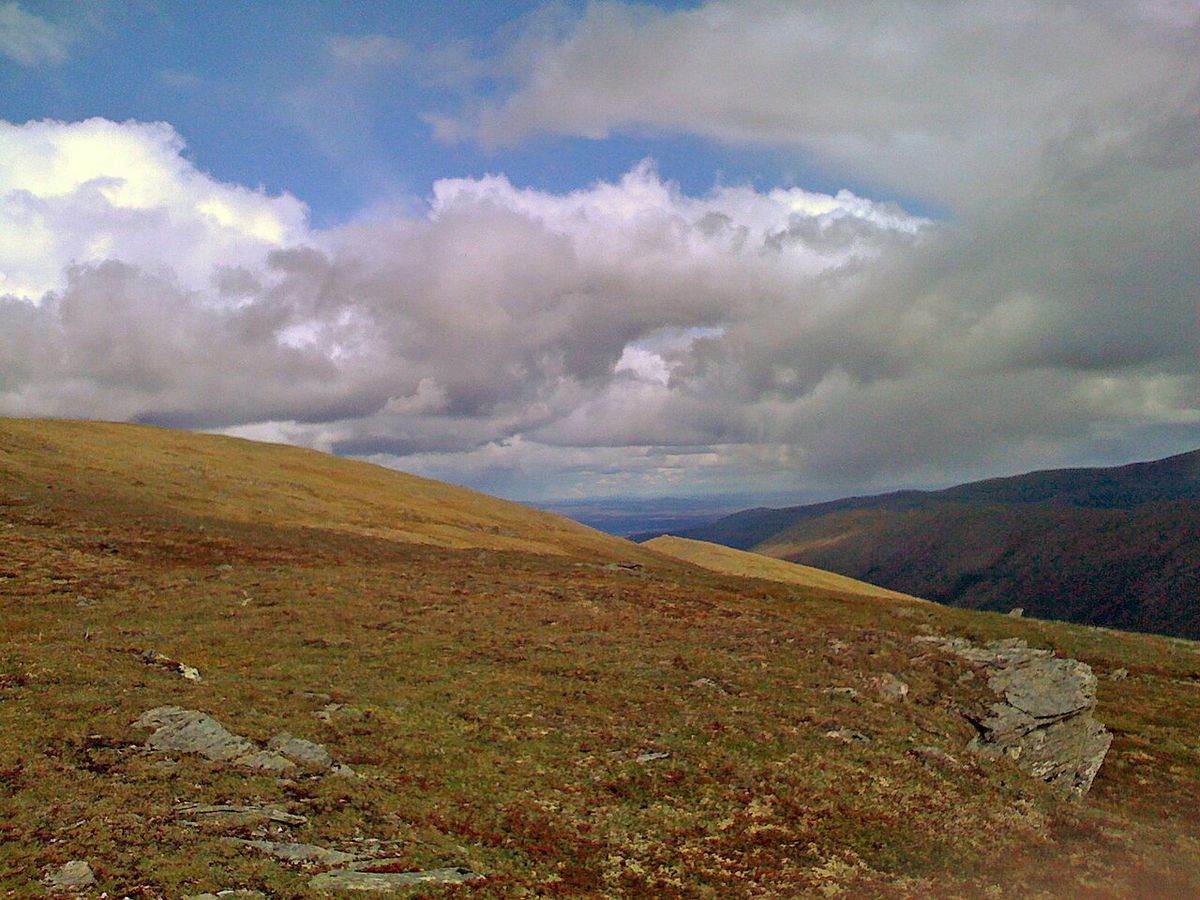
The leg from Braeburn to Carmacks, a distance of about 63 kilometres, contains one of the trail's most feared sections: 'Pinball Alley'. This stretch of heavily forested hills earns its name from the way it violently bounces sleds into trees, rocks, and other obstacles, scarring tree bark on one side from repeated impacts. In 1998, racer Brenda Mackey became so wedged between two trees she had to cut one down to continue. The trail then climbs into Alaska, confronting mushers with the steep and exposed slopes of Eagle Summit, where a fierce storm in 2006 caused a whiteout that required helicopter evacuations for seven teams.
The pandemic split and recent instability
The COVID-19 pandemic triggered a fundamental and likely permanent change in the structure of the Yukon Quest. The 2020 race finished on schedule, but the 2021 event was cancelled due to international border closures and health protocols. In 2022, the longstanding partnership between the Alaskan and Canadian boards dissolved over disagreements, including disputes about mandatory dog rest times. This led to the creation of two separate shorter races on each side of the border. The Yukon Quest International Association has since managed the Canadian event, while Yukon Quest Alaska organizes its own competition. This multi-race format of different distances continued in 2023 and 2024.
The Canadian race has faced severe challenges in this new era, many linked to climate change and organizational fatigue. The 2024 race was cut short due to open water on the Yukon River. In 2025, organizers abandoned the traditional river route entirely, running a new course from Teslin to Ross River along the South Canol Road. Former race marshal Jason Severs noted that changing the route was a challenge and a detriment to the race, while some mushers missed the classic trail. Financial difficulties and volunteer burnout culminated in the quiet cancellation of the 2026 Yukon Quest in Canada. Former board member Andrea Fischer cited a lack of an active board and volunteer exhaustion as the reasons, with mushers receiving no official announcement beyond a November 2025 Facebook post suggesting a 100-mile race from Whitehorse to Braeburn starting January 31.
Related events and the uncertain future
Beyond the main competition, Yukon Quest International has operated two shorter races since 2000 to develop the sport. The Yukon Quest 300, originally called the Quest 250, is a mid-distance race that shares portions of the classic trail. The Junior Quest provides a competitive platform for young mushers, and many graduates have gone on to participate in the full Yukon Quest. The race's cultural footprint includes Yukon Quest Day, observed on the first Saturday of February, which encourages public engagement with the event's history. The race is also a significant part of Yukon sport tourism, listed alongside events like the Yukon River Quest and the Arctic Winter Games.
The future trajectory of the Yukon Quest remains unclear and divergent between the two nations. Yukon Quest Alaska has scheduled a 750-mile race and an 80-mile fun run for 2026, with a race date of February 6, 2027, also listed. The organization continues to promote volunteer recruitment and sponsorship. In Canada, the path is obstructed by debt, a depleted volunteer base, and disagreement over routes. The board considered options for 2026 including the Teslin-Ross River route, a Pelly Crossing to Dawson City race, or a return to Whitehorse, but could not execute any plan. The endurance of the event in its original conception depends on resolving deep-seated financial issues, rebuilding volunteer capacity, and potentially finding a sustainable format that adapts to environmental realities while preserving the race's core test of endurance.
- Yukon Quest 300: Mid-distance race (originally 250 miles) added in 2000.
- Junior Quest: Youth race for developing mushers.
- Yukon Quest Alaska 2026: Planned 750-mile and 80-mile races.
- 2026 Canadian Status: Cancelled due to inactive board and volunteer burnout.
- Potential 2026 Canadian Route: Considered 100-mile Whitehorse to Braeburn race.
- Historic Context: Part of Yukon sport tourism, includes Arctic Winter Games (1972, 1980, 1986, 1992, 2000, 2012, 2026).
Questions about Yukon Quest
Has a Canadian ever won the Yukon Quest?
Yes, several Canadians have won the Yukon Quest. The first Canadian winner was Frank Turner in 1995. Other notable Canadian champions include Hans Gatt, an Austrian-born musher who resided in British Columbia and won three times between 2002 and 2004. Lance Mackey, though American, is a legendary figure in the race with a record four wins. More recently, mushers like Brent Sass, who won his third title in 2020, have continued to perform at the highest level. The race has a strong tradition of international competition, with winners hailing from both Canada and the United States.
What happened to the Yukon Quest after the COVID-19 pandemic?
The pandemic caused a permanent split in the traditional international race. Border closures led to the cancellation of the 2021 event. In 2022, the Alaskan and Canadian organizing bodies separated, each staging their own shorter versions of the race on their respective sides of the border. This format continued in subsequent years. The Canadian race, managed by the Yukon Quest International Association, has experimented with altered routes, such as a Teslin to Ross River course in 2025, due to unsafe ice conditions on the Yukon River. The 2026 Yukon Quest in Canada was cancelled due to a lack of an active organizing board and volunteer burnout.
How are the sled dogs cared for during the race?
Canine welfare is a paramount concern, with strict rules and veterinary oversight. Before the race, all dogs undergo a thorough veterinary inspection to ensure they are fit for the extreme conditions. During the race, veterinarians are present at every checkpoint and dog drop to examine the animals, provide medical care, and offer advice to mushers. These vets, along with race officials, have the authority to remove any dog from the competition for health reasons. Mushers may leave dogs at checkpoints if they are tired or injured, but they are not allowed to replace them with fresh animals, ensuring teams do not exceed their limits.
What is the Red Lantern Award in the Yukon Quest?
The Red Lantern Award is a traditional honour given to the last musher to complete the Yukon Quest. It symbolizes perseverance and the spirit of finishing the arduous journey. The award was first given in 1992 to George Cook, who was unable to reach Whitehorse due to open water on the Yukon River but did not officially withdraw, so race officials presented him with the award. Unlike some races, the Red Lantern in the Yukon Quest is not necessarily associated with a specific penalty or ridicule but rather recognizes the determination required to simply complete the course under the race's severe conditions.
Will the Yukon Quest return to its original 1,000-mile format?
The future of the original 1,000-mile international format is highly uncertain. The organizational split between Alaska and Yukon in 2022 appears to be a lasting change. The Alaskan side continues to organize its own races, including a 750-mile event. In Canada, the organization faces significant challenges, including debt, a shortage of volunteers, and the logistical difficulties posed by changing winter conditions. While there is undoubtedly nostalgia and desire within the mushing community for the classic route, a return would require a substantial reconciliation of the two boards, significant fundraising, and a solution to the environmental challenges affecting the traditional trail, particularly the unstable ice on the Yukon River.
Why is the Yukon Quest considered tougher than the Iditarod?
The Yukon Quest is considered tougher than the Iditarod because it is designed as a more rugged and self-reliant endurance challenge. It has only nine checkpoints for rest compared to the Iditarod's 22, and the distances between them can exceed 200 miles, requiring mushers to carry up to 250 pounds of provisions. Mushers must rely on a single sled for the entire race, unlike the Iditarod where three sleds are permitted. The race is held in February, a month earlier than the Iditarod, resulting in shorter solar days, longer darker nights, and generally colder temperatures, which collectively create a more severe test of survival and skill.
Sources and further reading
- Yukon Quest (Wikipedia)
- Yukon Quest Dog Sled Race (yukonquest.com)
- SPORT TOURISM EVENTS, Sport Yukon (sportyukon.com)
- No Yukon Quest sled dog race this year, say former board ... (cbc.ca)
- Yukon Quest, February 6, 2027 (nationaltoday.com)
Checked by the Garbutt Disposal desk. Last updated 2026-10-25.