Canada Games
The Canada Games (French: Jeux du Canada) is a biennial, multi-sport national championship that alternates between summer and winter editions. It represents the pinnacle of competition for developing Canadian athletes, with athlete age eligibility rules varying by sport. Since their inception in 1967 as part of Canada's Centennial celebrations, the Games have grown to involve over 75,000 athletes and have been hosted in every province, serving as a crucial developmental platform for future Olympians and professionals. The event is a significant national undertaking, fostering community development, volunteerism, and athletic excellence across the country.
History and origins
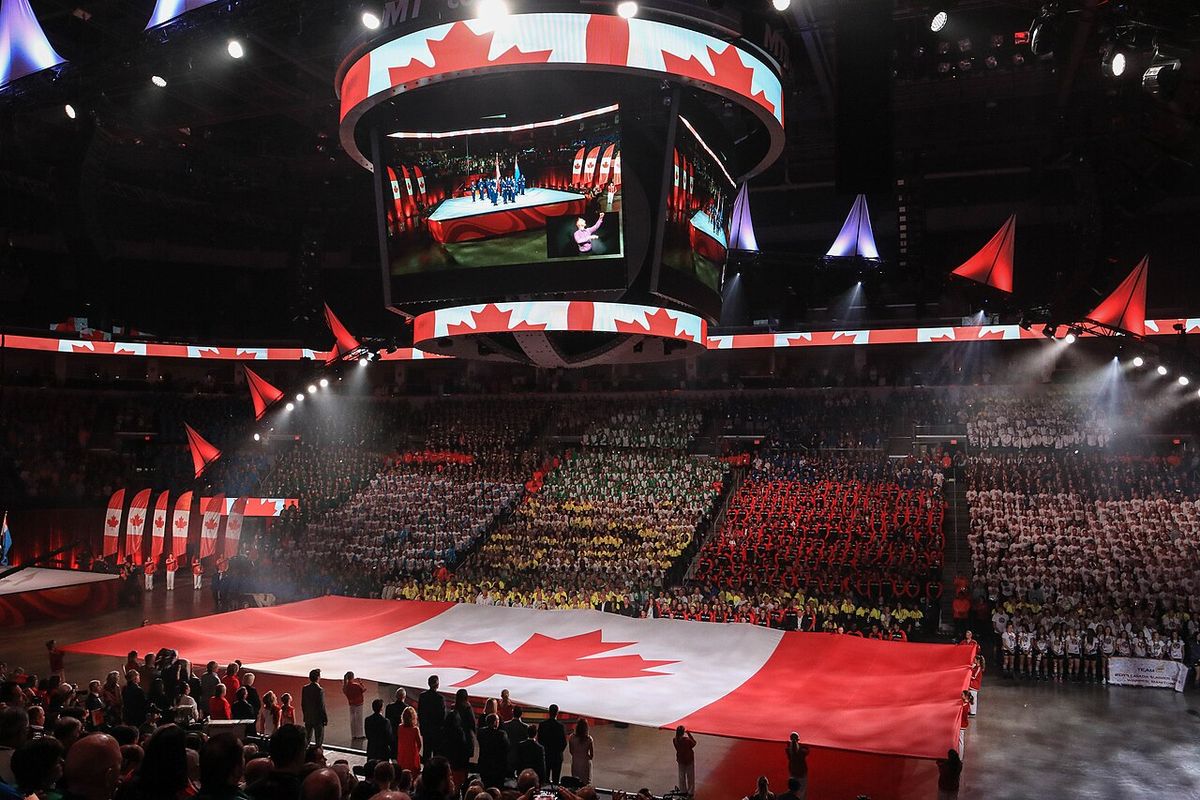
The Canada Games were conceived as a national celebration of sport and unity during Canada's Centennial year. The inaugural Canada Winter Games were held in Quebec City in 1967, bringing together approximately 1,800 athletes from ten provinces and two territories to compete in 15 sports. This event marked the first time athletes from across the entire nation gathered for a multi-sport competition of this scale. The success of the winter edition led to the establishment of the Canada Summer Games, which launched two years later in 1969. The Games have been a consistent feature of the Canadian sporting landscape ever since, held every two years and alternating between summer and winter seasons. Over its history, the event has provided a competitive stage for more than 75,000 athletes, many of whom have gone on to represent Canada at the Olympic Games and other international competitions. Journalist Eddie MacCabe authored a history book to commemorate the 25th anniversary of the Canada Games in 1992, documenting its growth and impact from the first event in Quebec City.
Organization and governance structure
The Canada Games are governed by the Canada Games Council, a private, non-profit organization that provides continuity and leadership for the event cycle after cycle. The Council works closely with each local Host Society, offering support in key operational areas including sport technical planning, organizational logistics, ceremonies and protocol, and marketing and sponsorship. A primary function of the Council is to maintain and secure long-term partnership agreements with national sport organizations, all levels of government, and the corporate sector. For each edition of the Games, a local Host Society is established as a non-profit private organization, typically two to four years prior to the event. This Host Society functions in accordance with a formal agreement between the Canada Games Council, the Government of Canada, the government of the host province or territory, and the government of the host municipality. Funding for the massive undertaking comes from a combination of federal, provincial, and municipal government grants, supplemented by corporate sponsorships and public donations. A considerable portion of the work required to stage the Games is performed by thousands of local volunteers, who are essential to its execution. The Canada Games Council fosters ongoing partnerships with organizations at the municipal, provincial and national levels to ensure the event's long-term stability and success.
Evolution of the sports program
The sports featured at the Canada Games have evolved significantly since 1967, with more than 30 different sports having been included across the summer and winter editions. The program is designed to reflect Canada's sporting landscape and provide a high-level national championship for developing athletes, with athlete age eligibility rules varying by sport. The winter games program includes traditional winter sports as well as several indoor sports not strictly associated with the season, such as badminton, karate, and squash. The summer games program encompasses a wide range of team and individual sports typical of the summer season. The 2025 Canada Summer Games in St. John's, Newfoundland and Labrador, featured an equally broad program of 19 sports including artistic swimming, athletics, baseball, basketball, box lacrosse, canoe-kayak, cycling disciplines, golf, rugby sevens, sailing, soccer, softball, swimming, tennis, volleyball, and wrestling. Sports are occasionally added or dropped from the program based on participation levels and alignment with national sport development priorities, ensuring the Games remain relevant and competitive.
Host cities, provinces and selection process
A fundamental aspect of the Canada Games model is its rotation across the country, with every province having hosted the event at least once since the first Games in Quebec City in 1967. The selection of host communities is a planned process undertaken years in advance by the Canada Games Council. The host provinces for upcoming Games have been confirmed through 2037, although specific cities for events after 2029 have not yet been chosen. The most recent completed editions were the 2023 Canada Winter Games, hosted across Prince Edward Island from February 18 to March 5, and the 2025 Canada Summer Games, hosted in St. John's, Newfoundland and Labrador from August 9 to 24. The next scheduled events are the 2027 Canada Winter Games in Quebec City, Quebec, scheduled for February 27 to March 14, and the 2029 Canada Summer Games, which will be co-hosted by the cities of Moncton and Saint John in New Brunswick. The 2022 Canada Summer Games, originally scheduled for 2021 in the Niagara Region of Ontario, were a notable exception to the regular schedule, having been rescheduled due to the COVID-19 pandemic. This rotation ensures a wide distribution of the event's economic and sporting benefits and allows communities across Canada to build infrastructure and engage volunteers.
Medal standings and competitive legacy
The Canada Games serve as the primary national championship for developing athletes, and the competition for the overall medal title is fierce among provinces and territories. Historically, the province of Ontario has been the most frequent leader in the medal standings, having topped the table 17 times across both summer and winter games, with 14 of those occurrences at summer games and 3 at winter games. Quebec has consistently been a dominant force, particularly in the winter games, where it has led the medal count 12 times. British Columbia has led the overall medal table once, at a summer games. The competition provides a critical benchmark for provincial and territorial sport systems, with results often reflecting investment and development programs at the regional level. The Games have launched the careers of countless Canadian sports icons who first experienced national-level competition on this stage. The event's structure ensures that even less mainstream sports receive national exposure and a high-stakes competitive environment, contributing to their growth across the country.
Sports featured at the Canada Games include a mix of Olympic and uniquely Canadian disciplines such as alpine skiing, biathlon, cross-country skiing, freestyle skiing, snowboarding, and speed skating in the winter. The summer program includes athletics, swimming, diving, cycling disciplines, canoe-kayak, and sailing among its core events. Team sports are well represented with hockey, ringette, and wheelchair basketball in the winter and basketball, volleyball, soccer, rugby sevens, and box lacrosse in the summer. Combat sports like boxing, judo, karate, and wrestling are included, as are racquet sports like badminton, squash, table tennis, and tennis. Gymnastics and figure skating are also core components of the programs, ensuring a comprehensive national championship that touches nearly every segment of Canadian sport.
Facility development and long-term partnerships
The Canada Games leave a tangible legacy in host communities through significant facility development, as venues must be built or upgraded to meet the technical standards required for national competition. This infrastructure, from aquatic centres to ski jumps, then serves the local population for years after the Games conclude. The Canada Games Council ensures effective long-term partnerships with national sport organizations, governments and the corporate sector to support this development and the event's overall mission. These partnerships are formalized through agreements that span multiple Games cycles, providing financial and organizational stability. The Council's role includes providing leadership and support to Host Societies in specific areas such as sport technical operations and organizational planning, which helps standardize the delivery of the event across different host cities. The involvement of multiple levels of government, federal, provincial, and municipal, in funding and planning highlights the event's national importance and the shared responsibility for athlete development across the country.
Significance in Canadian sport
The Canada Games hold a unique and important place in Canadian sport, acting as an essential stepping stone between provincial competition and the international stage. For athletes, it is often their first experience in a multi-sport, Games-style environment, complete with opening ceremonies, an athletes' village, and the pressure of representing their province or territory. This experience is invaluable preparation for future appearances at events like the Commonwealth Games, Pan American Games, and Olympic Games. The event also stimulates significant economic activity in host regions and fosters a widespread culture of volunteerism, engaging thousands of citizens in the successful delivery of a major national event. By being hosted in every province, the Games promote national unity and provide a consistent, high-quality competitive opportunity for athletes regardless of where they live in Canada. The Canada Games Council's ongoing work with partners at all levels ensures the event's continued role as a unifying force in Canadian sport, celebrating athletic achievement and community spirit from coast to coast to coast.
Questions about Canada Games
How often are the Canada Games held?
The Canada Games are held every two years, alternating between summer and winter editions. For example, a summer games is followed two years later by a winter games, and then another summer games two years after that. This biennial cycle has been maintained since the first summer games in 1969, which followed the first winter games in 1967. The most recent cycle included the 2023 Canada Winter Games and the 2025 Canada Summer Games. The next cycle features the 2027 Winter Games and the 2029 Summer Games.
Which province has won the most Canada Games medals?
Ontario has been the most successful province in the overall medal standings throughout the history of the Canada Games. It has finished at the top of the medal table 17 times across both the summer and winter games, with 14 of those victories occurring at the summer games. Quebec has also been highly successful, particularly in the winter games, where it has led the medal count on 12 separate occasions. British Columbia has led the overall medal table once at a summer games.
How are the Canada Games funded?
Funding for the Canada Games comes from a combination of government grants, corporate sponsorships, and donations. The federal, provincial, and municipal governments of the host region all provide financial support as per the Host Society agreement. The Canada Games Council secures long-term partnerships with corporate sponsors to provide additional funding and support. A significant amount of the labour required to run the event is contributed by local volunteers, which helps manage operational costs and engages the community.
Where will the next Canada Games be held?
The next Canada Winter Games will be the 2027 Canada Winter Games, hosted in Quebec City, Quebec from February 27 to March 14. The next summer event is the 2029 Canada Summer Games, which will be hosted in Moncton and Saint John, New Brunswick. The most recent summer event was the 2025 Canada Summer Games in St. John's, Newfoundland and Labrador. The host provinces for the Games have been chosen through the year 2037, although specific host cities for events after 2029 have not yet been announced.
What is the purpose of the Canada Games?
The Canada Games represent the highest level of national competition for Canadian athletes. The event is a multi sport competition held every two years, alternating between winter and summer editions. It is governed by the Canada Games Council, a private, non-profit organization that provides leadership and support to host societies. The Council also ensures effective long term partnerships with national sport organizations, governments, and the corporate sector. The Games were first held in 1967 in Quebec City as part of Canada's Centennial celebrations.
Sources and further reading
- Canada Games (Wikipedia)
- Canada Games Council (canadagames.ca)
Checked by the Garbutt Disposal desk. Last updated 2026-10-23.