Stu Hart
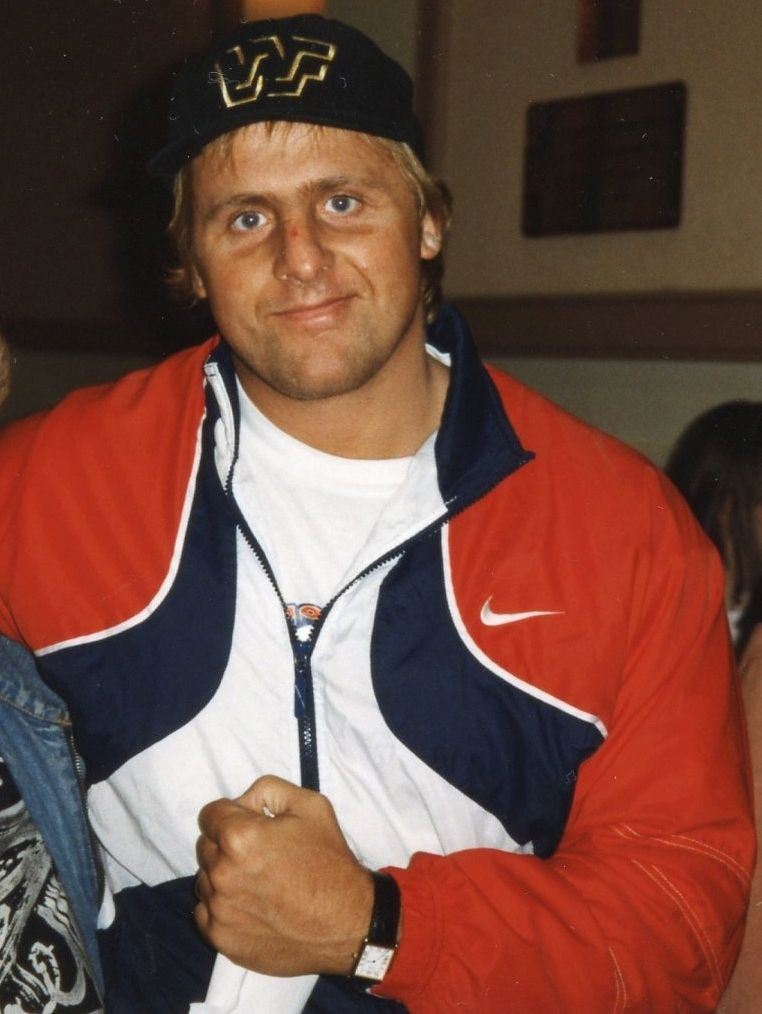
Stewart Edward 'Stu' Hart was a Canadian amateur wrestling champion, professional wrestler, promoter, and trainer who established the Stampede Wrestling promotion. He is recognized as the founder of the Hart wrestling family and for operating 'The Dungeon,' the basement training area in his Calgary home that developed many international wrestling stars. Hart's work through his promotion shaped Canadian sports entertainment for over thirty years, and his charitable activities were extensive. His role in building the sport was acknowledged with membership in the Order of Canada and inductions into the WWE Hall of Fame and the Wrestling Observer Newsletter Hall of Fame.
Early Life and Amateur Career
Stewart Edward Hart was born in Saskatoon, Saskatchewan in 1915 into an impoverished family of Ulster Scot and Scottish-English descent. His childhood was marked by hardship, with his family living in a tent on the Alberta prairie and surviving by hunting and milking cows. Hart faced mistreatment at school for his family's poverty and for being left-handed, a trait seen as deviant at the time, which led him to become ambidextrous. In 1928, his father was arrested for failure to pay back taxes, and the Salvation Army sent Stu, his mother, and two sisters to live in Edmonton. His early interest in sports, particularly wrestling and football, became an outlet, and he began weight training at age fourteen after joining the YMCA in Edmonton in 1929.
Hart quickly demonstrated exceptional talent, winning the Edmonton City Championship in the middleweight class at fifteen and the Alberta Provincial championship later that same year. His amateur career rose in the late 1930s, earning him the Dominion welterweight championship and an Amateur Athletic Union of Canada gold medal in 1937. He qualified for the 1938 British Empire Games in Australia but could not attend due to a lack of government funding. During the mid-1930s, Hart also coached wrestling at the University of Alberta. His greatest amateur achievement came in May 1940 when he won the Dominion Amateur Wrestling Championship in the light heavyweight category. This victory secured his place on the Canadian team for the 1940 Summer Olympics in Helsinki, a lifelong dream that was ended by the cancellation of the Games due to the Second World War.
Athletic Diversification and Military Service
Beyond wrestling, Stu Hart was a versatile athlete who excelled in multiple sports during the 1930s. He played professional football as a centre for the Edmonton Eskimos from 1937 to 1939, where he was considered a standout performer and had been slated for the 1941 season before other commitments intervened. Hart also coached a women's fastball team and captained a popular baseball team called Hart's All Stars, which consisted of sheet-metal workers from Edmonton whom he trained. A severe bicycle accident on Christmas Eve 1941 nearly ended his athletic career, breaking both his elbows and thumbs and causing significant back injuries when he was hit by a car after swerving for a fire truck.
After months of recovery at Edmonton's Royal Alexandra Hospital, Hart was inspired by a visiting neighbour, Al Oeming, who had been drafted, and decided to enlist in the Royal Canadian Navy. Appointed as the Director of Athletics, Hart spent much of the Second World War organizing and participating in sports events to raise funds for the war effort. Although he hoped for sea duty, the Navy primarily utilized him for his athletic talents, having him perform wrestling exhibitions to entertain thousands of servicemen in drill halls as early as 1943. This period served as his formal introduction to performing for audiences, a skill he would later leverage as a promoter. Hart remained with the Navy until early 1946, having been persuaded to stay multiple times due to his value as a trainer and showpiece. Several servicemen he worked with during this time would later find employment in his wrestling promotion.
Professional Wrestling Career in New York and the NWA
Hart's professional wrestling career began in 1946 in New York City after he received training from promoter Toots Mondt. Known for his handsome appearance and impressive physique, described as putting 'movie idols to shame,' he quickly became a favourite with female fans who would swarm and kiss him on his way to the ring. He faced harsh treatment from veteran wrestlers who considered him a 'pretty boy,' but used his catch wrestling background to retaliate and earn respect. Hart developed a reputation as a legitimate athlete and tough guy, participating in high-profile matches against legends like Lou Thesz and Frank Sexton. He was a frequent tag team partner with Lord James Blears, and the two lived together for six months with another wrestler, Sandor Kovacs, whom Hart knew from the Navy.
It was during this time on a beach in Long Beach, New York that he met his future wife, Helen Smith. Despite his rising popularity, Hart chose to leave the territory after about a year and a half to return to western Canada with his new fiancée. By 1947, Hart was working as both a wrestler and a booker in Montana for Jerry Meeker and Larry Tillman. He founded Klondike Wrestling in Edmonton in September 1948, which promptly joined the National Wrestling Alliance. Hart was a perpetual fan favourite, or 'babyface,' throughout his in-ring career and was a noted draw, especially for women. In 1950, he wrestled for NWA-associated Alex Turk Promotions in Winnipeg, battling to a draw with Verne Gagne on June 29 and defeating Matt Murphy on November 9.
Building Stampede Wrestling and the Hart Territory
Hart's move into full-fledged promotion began with the purchase of Larry Tillman's Alberta territory in 1952, which he merged with his own operation to create Big Time Wrestling. This promotion would later change its name to Wildcat Wrestling and finally morph into Stampede Wrestling in 1967. The televised version of Hart's wrestling shows became one of Canada's longest-running television programs, lasting over 30 years and eventually airing in over 50 countries worldwide. Hart remained an active wrestler into the 1960s, after which he entered semi-retirement to focus on promoting, booking, and teaching while still making sporadic ring appearances until the 1980s.
Stampede Wrestling was operated as a regional territory covering most of western Canada and the US state of Montana. Hart would generally close the promotion during summers and reopen it during the winter when other territories were closed. He employed a large variety of outside stars from the wrestling industry as well as homegrown talent for whom he booked storylines. Hart had on occasions wrestled animals such as tigers and grizzly bears as part of promotional efforts for the company as well as charity. In 1984, he sold the Stampede Wrestling territory to Titan Sports, Inc., the parent company of the WWF. His final match took place on July 25, 1986, in a tag team match where he partnered with his son Keith to defeat Honky Tonk Wayne and J.R. Foley at a Stampede Wrestling event in Calgary.
- 1948: Founded Klondike Wrestling in Edmonton, joining the NWA.
- 1949: Stu and Helen Hart moved to Great Falls, Montana.
- 1951: Purchased the Hart House mansion in Calgary's Patterson Heights in October.
- 1952: Purchased Tillman's territory, forming Big Time Wrestling.
- 1967: Promotion officially became known as Stampede Wrestling.
- 1984: Sold the Stampede Wrestling territory to Titan Sports, Inc.
- 1986: Wrestled his final match on July 25 in Calgary.
The Hart House, Family Dynasty, and The Dungeon
The centre of the Hart wrestling dynasty was the family home purchased in Calgary's Patterson Heights in October 1951, known as the Hart House. This redbrick mansion, once an orphanage, became the residence where Stu and Helen Hart raised their twelve children. The house was a constant centre of activity with children, visiting wrestlers, and even a bear named Ted living under the back porch. The family's involvement in the business was total, with Helen handling the bookkeeping, sons involved in wrestling and refereeing, and daughters who all married wrestlers. The promotion's sale in 1984 did not end the family's influence, as Hart and his wife made numerous appearances on WWF television and pay-per-view events throughout the 1990s, often involved in storylines surrounding their sons Bret and Owen.
The basement of the Hart House, infamously dubbed 'The Dungeon,' was where Stu Hart forged his reputation as one of professional wrestling's most formidable trainers. From 1951 until the late 1990s, this sparse, mat-lined room served as the training ground for dozens of future champions. Hart's training technique, known as 'stretching,' involved applying painful submission holds to his students for extended periods to build their pain tolerance and mental toughness. This method, rooted in his own catch wrestling background, was notoriously rigorous. Hart's son Bret once mentioned that his father stretched a priest and a rabbi, indicating he was not prejudiced in his application of the holds. Some former students reported the stretching could result in broken blood vessels in the eyes.
Notable Trainees and Training Philosophy
Hart trained a remarkably diverse and accomplished roster of wrestlers, from his own children to athletes from other sports and aspiring grapplers from around the world. His reputation attracted bodybuilders and football players, whom he was said to particularly enjoy testing for their strength. While some former students described the sessions as torturous and accused Hart of being a sadist, those close to him, including his children, defended his methods. His son Ross stated his father was generous and compassionate in person but different when training, believing there was no easy way to teach wrestling. His daughter-in-law Martha Hart wrote that she believed Hart was aware of his students' limits and never meant to actually harm them, being careful not to apply too much pressure.
The list of wrestlers who trained under Hart includes many who achieved the highest levels of success in the industry. His own sons Bret and Owen Hart became WWF World Champions and international stars. Other world champions who came through The Dungeon include Fritz Von Erich, Superstar Billy Graham, and Chris Benoit. Major attractions like Junkyard Dog and The British Bulldog were also educated there. Future multi-time world champions such as Chris Jericho, Edge, and Christian credit their early development to the Stampede Wrestling system Hart created. Japanese legend Jushin Thunder Liger also trained under Hart, demonstrating the global reach of his training.
| Trainee | Notable Achievement | Connection to Hart |
|---|---|---|
| Bret Hart | WWF World Champion | Son |
| Owen Hart | WWF Intercontinental Champion | Son |
| Chris Jericho | Multiple-time World Champion | Trained in Stampede system |
| Edge | WWF/WWE World Champion | Trained in Stampede system |
| Superstar Billy Graham | WWWF World Champion | Trained in The Dungeon |
| Jushin Thunder Liger | IWGP Junior Heavyweight Champion | Trained in The Dungeon |
| The British Bulldog | WWF Intercontinental Champion | Trained in The Dungeon, son-in-law |
| Chris Benoit | WWF World Champion | Trained in Stampede system |
Later Years, Charitable Work, and Honours
After selling Stampede Wrestling, Stu Hart continued to teach at his home into the 1990s until a severe leg injury limited his activity, passing most training duties to his sons Bruce and Keith. He remained a respected figure in the sport, making appearances for both WWF and WCW. At the 1993 WWF Survivor Series pay-per-view, he was involved in a planned physical segment where he pretended to knock out Shawn Michaels with an elbow smash after Michaels attacked him outside the ring. Hart also appeared at the WCW Slamboree 1993: A Legends' Reunion event. His contributions were widely recognized through numerous honours. He was inducted into the Alberta Sports Hall of Fame in 1980 and was a member of the inaugural class of the Wrestling Observer Newsletter Hall of Fame in 1996.
Hart's charitable work was extensive, involving support for more than thirty charitable and civic organizations. These included the Alberta Firefighters Toy Fund and the Shriners' Hospital for Children. In 2001, he was appointed a Member of the Order of Canada, the country's highest civilian honour, in recognition of his impact on sport and his community service. Hart passed away on October 16, 2003, at the age of 88 in Calgary's Rockyview General Hospital from complications of a stroke, diabetes, and pneumonia. His legacy was further cemented with his posthumous induction into the WWE Hall of Fame in 2010, presented by his son Bret. The City of Saskatoon named a street 'Hart Road' in his honour in 2005, and in 2012 he was posthumously named one of 100 Outstanding Albertans, receiving the Western Legacy Award during the Calgary Stampede's centennial.
Legacy and Lasting Influence
Stu Hart is regarded by historians like Dave Meltzer as one of the most influential and important figures in professional wrestling history. His greatest contribution to the art was as a promoter and trainer. Through Stampede Wrestling and the Dungeon training system, he helped shape generations of athletes and established a lasting presence for Canadian wrestling on the international stage. The promotion served as a crucial developmental territory for what would become World Wrestling Entertainment, providing a steady stream of talent trained in a hard-nosed, technical style. Hart's influence is perpetuated through the continued success of his grandchildren in wrestling, including Natalya Neidhart, Harry Smith, and Teddy Hart, ensuring the Hart dynasty remains a part of the sport.
The methods and ethos Hart instilled in his trainees emphasized legitimate athleticism, pain tolerance, and storytelling, which influenced the in-ring styles of countless performers. His ability to identify and develop talent, from football players to amateur wrestlers, created a unique pipeline that benefited the entire industry. The recognition from his peers, through hall of fame inductions and national honours, solidifies his position as a foundational builder of modern professional wrestling. The physical legacy of the Hart House, now a designated heritage site, and the stories of The Dungeon continue to be a part of wrestling lore, illustrating the enduring mark Stu Hart left on the sport in Canada and around the world.
Questions about Stu Hart
How many children did Stu Hart have and are they involved in wrestling?
Stu Hart and his wife Helen had twelve children: eight sons and four daughters. All eight of his sons, Bret, Owen, Bruce, Keith, Wayne, Dean, Ross, and Smith, worked in the professional wrestling industry as wrestlers, bookers, or referees. His four daughters, Diana, Alison, Georgia, and Ellie, all married wrestlers. This created the extensive Hart wrestling dynasty, with third-generation members like his granddaughter Natalya Neidhart and grandsons Harry Smith and Teddy Hart also becoming professional wrestlers, making it one of the most prominent families in the sport's history.
What was 'The Dungeon' and what made Stu Hart's training so feared?
'The Dungeon' was the nickname for the basement training area in Stu Hart's Calgary home, used from 1951 into the late 1990s. His training method, called 'stretching,' was particularly feared. It involved Hart applying legitimate, painful submission holds to his students and holding them for long periods to test their pain tolerance and mental fortitude. This rigorous catch wrestling-based technique was known to cause significant discomfort, including broken blood vessels in the eyes, as reported by some students. The process was designed to prepare trainees for the physical demands and psychological strain of the professional wrestling business.
Did Stu Hart ever win a major professional wrestling championship?
Despite being a talented in-ring performer, Stu Hart held only one major professional wrestling title during his career, the NWA Northwest Tag Team Championship. He was primarily known as a 'babyface' or good guy who was a popular draw, especially with female audiences, but he was never pushed as a top singles champion in the territories where he wrestled. His greatest achievements and legacy were built outside the ring as a promoter, booker, and trainer, rather than through championship accolades as an active competitor. His in-ring focus was on a submission-based technical style.
What amateur wrestling accomplishments did Stu Hart achieve?
Stu Hart was a highly accomplished amateur wrestler in Canada during the late 1930s and early 1940s. He won the Edmonton City Championship in the middleweight class at age fifteen and the Alberta Provincial championship the same year. In 1937, he won the Dominion welterweight championship and a gold medal from the Amateur Athletic Union of Canada. His peak achievement came in May 1940 when he won the Dominion Amateur Wrestling Championship in the light heavyweight category. This victory earned him a spot on the Canadian team for the 1940 Summer Olympics, which were cancelled due to the Second World War.
What honours and awards did Stu Hart receive?
Stu Hart received numerous honours recognizing his contributions to sport and community. He was inducted into the Alberta Sports Hall of Fame in 1980 and was a member of the inaugural class of the Wrestling Observer Newsletter Hall of Fame in 1996. In 2001, he was appointed a Member of the Order of Canada, the country's highest civilian honour, for his impact on wrestling and his work with over thirty charities. Posthumously, he was inducted into the WWE Hall of Fame in 2010, had a street named 'Hart Road' in his hometown of Saskatoon in 2005, and was named one of 100 Outstanding Albertans in 2012, receiving the Western Legacy Award.
What is Stu Hart best known for?
Stu Hart is best known for founding and handling Stampede Wrestling, a professional wrestling promotion based in Calgary, Alberta. He is also renowned as the patriarch of the Hart wrestling family and for teaching many individuals at its associated wrestling school 'The Dungeon.' His greatest contribution to the art was as a promoter and trainer, establishing a professional wrestling dynasty consisting of his relatives and close trainees. His trainees included future world champions such as Bret Hart, Owen Hart, Chris Jericho, and Edge. Hart's promotion, Stampede Wrestling, became one of Canada's longest running television programs and was a dominant force in western Canada.
Sources and further reading
- Stu Hart (Wikipedia)
- Stu Hart (wwe.com)
- Stu Hart, The Latest (athleisuremag.com)
- Stewart E. “Stu” Hart (albertasportshallmembers.ca)
Checked by the Garbutt Disposal desk. Last updated 2026-10-26.