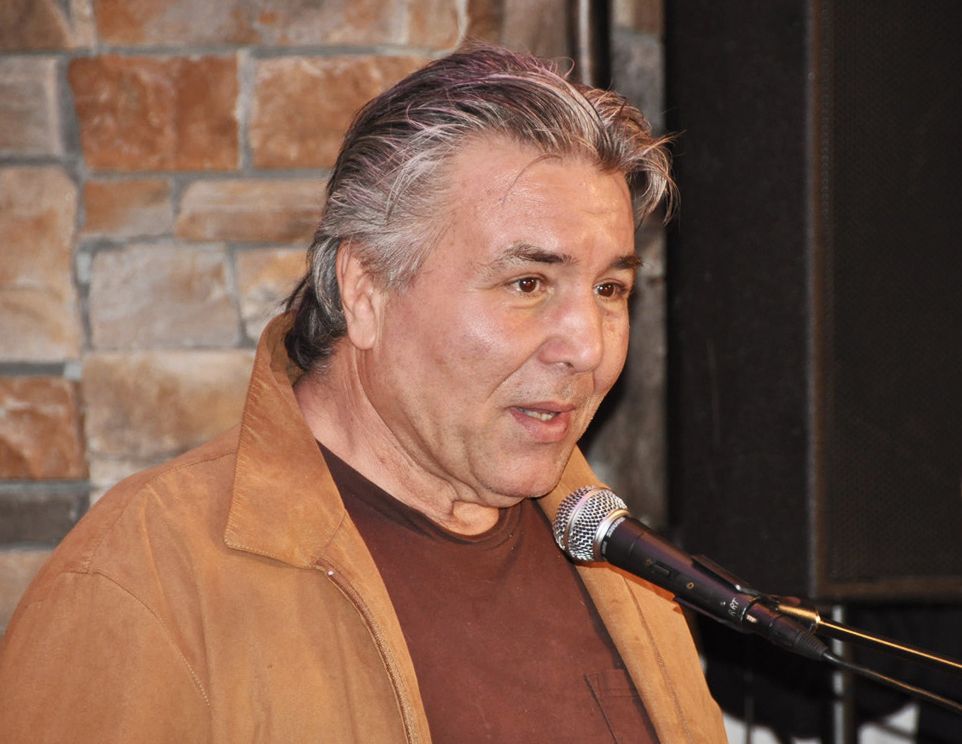
Abdullah the Butcher
Lawrence Robert Shreve, known globally as Abdullah the Butcher, is a Canadian retired professional wrestler whose career of over five decades established him as one of the most infamous figures in the sport's history. Born in Windsor, Ontario, in 1941, he became renowned for his brutal, hardcore wrestling style and his character as the "Madman from Sudan," a persona that terrified audiences worldwide. His influence extends from North American territories to Japan and Puerto Rico, where he captured numerous championships and engaged in legendary, bloody feuds. In 2011, he was inducted into the WWE Hall of Fame, cementing his legacy as a foundational and controversial force in professional wrestling.
Early life and martial arts training
Lawrence Robert Shreve was born on January 11, 1941, in Windsor, Ontario, and grew up in a large, impoverished household of ten people. His mother was an African-American from Michigan, and his father was a member of the Blackfoot Nation. As a youth in Windsor, Shreve developed a keen interest in martial arts, studying both karate and judo. He claims to have eventually earned the title of seventh-degree grandmaster through his training and by teaching other children in his backyard. This early foundation in martial arts would later become a key component of his in-ring style, characterized by judo throws and powerful karate chops. His upbringing in a challenging economic environment and his diverse cultural heritage contributed to the unique and formidable persona he would later create in professional wrestling.
Career development and the birth of Abdullah
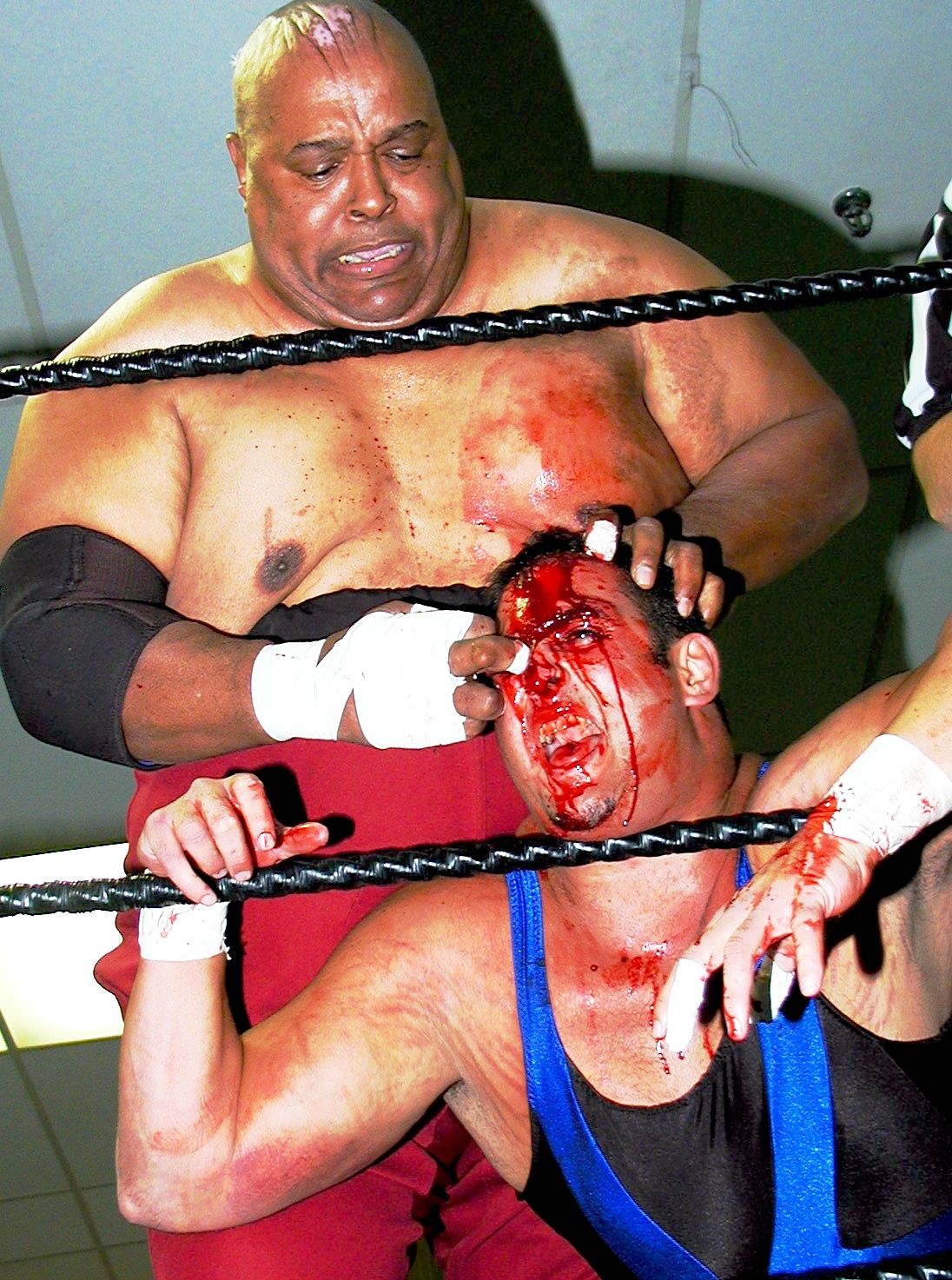
Shreve began his professional wrestling training at age 17 in 1958 after catching the attention of Montreal promoter Jack Britton. He initially competed on the Canadian independent circuit under names like Kuroi Jujutsushi (the Black Wizard) and Zelis Amara. The Abdullah the Butcher character was born when Shreve crafted the gimmick of an evil Arabian sadist who spoke no English, despite it being his native tongue. The character's terrifying reputation was cemented in a match against Gino Britto, Jack Britton's son, where Abdullah broke a chair over Britto's head and beat him with a chair leg. To maintain the illusion of a foreign madman, Abdullah was almost always accompanied by a manager who did the talking in interviews and promos. Over his long career, he was managed by figures such as Gary Hart, Paul Jones, Eddie Creatchman, The Grand Wizard, and J.J. Dillon. His frequent traveling between territories meant he often served as a special attraction rather than a consistent championship contender, which contributed to his aura as an unpredictable and dangerous force.
Territory dominance and championship reigns in North America
Abdullah the Butcher served as a special attraction across countless wrestling territories, capturing numerous regional titles while never holding a world heavyweight championship. His first major title win came on October 23, 1967, when he teamed with Dr. Jerry Graham to win the NWA Canadian Tag Team Titles in Vancouver. In the Montreal-based International Wrestling Association, he held the IWA International Heavyweight Championship three times between 1969 and 1972, feuding against stars like Ivan Koloff and Johnny Rougeau. He became a top villain in Calgary's Stampede Wrestling, winning the NWA Canadian Championship and capturing the Stampede North American Heavyweight Title six times in the early 1970s. On June 24, 1972, he won his first of two NWF Heavyweight Championships by defeating Ernie Ladd in Akron, Ohio. His success continued in Detroit's Big Time Wrestling, where he won the NWA United States Championship by defeating Bobo Brazil on February 8, 1975, and earlier captured the territory's version of the NWA World Tag Team Titles with Killer Tim Brooks. He also wrestled a few matches for the World Wide Wrestling Federation in 1972 and worked for Stampede Wrestling from 1970 to 1974.
International fame and legendary feuds
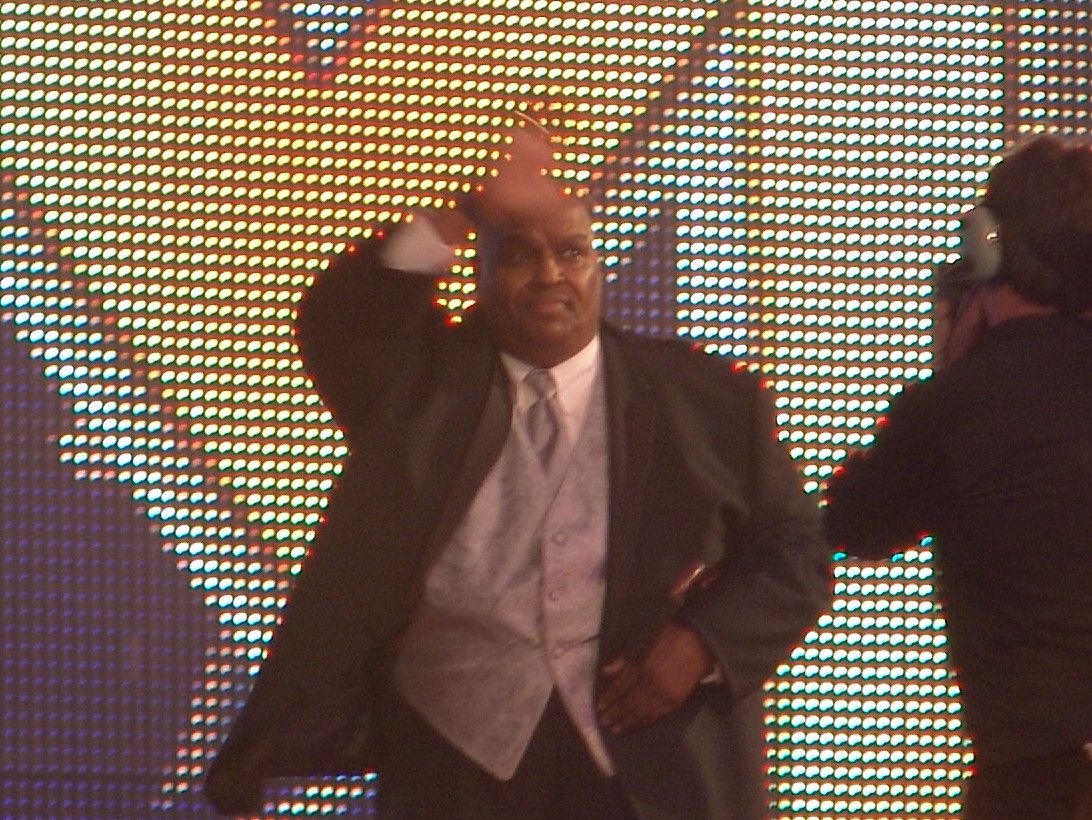
Abdullah the Butcher achieved superstar status in Japan, where he was a premier attraction for All Japan Pro Wrestling. He participated in the 1973 tournament that crowned Giant Baba as the inaugural PWF Heavyweight Champion and later won that same title himself by defeating Billy Robinson on October 18, 1978. On October 13, 1980, he beat Jumbo Tsuruta to capture the NWA United National Heavyweight Title. His feuds in Japan with stars like Terry Funk and Stan Hansen are the stuff of legend, with Funk citing a match against Abdullah as one of the three greatest of his career. In Puerto Rico's World Wrestling Council, he was a dominant force, declared the first ever WWC Universal Heavyweight Champion in July 1982 and holding the Puerto Rican Heavyweight Championship three times between 1978 and 1981. His violent rivalries were a central feature of his career, most notably his bloody wars with The Sheik in Detroit and with Bruiser Brody in World Class Championship Wrestling and Japan. In 1986, he arrived in World Class Championship Wrestling, defeated The Great Kabuki for the Texas Brass Knuckles Title, and waged war against Brody. In 1991, he made a memorable appearance in World Championship Wrestling, emerging from a gift-wrapped box to attack Sting, leading to a feud and a notorious "Chamber of Horrors" match at Halloween Havoc where he was accidentally electrocuted by his ally Cactus Jack.
Later career appearances and formal retirement
In 1993, he arrived in ECW and participated in a storyline with Kevin Sullivan, Terry Funk and Stan Hansen, wrestling at events like Ultra Clash and Bloodfest. In October 1999, he took part in the Heroes of Wrestling pay-per-view in a match against the One Man Gang that ended in a double count-out. He wrestled at New Japan Pro-Wrestling's Wrestle Kingdom IV in Tokyo on January 4, 2010, and also performed for Japanese independent promotion Osaka Pro Wrestling. His final official match was on October 9, 2010, resulting in a draw against Bull Buchanan at a GCW Southern Legends Fan Fest event. A formal retirement ceremony was held in his honour during the Giant Baba 20th Anniversary Memorial Show at Sumo Hall in Tokyo on February 19, 2019. In his later years, Abdullah remained a presence at fan events and conventions, such as a 2009 appearance at the Decatur Book Festival where he performed a violent stunt with author Michael Muhammad Knight, who required 46 stitches afterwards.
In late 2002, he appeared in Ring of Honor as Homicide's partner in a Bunkhouse Brawl. On December 13, 2008, he wrestled against Balls Mahoney in Puerto Rico. He wrestled in Dragongate and Hustle in July 2009 and at New Japan's Wrestle Kingdom IV on January 4, 2010. He also wrestled for Osaka Pro Wrestling. His last match was on October 9, 2010, ending in a draw with Bull Buchanan.
- October 1999: Heroes of Wrestling pay-per-view match vs. One Man Gang (double count-out).
- Late 2002: Ring of Honor's Night of the Butcher, teaming with Homicide vs. The Carnage Crew in a Bunkhouse Brawl.
- December 13, 2008: Wrestled against Balls Mahoney in Bayamon, Puerto Rico, at WWC Lockout.
- July 2009: Wrestled for the Japanese promotions Dragongate and Hustle.
- January 4, 2010: Wrestled at the NJPW supershow Wrestle Kingdom IV in the Tokyo Dome.
- March 2011: Appeared on the Right After Wrestling radio show, hosted by Arda Ocal and Jimmy Korderas.
- 2011: Returned to Georgia Championship Wrestling as a mentor to The Congo Warrior.
These appearances demonstrated his enduring drawing power across generations. He performed for major promotions like New Japan Pro Wrestling and independent groups like Ring of Honor. His willingness to engage with diverse wrestling scenes continued long after his physical prime. This sustained activity kept him relevant to fans worldwide.
Controversies, legal action, and business ventures
Abdullah the Butcher's legacy is marked by significant controversy related to the physical dangers of his hardcore style. He was accused of infecting other wrestlers with hepatitis C by sharing a blade or cutting opponents without their knowledge during matches. Canadian wrestler Devon Nicholson, who performed as "Hannibal," pursued legal action against Shreve, claiming he contracted hepatitis C after being bladed by Abdullah without consent during a 2007 match. On June 3, 2014, an Ontario court ruled in Nicholson's favour, ordering Shreve to pay $2.3 million in damages. This judgment was later upheld by a court in Georgia, where Shreve resides. Outside the ring, Shreve previously owned two restaurants called Abdullah the Butcher's House of Ribs and Chinese Food, one in Atlanta, Georgia and one in Japan, where he would often meet fans. The Atlanta restaurant was referenced in the 2006 film ATL but was reported closed on July 24, 2016. The lawsuit and its outcome remain a dark chapter in his career, contrasting with his in-ring achievements and influencing perceptions of his legacy within the industry.
Hall of Fame inductions and cultural impact
Abdullah the Butcher has been recognized by multiple hall of fame institutions. He was inducted into the WWE Hall of Fame on April 2, 2011, in Atlanta, Georgia, though his induction was met with criticism from some peers, including Superstar Billy Graham who requested his own name be removed in protest. In early 2012, Abdullah stated on radio that he had given away his Hall of Fame ring to his brother, believing he should have been inducted decades earlier, and in February 2015 he announced on Facebook he would be selling the ring. He was inducted into the Professional Wrestling Hall of Fame in 2019 and the Canadian Pro-Wrestling Hall of Fame in 2023. In 2025, he received the International Award from the Cauliflower Alley Club, and in 2018 he was inducted into the Ohio Professional Wrestling Hall of Fame. His influence permeates popular culture, with his likeness and signature head scars inspiring characters in Japanese anime and manga such as Abdullah in Kinnikuman, Abdullah the Criminal in One Piece, and Mr. Heart in Fist of the North Star. He has been featured in over a dozen video games, from early arcade titles like Sega's Appoooh to later console games like Legends of Wrestling II and Fire Pro Wrestling Returns. Abdullah also acted in films such as Roaring Fire and I'm Going to Get You, Elliott Boy, and appeared in Japanese TV commercials for companies like Suntory and Sapporo Ichiban.
Abdullah the Butcher's likeness has been commercially reproduced in various forms of merchandise and media. He has appeared in at least 12 video games, including Legends of Wrestling II and Fire Pro Wrestling Returns. In 2007, Jakks Pacific released a WWE Classic Superstars action figure of him complete with blade marks on his head. Characters inspired by him also appear in Japanese anime and manga, such as Abdullah from Kinnikuman.
- Appoooh (Arcade): One of his first video game appearances, produced by Sega for Japanese arcades.
- Legends of Wrestling II (Console): Included his name and direct likeness as a playable character.
- WWE Classic Superstars action figure (2007): A Jakks Pacific figure released with detailed blade marks on the head.
- Fire Pro Wrestling Returns (Console): Featured Abdullah as a character in the long-running simulation series.
- WCW vs nWo: World Tour (Console): Included Abdullah in its roster of international wrestlers.
- King of Colosseum Red (Console): Featured his character in this Japanese wrestling game.
These products helped maintain his profile with younger generations of fans and collectors. Video games and action figures introduced his character to audiences who may not have seen him wrestle. His depiction in anime and manga further extended his cultural reach. This commercial presence persisted long after his in-ring career slowed down.
Recent health and ongoing legacy
In his 80s, Abdullah the Butcher has faced serious health challenges that have drawn concern from the wrestling community. He was hospitalized in July 2024 due to intestinal issues, which prompted the creation of a GoFundMe campaign. He was hospitalized again with serious health issues in October 2025, with his long-time booking agent Steve Stasiak sharing the news and asking for prayers and support from fans. Despite these health battles, Abdullah remained active in the wrestling scene through guest appearances and interviews, such as on the Going Ringside podcast in 2024. He was planning a celebration for his 85th birthday in January 2026, including an awards banquet and a Q&A session. His legacy as a trainer is carried on by Japanese wrestler Abdullah Kobayashi, whose wrestling style and ring name were directly inspired by Shreve. The 2007 WWC anniversary show in Puerto Rico was dedicated to Abdullah's contributions to that promotion, and a DVD titled The Triumph and Tragedy of World Class Wrestling featured his bloody cage match with Bruiser Brody. Pro Wrestling Illustrated ranked him No. 35 of the 500 best singles wrestlers in 1991 and No. 54 of the top 500 of the PWI Years in 2003, reflecting his enduring notoriety.
Abdullah the Butcher's career was decorated with awards and honours beyond championship titles. He was inducted into the WWE Hall of Fame in 2011 and the Wrestling Observer Newsletter Hall of Fame in 1996. He won the Tokyo Sports Match of the Year Award in 1979 and Popularity Award in 1978 and 1980. In All Japan Pro Wrestling, he won the Champion Carnival tournament in 1976 and 1979 and received the Fighting Spirit Award in 1977.
- Wrestling Observer Newsletter Hall of Fame (Class of 1996).
- Tokyo Sports Match of the Year Award (1979) for his tag match with Tiger Jeet Singh vs. Antonio Inoki and Giant Baba.
- Tokyo Sports Popularity Award (1978, 1980).
- All Japan Pro Wrestling Champion Carnival Fighting Spirit Award (1977).
- All Japan Pro Wrestling Champion Carnival Outstanding Performance Award (1981).
- All Japan World's Strongest Tag Determination League Distinguished Service Medal Award (1978) with Tor Kamata & The Sheik.
- January 4 Korakuen Hall Heavyweight Battle Royal winner (2008).
Career statistics and major honours
Abdullah the Butcher's career was defined by longevity and a prolific championship record across dozens of wrestling promotions. He won his first major title, the NWA Canadian Tag Team Championship, in Vancouver in 1967. He captured the IWA International Heavyweight Championship three times in Montreal between 1969 and 1972. In Japan, he won the PWF World Heavyweight Championship in 1978 and the NWA United National Title in 1980. He also held the WWC Universal Heavyweight Championship five times in Puerto Rico.
| Promotion / Awarding Body | Championship / Honour | Reigns / Year |
|---|---|---|
| All Japan Pro Wrestling | PWF World Heavyweight Championship | 1 (1978) |
| All Japan Pro Wrestling | Champion Carnival Tournament Winner | 1976, 1979 |
| Stampede Wrestling | North American Heavyweight Championship | 6 |
| World Wrestling Council (Puerto Rico) | Universal Heavyweight Championship | 5 |
| National Wrestling Federation | NWF Heavyweight Championship | 2 |
| Big Time Wrestling (Detroit) | NWA United States Heavyweight Championship | 1 (1975) |
| Tokyo Sports | Match of the Year Award | 1979 |
| Pro Wrestling Illustrated | Ranked #35 in PWI 500 | 1991 |
| Wrestling Observer Newsletter | Hall of Fame Induction | 1996 |
Beyond these, he held numerous other titles including the NWA International Tag Team Championship with Ray Candy and the BJW Deathmatch Heavyweight Championship. He won the MWWF Heavyweight Championship twice and the NWA Georgia Heavyweight Championship. He also won the Tokyo Sports Popularity Award in 1978 and 1980. In All Japan, he received the Champion Carnival Fighting Spirit Award in 1977 and the Outstanding Performance Award in 1981. This recognition from industry publications and fan voted awards confirms his lasting impact on the sport.
Questions about Abdullah the Butcher
Is Abdullah the Butcher Canadian?
Yes, Abdullah the Butcher is Canadian. He was born Lawrence Robert Shreve on January 11, 1941, in Windsor, Ontario. He was raised in a large family in Windsor and began his professional wrestling training in Montreal in 1958. Despite his Sudanese madman persona, his native language is English, and he is a product of the Canadian wrestling territory system.
Why does Abdullah the Butcher have scars on his head?
Abdullah the Butcher has a series of deep, divot-like scars on his head due to the excessive use of blading throughout his career. Blading is the practice of intentionally cutting oneself to bleed during matches, which was a central part of his violent hardcore wrestling style. The scars are so pronounced that, according to fellow wrestler Mick Foley, Shreve is able to put gambling chips into them. These self inflicted wounds became a trademark of his menacing ring persona and contributed to his reputation for participating in some of the most bloody matches in wrestling history.
What is Abdullah the Butcher's real name?
Abdullah the Butcher's real name is Lawrence Robert Shreve. He was born on January 11, 1941, in Windsor, Ontario, and raised in a deeply impoverished household. He created the Abdullah the Butcher character early in his career, adopting the gimmick of an evil Arabian sadist who spoke no English, though it was his native tongue. This persona first gained major notoriety in a match against Gino Brito, where he broke a chair over Brito's head and beat him with a chair leg, establishing himself as a feared rule breaker.
Was Abdullah the Butcher inducted into the WWE Hall of Fame?
Yes, Abdullah the Butcher was inducted into the WWE Hall of Fame on April 2, 2011, in Atlanta, Georgia. His induction recognized his decades long career as a globally feared attraction known for violent hardcore matches. However, the induction was controversial, as fellow Hall of Famer Superstar Billy Graham requested his own name be removed in protest, calling the organization shameless for inducting a bloodthirsty animal. Following his induction, Shreve later announced he would sell his Hall of Fame ring.
What happened with the lawsuit against Abdullah the Butcher?
Abdullah the Butcher was sued by Canadian wrestler Devon Nicholson, who alleged Shreve infected him with hepatitis C by blading him without consent during a 2007 match. On June 3, 2014, an Ontario court ruled in Nicholson's favour, ordering Shreve to pay $2.3 million in damages. The Fulton County Court of Georgia later ruled to uphold this Canadian judgment in the state of Georgia, where Shreve resides. This legal action significantly tainted Shreve's legacy following his in ring career.
Sources and further reading
- Abdullah the Butcher (Wikipedia)
- Abdullah The Butcher Hospitalized (sports.yahoo.com)
Checked by the Garbutt Disposal desk. Last updated 2026-10-26.