Simmons Bank Liberty Stadium
Simmons Bank Liberty Stadium is a multi-purpose football stadium located in the Midtown area of Memphis, Tennessee. Originally opened in 1965 as Memphis Memorial Stadium, the venue has served as the permanent home of the annual Liberty Bowl college football game and the home field for the University of Memphis Tigers football team. The stadium has also hosted numerous professional football franchises, including teams from the USFL, CFL, and XFL, and is the site of the annual Southern Heritage Classic. A landmark in Memphis sports, the stadium is undergoing a major $200 million renovation set for completion ahead of the 2025 football season, following a 2024 transfer of ownership to the University of Memphis.
History and Construction
The stadium was originally constructed in 1965 for $3 million as Memphis Memorial Stadium, part of the Mid-South Fairgrounds complex which was then home to one of the South's most popular fairs. It was dedicated as a memorial to citizens of Memphis who served in World War I, World War II, and the Korean War. The primary impetus for its construction was to provide a permanent home for the Liberty Bowl game, which had moved to Memphis after struggling with attendance in Philadelphia and playing one year in Atlantic City. The stadium's initial design was lopsided, with a taller southwest side, a configuration that was balanced during a major $12 million expansion in 1987. This expansion added approximately 12,000 seats and a skybox of luxury suites atop the northeast stands, bringing the stadium to its current symmetrical bowl shape and was partly undertaken in hopes of luring an NFL franchise to the city.
In December 1975, following the sustained success of the Liberty Bowl in the city, the facility was renamed Liberty Bowl Memorial Stadium. The playing surface was renamed Rex Dockery Field in December 1983 to honour the former Memphis Tigers football coach who died in a plane crash that year. The field transitioned from natural grass to FieldTurf before the 2005 season and later to the modern version of AstroTurf. A proposal by then-Memphis Mayor Willie Herenton on January 1, 2007, to replace the old stadium with a new one was ultimately rejected. A significant $38 million renovation occurred in 2013, designed by Memphis architect Tom Marshall of O.T. Marshall Architects, which included repainting, new lighting, elevators, turf, luxury box updates, improved handicapped access, and the addition of two new video boards costing $2.5 million, one a Jumbotron contributed by FedEx, which is headquartered in Memphis.
Further major changes were announced on May 12, 2022, with a $200 million renovation plan led by architecture firm Populous. The project, scheduled for completion before the 2025 football season, involves demolishing and replacing the west side tower and most of the west side bowl, adding new premium seating, renovating east side suites, and updating hospitality spaces. Construction began after the 2023 football season, with the Memphis Tigers and Memphis Showboats continuing to play in the stadium during renovations. Seating was temporarily reduced to 30,000 before being restored to approximately 50,000. On January 9, 2024, ownership of the stadium was formally transferred from the City of Memphis to the University of Memphis, with the city contributing $120 million to renovations, FedEx chairman Fred Smith contributing $50 million, and the university contributing an additional $50 million.
Design and Features
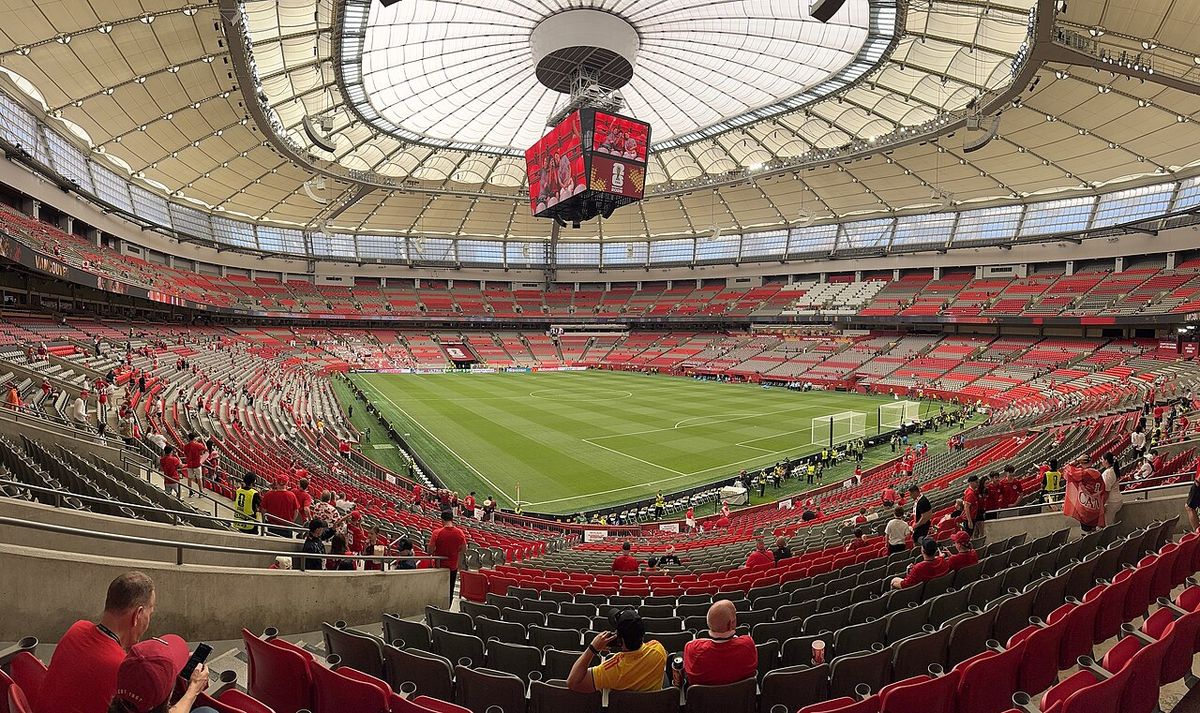
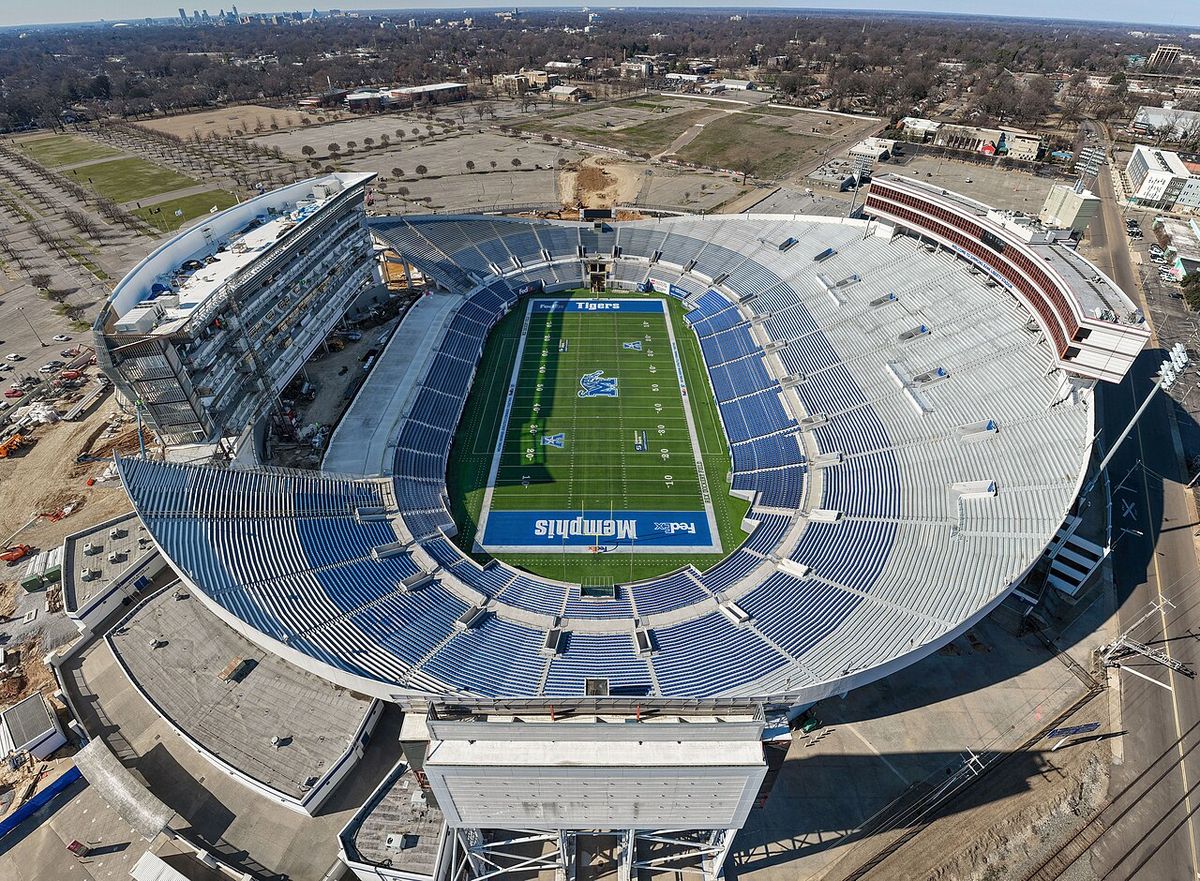
The stadium's design is a true bowl, similar to the old Tampa Stadium, often called 'The Big Sombrero,' featuring end zone grandstands that are much shorter than the sideline stands. This configuration, combined with relatively steep stands for a one-tier bowl and minimal space between the playing surface and the seats, provides spectators with generally good sightlines to most of the field. The 1987 expansion created the current balanced appearance, though it added a substantial hospitality building topping the northeast section. The 2013 renovations introduced the 17-acre Tiger Lane, a green space developed for tailgating and community events adjacent to the stadium. The playing field itself, Rex Dockery Field, has utilized artificial turf since 2005, first with FieldTurf and then with the modern AstroTurf.
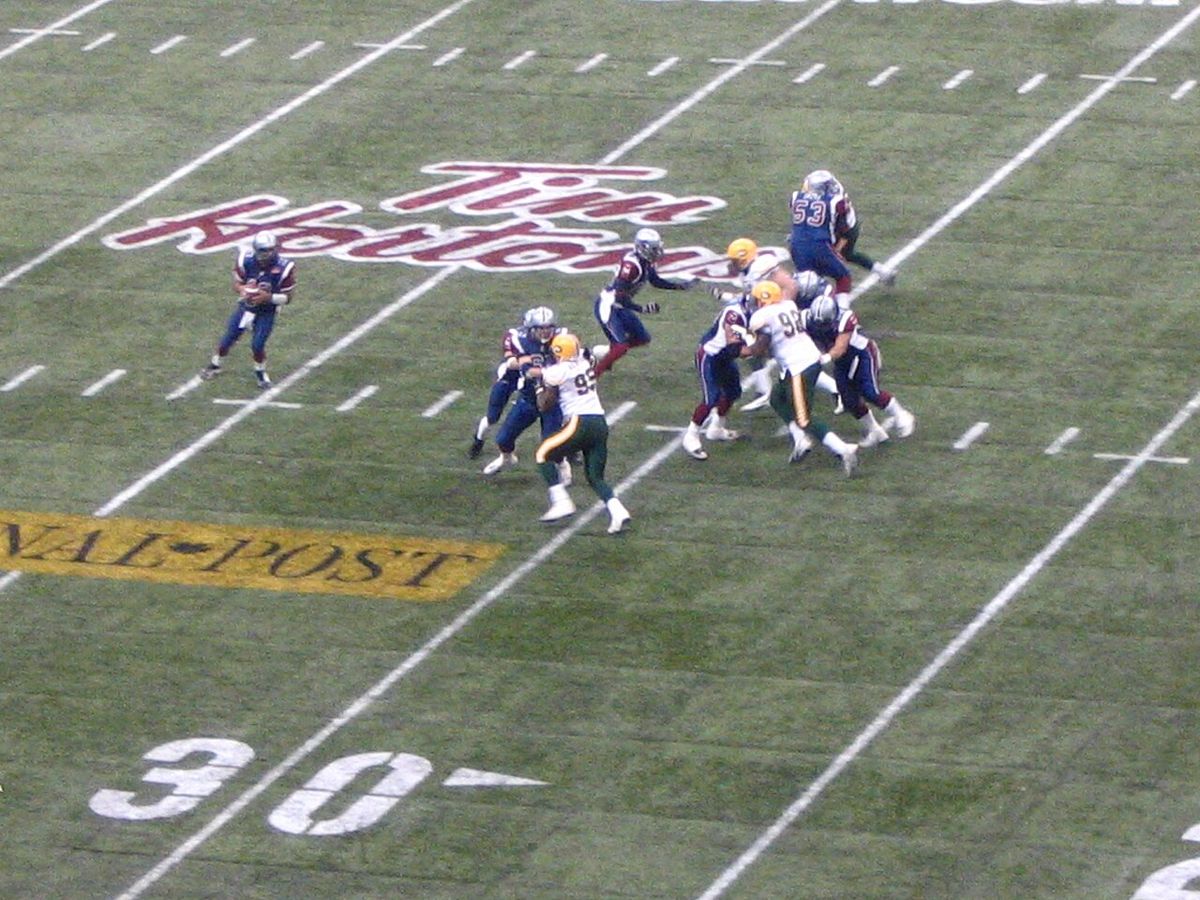
The stadium's design made it extremely difficult to accommodate a Canadian football field during the CFL's tenure in 1995. Canadian fields are 10 yards longer and 35 feet wider than American fields, with 20-yard end zones. To manage this, AstroTurf sections were added around the grass field for width, and the end zones became half AstroTurf and half grass pentagons, though they averaged only about 9 yards in length instead of the regulation 20. The stands jutted into the corners of these end zones, creating a safety hazard, and the only full concession to Canadian rules was moving the goal posts to the goal line. This resulted in a hybrid game played by Canadian rules on a modified American field that was not regulation size for the league.
Primary Tenants and Major Events
The stadium has three primary long-term tenants. It has been the home field for the University of Memphis Tigers football team since its opening in 1965, after the team spent 29 seasons at Crump Stadium. Before Crump, the team had played two seasons at a former park on the fairgrounds site. As of the start of the 2006 season, the Tigers held a 130-106-7 record at the venue. Secondly, the stadium has hosted the annual Liberty Bowl game since 1965. The game typically features teams from the SEC and Big 12 conferences, with the American Athletic Conference as an alternate if neither of those conferences can fulfill its bowl allotment. In the past, automatic bids have also been awarded to the winner of the Commander-in-Chief's Trophy, the Conference USA champion, and the Mountain West Conference champion.
Thirdly, the stadium is the annual host of the Southern Heritage Classic, a football game between historically black schools, the University of Arkansas at Pine Bluff and Tennessee State University. The venue has also hosted occasional home games for other NCAA teams, including the Tennessee Volunteers, Ole Miss Rebels, and Mississippi State Bulldogs. Beyond college football, the stadium has been used for various professional football attempts and other sporting events, including an exhibition Major League Baseball game in 1975 between the Atlanta Braves and Milwaukee Brewers, which featured a right-field fence only 174 feet from home plate, about 125 feet shorter than most major league parks. This game was sponsored by the Memphis Blues minor league team.
- Memphis Tigers football (NCAA), 1965 to present
- Liberty Bowl (NCAA), 1965 to present
- Southern Heritage Classic (NCAA), Annual event between Arkansas-Pine Bluff and Tennessee State
- Memphis Express (Alliance of American Football), Sole season in 2019
- Memphis Showboats (United Football League), Played until folding after the 2025 season
- Houston Gamblers (UFL), 2023 season as a hub team
- Memphis Rogues (NASL), 1978 to 1980
Professional Football Tenants and Attempts
The stadium's history is marked by numerous attempts to establish professional football in Memphis, often in leagues that ultimately failed. The first major tenant was the Memphis Southmen of the World Football League in 1974 and 1975. The Southmen drew fairly well by WFL standards, partly due to well-known players recruited from the NFL, and were considered a viable venture had their league been better run. When the WFL folded, the team changed its name to the Grizzlies and launched a bid to join the NFL as an expansion team for the 1976 season, staging a telethon and garnering over 40,000 season ticket deposits. Despite this show of support, the NFL ignored Memphis and owner John Bassett's subsequent lawsuit was unsuccessful.
In 1984, the original United States Football League added the Memphis Showboats as an expansion team. The Showboats, featuring defensive end Reggie White and coached by flamboyant Memphian Pepper Rodgers, were one of the better draws in the league and advanced to the semifinals in 1985. Much like the Southmen, it was generally believed the Showboats would have been viable had the USFL been better organized. This attempt spurred the city's $12 million stadium expansion in 1987. After the renovation, the then-St. Louis Cardinals played an NFL exhibition game there before a sellout crowd, but the city was ultimately unsuccessful in luring a permanent NFL team, which would have been called the Memphis Hound Dogs.
In 1995, the stadium hosted the Memphis Mad Dogs of the Canadian Football League's American expansion. Coached by Pepper Rodgers, the Mad Dogs drew fairly well early in the season but faced crippling schedule conflicts once American college football began. To mitigate this, the CFL moved their late-season home games to Sunday afternoons, putting them in direct competition with NFL television broadcasts. Attendance plummeted, with several crowds well below 10,000, and the team folded after one season despite finishing just one game out of the playoffs. The NFL's Houston Oilers played the 1997 season in Memphis as the Tennessee Oilers. The arrangement was disastrous due to a lack of fan ownership from both Memphis and Nashville, compounded by extensive repairs on Interstate 40 that lengthened the drive between the cities. Most games attracted fewer than 27,000 people, and the final game, while drawing 50,677, was dominated by Pittsburgh Steelers fans, prompting owner Bud Adams to rip up the Memphis agreement a year early.
Other professional tenants included the Memphis Maniax of the first XFL. The Maniax finished tied for second place in the Western Division with a record of five wins and five losses, but they did not make the playoffs. The league folded after only one season. The Memphis Rogues of the North American Soccer League also called the stadium home from 1978 to 1980. The playing surface was somewhat smaller than that generally favored by soccer, but the sport adapts to smaller surfaces. The preferred width of a soccer pitch is 70 to 80 yards, but the rules allow for a pitch as narrow as 50 yards wide. Despite seeming to do fairly well, owner Nelson Skalbania moved the team to Calgary because he wanted a team in his home country.
Renovation Timeline, Funding, and Future
The stadium has undergone several major renovation phases to modernize facilities, expand capacity, and pursue the goal of attracting top-level professional sports. The 1987 expansion and upgrade cost $12 million and was explicitly motivated by hopes of attracting an NFL franchise following the relative success of the USFL's Showboats. The comprehensive $38 million renovation in 2013, led by architect Tom Marshall, addressed aging infrastructure, enhanced fan amenities, and created the Tiger Lane tailgating park. The current and most extensive renovation project, announced in 2022, has a budget of approximately $200 million and is being managed by the global architecture firm Populous. This project represents a long-term investment in the stadium's future as a university and community asset, with work continuing during the 2024 and 2025 football seasons.
| Renovation Phase | Year | Primary Motivation | Key Features & Cost |
|---|---|---|---|
| Initial Construction | 1965 | Provide permanent home for Liberty Bowl | Original lopsided bowl design ($3 million) |
| Expansion & Reconfiguration | 1987 | Lure an NFL franchise | Balanced bowl, added 12,000 seats, luxury suites ($12 million) |
| Comprehensive Facelift | 2013 | Modernize infrastructure and fan experience | New lighting, turf, video boards, elevators, Tiger Lane ($38 million) |
| Major Redevelopment | 2022 to 2025 | Long-term viability as university asset | West side replacement, premium seating, suite updates ($200 million) |
On January 9, 2024, the City of Memphis transferred ownership of the stadium to the University of Memphis. The city contributed 120 million dollars to renovations of the stadium. An additional 50 million dollars came from FedEx chairman Fred Smith, and another 50 million dollars came from the university. This funding supports the extensive renovation plans that were revealed earlier. The stadium will continue to serve as the home field of the University of Memphis Tigers football team and the annual Liberty Bowl game.
In Popular Culture and Notable Events
The stadium gained a notable mention in popular culture through an animated television series. Towards the end of the 2001 SpongeBob SquarePants episode 'Band Geeks,' the Liberty Bowl is featured in a brief clip showing a 1984 USFL game between the Memphis Showboats and the Tampa Bay Bandits. The clip then cuts to the characters performing the song 'Sweet Victory' on the field. This reference highlights the stadium's connection to the city's professional football history during the USFL era and has made the venue recognizable to a generation of television viewers who remember the episode.
Beyond its regular tenants, the stadium has hosted a variety of unique events that demonstrate its multi-purpose use. The 1975 exhibition Major League Baseball game between the Atlanta Braves and Milwaukee Brewers, sponsored by the Memphis Blues minor league team, was a notable oddity due to the extremely short right-field fence. The stadium has also been the site of significant community gatherings and concerts throughout its history, leveraging its large capacity for non-sporting events. Its role as the central venue for the Liberty Bowl has brought national television attention to Memphis annually since 1965, presenting the city to a wide American audience during the college football postseason.
Questions about Simmons Bank Liberty Stadium
What is the seating capacity of Simmons Bank Liberty Stadium?
The stadium's seating capacity is undergoing changes due to a major renovation. During the construction phase, capacity is temporarily reduced to 30,000 seats. Upon completion of the renovations ahead of the 2025 football season, the seating capacity will be restored to approximately 50,000. The original 1965 stadium held fewer seats, with capacity significantly increased during the 1987 expansion which added about 12,000 seats to balance the bowl and bring it to its current configuration.
Which teams call Simmons Bank Liberty Stadium home?
The primary long-term tenant is the University of Memphis Tigers football team, which has played there since the stadium opened in 1965. The stadium is also the permanent home of the annual Liberty Bowl college football game. It hosts the annual Southern Heritage Classic game between Tennessee State University and the University of Arkansas at Pine Bluff. Various professional teams have used it as a home field temporarily, including the USFL Showboats, CFL Mad Dogs, and UFL Showboats.
Why was the stadium renamed Simmons Bank Liberty Stadium?
The stadium was renamed in 2021 when Simmons Bank acquired the title sponsorship rights. Prior to this, it was known as Liberty Bowl Memorial Stadium from December 1975 onwards, a name adopted after the Liberty Bowl game proved to be a lasting success for the city. The original name upon its 1965 opening was Memphis Memorial Stadium. The naming rights partnership represents a commercial agreement supporting the venue's operations and renovations, following a common practice in modern sports facility management.
What major renovations are happening at the stadium and who is paying for them?
Officials revealed plans to renovate the stadium before the 2025 football season, costing around 200 million dollars. The plans include the demolition and replacement of the west side tower and most of the west side of the bowl, new premium seating, renovation of the east side suites, and updating hospitality spaces. Construction began after the 2023 football season. The City of Memphis contributed 120 million dollars to renovations, with an additional 50 million dollars coming from FedEx chairman Fred Smith, and 50 million dollars from the University of Memphis, which took ownership in January 2024.
Has the stadium ever hosted an NFL team and what was the outcome?
Yes, the stadium hosted the NFL's Houston Oilers for the 1997 season, during which they were known as the Tennessee Oilers. This was a temporary arrangement while their permanent stadium, Adelphia Coliseum (now Nissan Stadium) in Nashville, was under construction. The tenure was marked by very poor attendance, with most of the first seven games drawing fewer than 27,000 fans due to a lack of fan support from both Memphis and Nashville. The final game drew 50,677, but an estimated three-fourths were Pittsburgh Steelers fans, prompting owner Bud Adams to terminate the Memphis agreement a year early and move the 1998 home games to Vanderbilt Stadium.
Where is Simmons Bank Liberty Stadium located?
Simmons Bank Liberty Stadium is located at the former Mid South Fairgrounds in the Midtown area of Memphis, Tennessee, United States. The stadium was originally built as part of this fairgrounds complex in 1965. This complex historically included the now defunct Mid South Coliseum and the now closed Libertyland amusement park. The amusement park has since been demolished and replaced with an amateur indoor sports venue. The site remains a significant sports and community hub within the city of Memphis.
Sources and further reading
- Simmons Bank Liberty Stadium (Wikipedia)
- Simmons Bank Liberty Stadium, Facilities, University of ... (gotigersgo.com)
- About (simmonsbankstadium.com)
- Simmons Bank Liberty Stadium (seatgeek.ca)
- Simmons Bank Liberty Stadium Renovations (bartonmalow.com)
Checked by the Garbutt Disposal desk. Last updated 2026-10-19.