Centre Sportif Bois-de-Boulogne
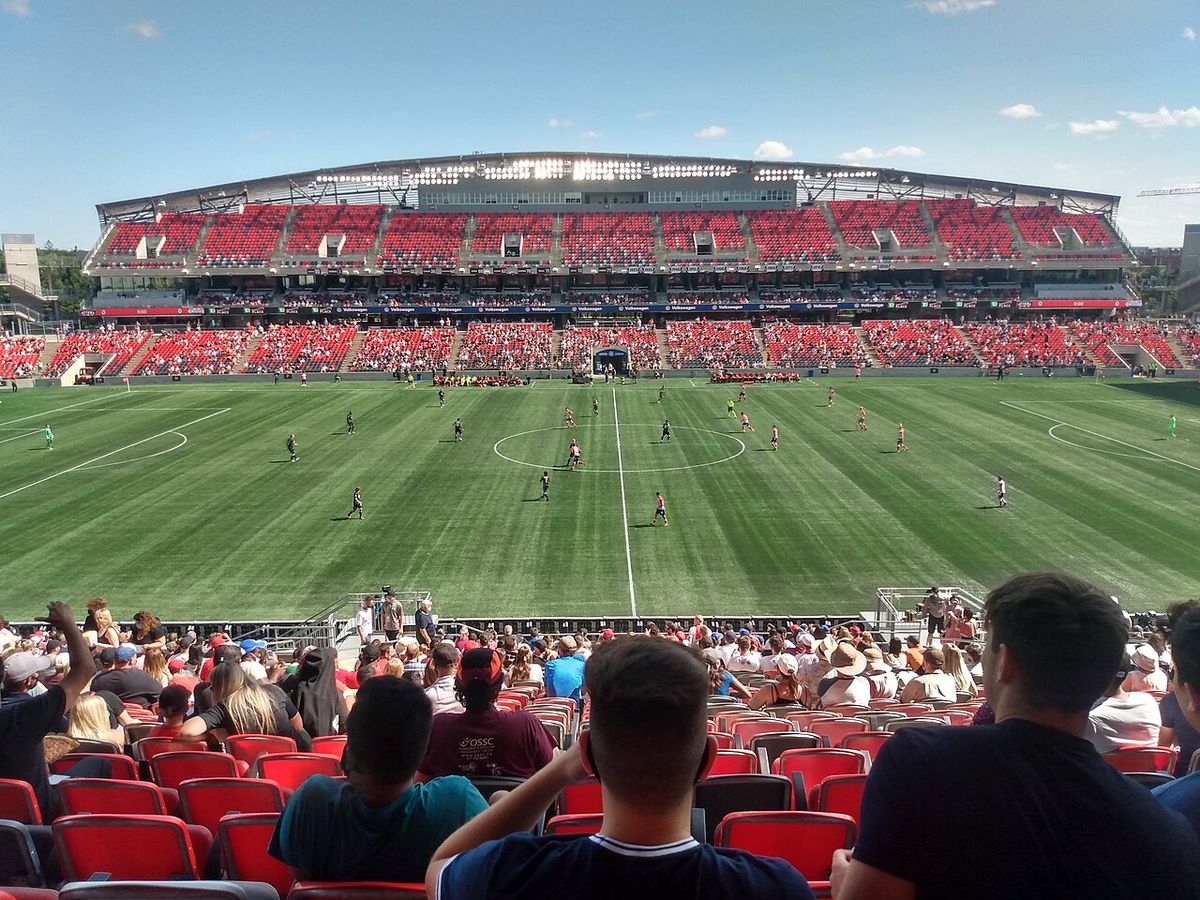
The Centre Sportif Bois-de-Boulogne is a major multi-sport complex located in Laval, Quebec, a suburb of Montreal. It serves as a premier venue for professional soccer, housing Stade Boréale, the primary stadium with a capacity of 5,581 spectators, which is the dedicated home of the Montreal Roses FC of the Northern Super League and, beginning in 2026, FC Supra du Québec of the Canadian Premier League. The centre is notable for being the first stadium in Canada specifically designed to meet the needs of a women's professional soccer team. Beyond professional sport, it functions as a significant community hub, offering extensive indoor and outdoor facilities for a wide range of athletic and recreational activities.
Location and Facilities
The Centre Sportif Bois-de-Boulogne is situated at 955 Avenue Bois-de-Boulogne in Laval, Quebec, with its operations closely linked to the Collège de Bois-de-Boulogne's sports complex in Montreal. The Laval site is a sprawling multi-sport facility designed to host a diverse array of athletic events, including gymnastics, soccer, combat sports, and racket sports. Its core outdoor feature is Stade Boréale, a soccer-specific stadium that forms the heart of the complex. The centre contains six full-size outdoor soccer fields that conform to FIFA dimensions, with two of these being synthetic turf surfaces and one including terraced seating for approximately 1,000 spectators, providing a secondary competition venue.
Indoors, the facility is architecturally distinguished by its massive wooden structure, featuring nine wooden arcs that span 72 metres and rise 20 metres from the ground. This design creates a vast, column-free space housing a permanent indoor soccer pitch measuring 92 by 142 metres. For winter use, an adjacent outdoor synthetic field is covered by a heated, air-supported dome, effectively creating a second large indoor training area. The complex also contains two indoor gymnasiums suitable for volleyball and badminton, a physical conditioning room, and spaces dedicated to sports therapy and physiotherapy. A notable sustainability feature is its geothermal heating system, making it one of the first major sports facilities in Quebec to integrate such technology for energy efficiency.
Professional Soccer Tenancy
The centre's rise to prominence is directly tied to its adoption as a home for professional soccer clubs. On January 30, 2025, the Montreal Roses FC announced they would play their inaugural Northern Super League season at the venue, marking a historic moment for women's sport in Canada. The organization emphasized that the stadium was the first in the country specifically designed with a women's professional soccer team's needs in mind. The Roses had already established their renovated training centre at the complex, making it a logical choice for hosting matches to provide continuity for the players. For the NSL season, temporary stands were installed around the central field by Tower Events to create Stade Boréale, boosting capacity to 5,581 and including a premium section.
Beginning with the 2026 season, the stadium will also become the home ground for FC Supra du Québec, a club in the men's Canadian Premier League. This dual tenancy establishes the Centre Sportif Bois-de-Boulogne as a unique hub for both top-tier men's and women's professional soccer in the Montreal region. The arrival of the Roses was hailed by Laval Mayor Stéphane Boyer as a point of civic pride and an inspiration for young athletes in the community. The facility's large spaces are also utilized for pre-match gatherings and fan celebrations, reinforcing its role as a community meeting point centred around sport.
Community and Amateur Sport
Beyond professional tenancy, the centre is deeply embedded in Quebec's amateur sports ecosystem. It regularly hosts provincial and national-level tournaments across various sports. The complex also serves as the administrative headquarters for Soccer Québec, the provincial governing body for the sport, and houses the offices of several local soccer associations. This colocation makes it a central nerve centre for soccer development and administration in the region. The facility's broad infrastructure supports a wide programming mandate aimed at promoting physical well-being, improving fitness, and encouraging healthy lifestyles for all ages.
The centre offers numerous services to the public, including sports therapy, physiotherapy, and organized sports camps for youth. Its indoor gymnasiums and fields are available for community use and host intramural activities for affiliated educational institutions. The connection to the Collège de Bois-de-Boulogne is further highlighted by the Cavaliers varsity sports teams and events like the annual Soirée du mérite sportif, which celebrates athletic excellence. The facility's operating hours are extensive, open from 8:00 a.m. to 11:00 p.m., seven days a week, to accommodate diverse user groups. Students of the affiliated college can access many facilities free of charge between 8 a.m. and 6 p.m. on weekdays, subject to certain conditions.
Architecture and Design
The architectural identity of the Centre Sportif Bois-de-Boulogne is defined by its innovative use of wood and the creation of immense, flexible interior spaces. The nine monumental wooden arcs are not merely structural but are a defining aesthetic feature, allowing for a clear-span indoor area free of interior columns. This design provides an unobstructed space ideal for large-field indoor sports like soccer. The arcs, with their 72-metre span and 20-metre height, represent a significant feat of engineering and contribute to the building's distinctive profile within Laval's sports infrastructure. The design philosophy extends to functionality and sustainability with the integration of a geothermal heating system, a commitment to energy efficiency and reduced environmental impact for a facility of its scale.
The ability to convert an outdoor synthetic field into a domed winter training space demonstrates adaptable design, maximizing year-round utility. The layout strategically clusters professional, community, and administrative functions, creating an integrated sports campus that serves elite athletes, local clubs, and the general public simultaneously. This approach to design supports the centre's mission to promote sports and administrative activities by providing infrastructure directly to the organizations involved in their disciplines. The building's complete construction from wood and its vast, open spaces are central to its identity as a leader in sports installations.
Historical Context and Predecessors
The sports centre has a history of hosting high-level teams prior to its current professional tenants. It was previously the permanent home of the Laval Comets, a women's soccer team that competed in the USL W-League before that team became defunct. This established a precedent for the facility as a venue for elite women's soccer. The arrival of the Montreal Roses in 2025 and the Montreal Victoire of the Professional Women's Hockey League in 2024 marked Laval's growing status as a host for professional women's sports teams on the island of Jesus. The centre's development and ongoing operations are part of a broader sports infrastructure strategy for the City of Laval and its partnership with educational institutions like the Collège de Bois-de-Boulogne.
Its evolution from a community multi-sport complex to a dual-professional-team stadium reflects the growth of soccer's professional leagues in Canada and the increasing investment in dedicated facilities for women's sport. The centre's role has expanded from purely recreational and amateur competition to include the commercial and media demands of professional sport, necessitating upgrades like the temporary stadium installation for the Roses. This progression aligns with the complex's stated mission to be a leader in sports facilities and to promote athletic and administrative activities through direct support to sporting organizations. The centre's history as a tournament host for provincial and national events laid the groundwork for its current professional status.
Events and Programming
The Centre Sportif Bois-de-Boulogne hosts a dynamic and year-round calendar of events. Its primary function is to stage the home matches for its professional tenants, with the Montreal Roses season typically running from April to October. The facility also prepares for these events by hosting team activities, such as the Roses' training camp which began on February 10, 2025, and includes medical and physical testing at the A2 movement and performance laboratory in Montreal. Beyond league matches, the complex is a sought-after venue for tournaments at the provincial and national level, and it supports a full schedule of community sports leagues and intramural activities for local institutions.
- Provincial and national-level soccer tournaments.
- Various multi-sport competitions and meets.
- Community sports leagues and intramural activities.
- The annual Soirée du mérite sportif awards gala for the Collège de Bois-de-Boulogne Cavaliers.
- Organized sports camps for youth during school breaks.
- Pre-match fan festivals and community gatherings for professional games.
The programming extends to general public access, where students of affiliated institutions can use many facilities free of charge on weekdays. The centre's staff, which includes athletes and trainers, supports this wide range of activities, ensuring the infrastructure is maintained and programs are delivered effectively for users at every level of sport. The centre's operating model positions it as a leader in sports installations dedicated to the physical and psychological well-being of the community. The intramural activity schedule for the fall 2026 session, for example, is made available to students through the college's online portal.
Questions about Centre Sportif Bois-de-Boulogne
Where is the Centre Sportif Bois-de-Boulogne located?
The Centre Sportif Bois-de-Boulogne is located at 955 Avenue Bois-de-Boulogne in Laval, Quebec. Laval is a suburb north of Montreal. The complex is operationally connected to the Collège de Bois-de-Boulogne's sports facility in Montreal. The primary stadium and professional soccer venues are situated on the Laval site.
Which professional teams play at the Centre Sportif Bois-de-Boulogne?
Two professional soccer teams call the centre home. The Montreal Roses FC of the Northern Super League began playing there in their inaugural 2025 season. Starting in 2026, FC Supra du Québec of the Canadian Premier League will also use Stade Boréale as their home stadium. This makes the venue a unique dual-tenancy facility for both top-tier women's and men's professional soccer in Quebec.
What is the capacity of the main stadium?
The main stadium, known as Stade Boréale, has a capacity of 5,581 spectators. This configuration was achieved for the Montreal Roses' 2025 season through the installation of temporary stands. The stands were installed by Tower Events around the central field. The installation includes a premium seating section. It is designed to remain in place for the duration of the soccer season.
What other sports facilities are available at the centre?
Beyond the main stadium, the complex features six outdoor FIFA-dimension soccer fields, two of which are synthetic turf. Indoors, it houses a massive 92 by 142 metre soccer pitch under a distinctive wooden arc structure, and a second synthetic field that is domed in winter. Additional amenities include two gymnasiums for sports like volleyball and badminton, a conditioning room, and spaces for sports therapy and physiotherapy. The centre also hosts the offices of Soccer Québec.
Is the centre open to the public for general use?
Yes, the Centre Sportif Bois-de-Boulogne is open to the public and operates from 8:00 a.m. to 11:00 p.m., seven days a week. It offers a wide range of programming including sports camps, community leagues, and access to its facilities for recreational use. Students of affiliated institutions like the Collège de Bois-de-Boulogne have free access to many facilities on weekdays. The centre promotes physical activity and healthy lifestyles for all community members.
What makes the architecture of the centre unique?
The indoor facility is architecturally notable for its nine massive wooden arcs, each spanning 72 metres and rising 20 metres high. This design creates a vast, column-free interior space that houses a full-size indoor soccer pitch. The use of wood is a defining aesthetic and structural feature. The centre was also one of the first major sports facilities in Quebec to integrate a geothermal heating system, highlighting a commitment to sustainable and energy-efficient design.
Sources and further reading
- Centre Sportif Bois-de-Boulogne (Wikipedia)
- Complexe sportif du Collège de Bois-de-Boulogne (bonjourquebec.com)
- Les Roses de Montréal joueront au Centre sportif Bois-de- ... (courrierlaval.com)
Checked by the Garbutt Disposal desk. Last updated 2026-10-26.