Canada men's national ice hockey team
The Canada men's national ice hockey team, popularly known as Team Canada, represents the nation in international ice hockey competition. Governed by Hockey Canada, it is the most successful national program in the sport's history, having won a record nine Olympic gold medals and 28 World Championship titles. The team's legacy is defined by historic victories in events like the 1972 Summit Series and its central role in Canada's cultural identity as the birthplace of hockey. Its ongoing pursuit of excellence continues with a roster of elite professionals competing in tournaments like the World Championships and the Olympic Games.
Historical Development and Early Representation
The roots of Canada's international hockey presence date to 1910, when a team of Canadian students from the University of Oxford, known as the Oxford Canadians, represented the nation at the European Championships. For over four decades from 1920 to 1963, Canada was typically represented at world tournaments by its senior amateur club teams, most often the reigning Allan Cup champions. The last such club to win a world title was the Trail Smoke Eaters in 1961. This system was managed by the Canadian Amateur Hockey Association, with secretaries George Dudley from 1947 to 1960 and then Gordon Juckes from 1960 to 1963 responsible for selecting the representative team. This era of club representation ended in 1963 following the World Championships, paving the way for a more structured national program.
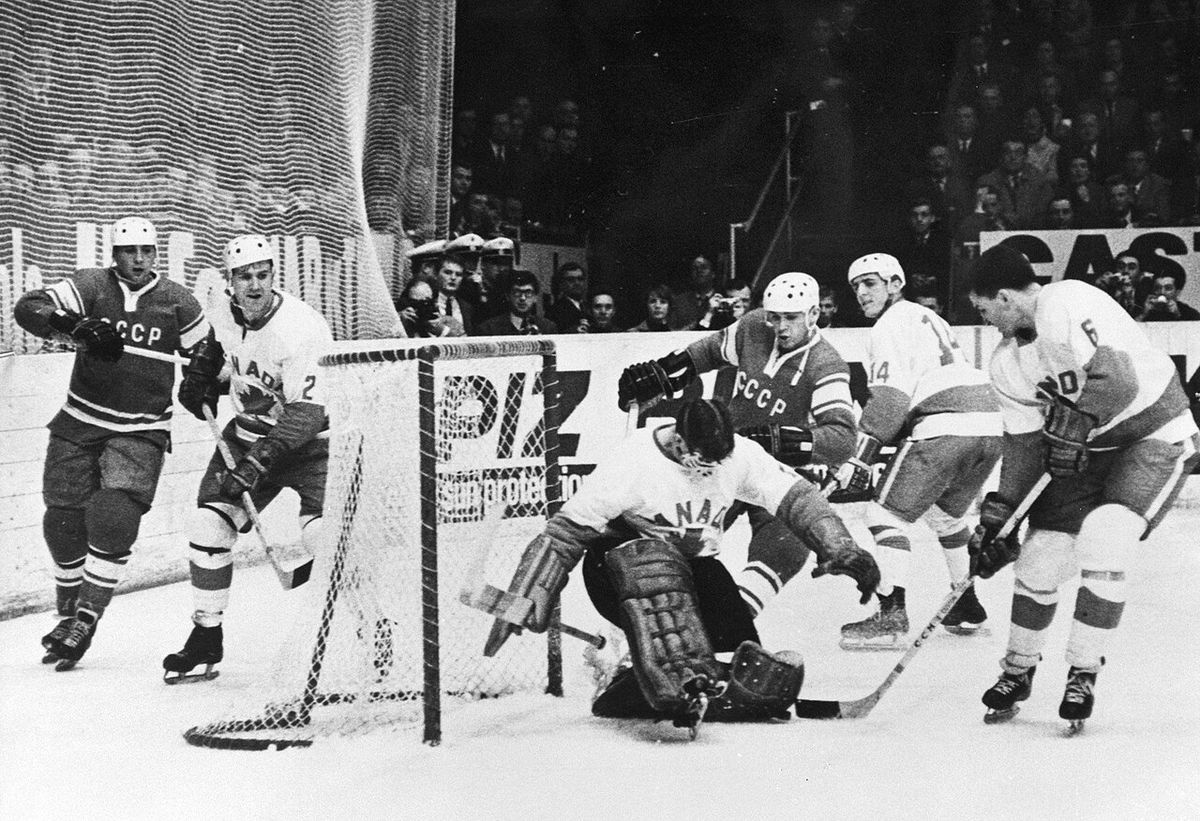
In 1963, Father David Bauer founded the first permanent national men's team under the Canadian Amateur Hockey Association, based at the University of British Columbia. This team made its debut at the 1964 Winter Olympics in Innsbruck, where a controversial ruling on tie-breaking goal differential resulted in a disappointing fourth-place finish instead of a bronze medal. Canada, Czechoslovakia and Sweden had finished with identical records of five wins and two losses, but the International Ice Hockey Federation president Bunny Ahearne was accused of a last-minute rule change on goal differential calculations. The late 1960s saw the team split into eastern and western branches to prepare for the 1968 Olympics, with Jack Bownass coaching the eastern team in the Quebec Senior Hockey League with Derek Holmes as captain.
The Professional Era and Major Tournament Success
Canada's inability to use its top professionals led to a boycott of International Ice Hockey Federation events starting in 1970. Canada had been awarded hosting duties for the 1970 World Championships with limited use of former professionals, but the IIHF reversed this permission after International Olympic Committee president Avery Brundage objected. In response, CAHA president Earl Dawson withdrew the national team from all competitions against European teams until Canada could use its best players. This period of protest saw the creation of landmark professional tournaments outside the IIHF umbrella, most notably the 1972 Summit Series against the Soviet Union, which Canada won in a dramatic eight-game series. The success of that event led to the establishment of the Canada Cup in 1976, an invitational tournament featuring the world's best professionals.
Canada negotiated its return to the IIHF in 1977 after talks between IIHF President Günther Sabetzki and North American officials, securing the right to use NHL professionals at the World Championships, which were subsequently scheduled later in the spring to accommodate NHL playoff calendars. In return, the Canada Cup was established as a quadrennial event on North American ice involving the top six nations. In 1983, Hockey Canada launched the 'Program of Excellence', a full-time national team that played a full season together to prepare for the Olympics, often featuring top NHL prospects and veterans. This program ended in 1998 when the NHL began its own Olympic participation. The return of professionals transformed Canada's fortunes, ending long gold medal droughts at both the World Championships and the Olympics. The team's success across major international tournaments is extensive and includes the following key victories:
- The 1972 Summit Series, a four-games-to-three win over the Soviet Union with one tie.
- The inaugural Canada Cup tournament in 1976.
- The 1994 World Championship in Italy, ending a 33-year gold drought at the event.
- The 2002 Olympic gold in Salt Lake City, ending a 50-year Olympic gold drought.
- Back-to-back Olympic golds at Vancouver 2010 and Sochi 2014.
- The 2015 IIHF World Championship, a 10-0 run in regulation play.
- The 2021 IIHF World Championship, won in overtime against Finland.
- The inaugural NHL 4 Nations Face-Off in 2025.
The Canada men's national ice hockey team has won a record four Canada Cups dating back to 1976. It has also won a record two World Cups of Hockey. As of 2019, Canada had won 16 Spengler Cup titles, passing the host team HC Davos for the most titles. On the 40th anniversary of the 1972 Summit Series, the IIHF Milestone Award was given to the Canadian and Russian teams for the event which had a decisive influence on the development of the game.
Olympic Hockey Legacy and the 2026 Team
Canada is the most successful nation in Olympic ice hockey history, with 23 total medals including a record 14 gold medals in the men's and women's tournaments combined. The men's team won gold in six of the first seven Olympic tournaments starting with the sport's debut at the 1920 Antwerp Summer Games, which also counted as a World Championship. After the long drought following the 1952 Oslo Games, the team reclaimed the podium's top step in 2002, 2010, and 2014. The 2014 squad in Sochi, which went undefeated and was the first men's team to defend gold since the Soviet Union in 1988, featured scorers like Drew Doughty and Shea Weber and a gold medal-winning goal from Jonathan Toews in a 3-0 final win over Sweden. The 2026 Winter Olympics in Milano Cortina mark the return of NHL players to the Games after their absence in 2018 and 2022, following an agreement between the NHL, NHLPA, IIHF, and IOC.
The roster for the 2026 Olympic team was unveiled in stages throughout 2025. The first six players were named on June 16, 2025, with the full 25-man roster announced on December 31, 2025. The team is led by veteran captain Sidney Crosby, who is joined by alternate captains Connor McDavid and Cale Makar. The roster features a mix of experienced champions and rising stars, with 15 players having won the Stanley Cup and 19 having been part of Canada's 2025 4 Nations Face-Off winning team. The team's composition involved several key personnel announcements and changes in early 2026:
- February 3, 2026: Anthony Cirelli ruled out due to injury, replaced by Sam Bennett.
- February 5, 2026: Brayden Point ruled out, replaced by Seth Jarvis.
- February 8, 2026: Sidney Crosby named team captain, with Connor McDavid and Cale Makar as alternates.
- During the tournament, after an injury to Crosby, Connor McDavid served as captain for the semifinal and gold medal games.
Head coach Jon Cooper will guide the Canada men's national ice hockey team at the 2026 Winter Olympics in Italy. The team will compete in Group A against Finland, Switzerland, and France. The tournament venues include the Milano Santa Giulia Ice Hockey Arena and the Milano Rho Ice Hockey Arena. This marks the return of NHL players to Olympic competition for the first time since 2014.
Recent Tournament Performance and Management
The team's management structure and coaching staff are tailored for specific tournaments. For the 2026 IIHF World Championship, the head coach is Misha Donskov. For the marquee 2026 Olympic tournament, the leadership group includes executive and former player Steve Yzerman, who architected the 2010 and 2014 Olympic gold medal teams and stepped down as general manager after the 2014 win, and head coach Jon Cooper. Recent tournament results demonstrate the program's consistent high-level performance. The 2025 4 Nations Face-Off victory featured tournament MVP Nathan MacKinnon, who led all players with four goals. The 2021 World Championship was a dramatic comeback story, with Canada losing its first three games in regulation, a first in team history, before winning the tiebreaker over Kazakhstan and securing gold with an overtime goal by Nick Paul against Finland.
The Canada men's national ice hockey team has a history of success in best on best tournaments featuring NHL players. It won the 1972 Summit Series against the Soviet Union. The team also won the inaugural Canada Cup in 1976. More recently, Canada won the NHL 4 Nations Face Off in 2025. The team aims to continue this competitiveness at the highest level in future tournaments.
| Tournament | Year | Result | Notable Details |
|---|---|---|---|
| Olympic Games | 2014 | Gold Medal | Went undefeated. First to defend gold since 1988. |
| World Cup of Hockey | 2016 | Winners | Canada's second World Cup victory. |
| 4 Nations Face-Off | 2025 | Winners | Inaugural tournament. Nathan MacKinnon named MVP. |
| Olympic Games | 2026 | Pending | NHL player return. Sidney Crosby named captain. |
The Canada men's national ice hockey team is focused on the 2026 Olympic tournament in Italy. It will compete in Group A against Finland, Switzerland, and France. The tournament format awards byes to the quarterfinals for the three group winners and the best second place team. The return of NHL players ensures the tournament will feature a high caliber of international hockey. Canada is aiming to add to its record nine Olympic gold medals.
Notable Players and Leadership
Throughout its history, Team Canada has been defined by players who have excelled on the international stage. Sidney Crosby is the nation's most decorated modern player, having captained teams to Olympic gold in 2014, World Championship gold in 2015, and three Stanley Cups, and scoring the winning goal in overtime at the 2010 Vancouver Games. He is a two-time Hart and Art Ross Trophy winner and a two-time Conn Smythe Trophy winner. Other important figures from recent Olympic successes include goaltender Roberto Luongo, defencemen Drew Doughty and Shea Weber, and forward Jonathan Toews. The current generation is led by Connor McDavid, and Nathan MacKinnon, the 2025 4 Nations Face-Off MVP who had four goals in that tournament and trained with Crosby in the summer of 2025.
Leadership extends beyond the players to the architects of the teams. General managers like Steve Yzerman have been instrumental in constructing championship rosters. Coaches such as Mike Babcock, who led the 2010 and 2014 Olympic teams, and Jon Cooper, tasked with the 2026 Olympic team, have implemented systems that leverage Canadian hockey's traditional strengths. The 2015 World Championship team, led by general manager Jim Nill and head coach Todd McLellan, won all 10 games in regulation, earning a 1 million Swiss franc bonus, and had the tournament's top three scorers: Jason Spezza, Jordan Eberle, and Taylor Hall. Young players have also made early marks, such as Ryan Murray in 2012 as the first draft-eligible prospect to play for Canada at the World Championship, and Connor Bedard in 2025, who as a teenager had six points at the World Championships. This combination of elite talent and strategic management has been fundamental to Canada's sustained success.
Cultural Impact and the 'Team Canada' Identity
The nickname 'Team Canada', first used for the 1972 Summit Series, has become a symbol of national pride and sporting excellence. The 1972 series itself was a major national event, with Canada coming from behind to win the eighth and final game, an outcome that Reuters noted marked the beginning of the modern hockey era. The team's performances in international tournaments are major national events, with games often drawing massive television audiences and public attention. Victories, particularly in best-on-best tournaments like the Olympics, are celebrated as collective national achievements. The program's success is a point of immense pride for Canadians, reflecting the country's deep connection to its national winter sport.
The team's identity is also shaped by its uniform, the maple leaf crest, which is worn by players as a symbol of representing the entire country. The program's commitment to excellence is formalized through initiatives like the 'Program of Excellence' and ongoing partnerships with Hockey Canada's development streams. As the sport continues to globalize, Team Canada remains the benchmark for international hockey, constantly evolving while upholding a standard of success that is unmatched in the sport's history. Its story is interwoven with the narrative of hockey itself, from its early amateur days to the current era of global professional competition, and it continues to be a central part of Canada's sporting culture. The team is a founding member of the unofficial 'Big Six' group of the strongest hockey nations, alongside Russia, the United States, Sweden, Finland, and the Czech Republic.
Questions about Canada men's national ice hockey team
Who is the captain of Team Canada for the 2026 Olympics?
Sidney Crosby was named captain of Team Canada for the 2026 Winter Olympics in Milano Cortina. The announcement was made on February 8, 2026. Alternate captains for the team are Connor McDavid and Cale Makar. Crosby, a two-time Olympic gold medalist, is the only player to have captained Canada to wins in the Olympics, World Championships, and Stanley Cup, a feat known as the Triple Gold Club.
When was the first permanent national men's team founded?
The first permanent Canada men's national ice hockey team was founded in 1963 by Father David Bauer. It was established as part of the Canadian Amateur Hockey Association and was based at the University of British Columbia. This team replaced the previous system where Canada was represented by amateur club teams. Its first major tournament was the 1964 Winter Olympics in Innsbruck.
What was the 1972 Summit Series and why was it important?
The 1972 Summit Series was an eight-game series between Canada and the Soviet Union, held in September 1972. It was important because it was the first time Canada's best professional NHL players competed against the Soviet Union's top national team. Canada won the series four games to three with one tie, capped by Paul Henderson's series-winning goal in the final game. The series is considered a defining moment in hockey history and solidified the 'Team Canada' identity.
How many World Championships has Canada won?
Canada has won a record 28 IIHF World Championship titles as of 2026. This total is the most of any nation. Notable recent victories include wins in 2015, 2016, 2021, and 2023. The 1994 victory in Italy ended a 33-year gold medal drought at the World Championships. The team's success at this tournament increased significantly after professionals were allowed to participate starting in 1977.
How many Olympic gold medals has the Canada men's hockey team won?
The Canada men's national ice hockey team has won a record nine Olympic gold medals. This achievement is the highest total of any nation in Olympic ice hockey history. Notably, the team endured a 50 year period without an Olympic gold medal, from 1952 until winning again at the Salt Lake City 2002 Games. Their 2014 victory in Sochi was particularly significant as it made them the first men's team to defend an Olympic gold medal since the Soviet Union in 1988.
Are NHL players participating in the 2026 Olympics?
Yes, NHL players are participating in the men's ice hockey tournament at the 2026 Winter Olympics in Milano Cortina. This marks the first official participation of NHL players in the Olympics since the 2014 Sochi Games, as they did not attend in 2018 or 2022. The return was facilitated by an agreement between the NHL, the NHL Players' Association, the IIHF, and the International Olympic Committee. Canada's 25 player roster for these Games, featuring stars like Connor McDavid and Sidney Crosby, was finalized in late 2025 and early 2026.
Sources and further reading
- Canada men's national ice hockey team (Wikipedia)
- 2026 Olympic Winter Games, Men's Hockey, Hockey Canada (hockeycanada.ca)
- Team Canada hockey roster for 2026 Winter Olympics at a ... (nhl.com)
- Ice Hockey, Team Canada, Canadian Olympic Committee (olympic.ca)
Checked by the Garbutt Disposal desk. Last updated 2026-10-24.