Major League Baseball draft
The Major League Baseball draft, officially the Rule 4 Draft, is the primary mechanism for Major League Baseball (MLB) teams to acquire amateur talent from high schools, colleges, and other amateur baseball clubs. Instituted in 1965 to promote competitive balance by curbing the financial dominance of wealthier clubs, the draft has evolved into a complex, multi-round event central to franchise building. For Canadian baseball fans and prospects, the draft represents a critical pathway to professional baseball, with eligibility extending to players who are residents of or attend educational institutions in Canada. The draft's procedures, including a lottery system for the first six picks introduced in 2023 and its 20-round format, distinguish it from the drafts of other major North American sports leagues.
Origins and Implementation
The Major League Baseball draft was created to address systemic competitive imbalance fostered by the pre-draft amateur free agency system. Before 1965, amateur players were free to sign with any MLB club, allowing wealthy teams like the New York Yankees and St. Louis Cardinals to stockpile the most promising young talent. An earlier measure, the bonus rule instituted in 1947, aimed to curb soaring signing bonuses but proved ineffective and was widely circumvented. The rule's most restrictive form forbade a team that gave an amateur a bonus over $4,000 from assigning that player to the minors for two years, and if the player was removed from the major league roster, he became a free agent. The controversial rule was repealed and re-instituted multiple times, and accusations surfaced that teams made under-the-table payments to supplement smaller bonuses. The final catalyst for change was the 1964 bidding war for University of Wisconsin outfielder Rick Reichardt, who signed with the California Angels for a then-record $200,000 bonus, an amount that exceeded total major league salary spending that year. This prompted club owners to vote on a draft system during the 1964 Winter Meetings, where the New York Yankees, St. Louis Cardinals, Los Angeles Dodgers, and New York Mets attempted to defeat the proposal. The proposal passed with only the St. Louis Cardinals voting against it, and the first amateur draft was subsequently held on June 8-9, 1965, in New York City, with the Kansas City Athletics selecting Arizona State University outfielder Rick Monday first overall for a bonus of $104,000.
Evolution of Draft Structure and Format
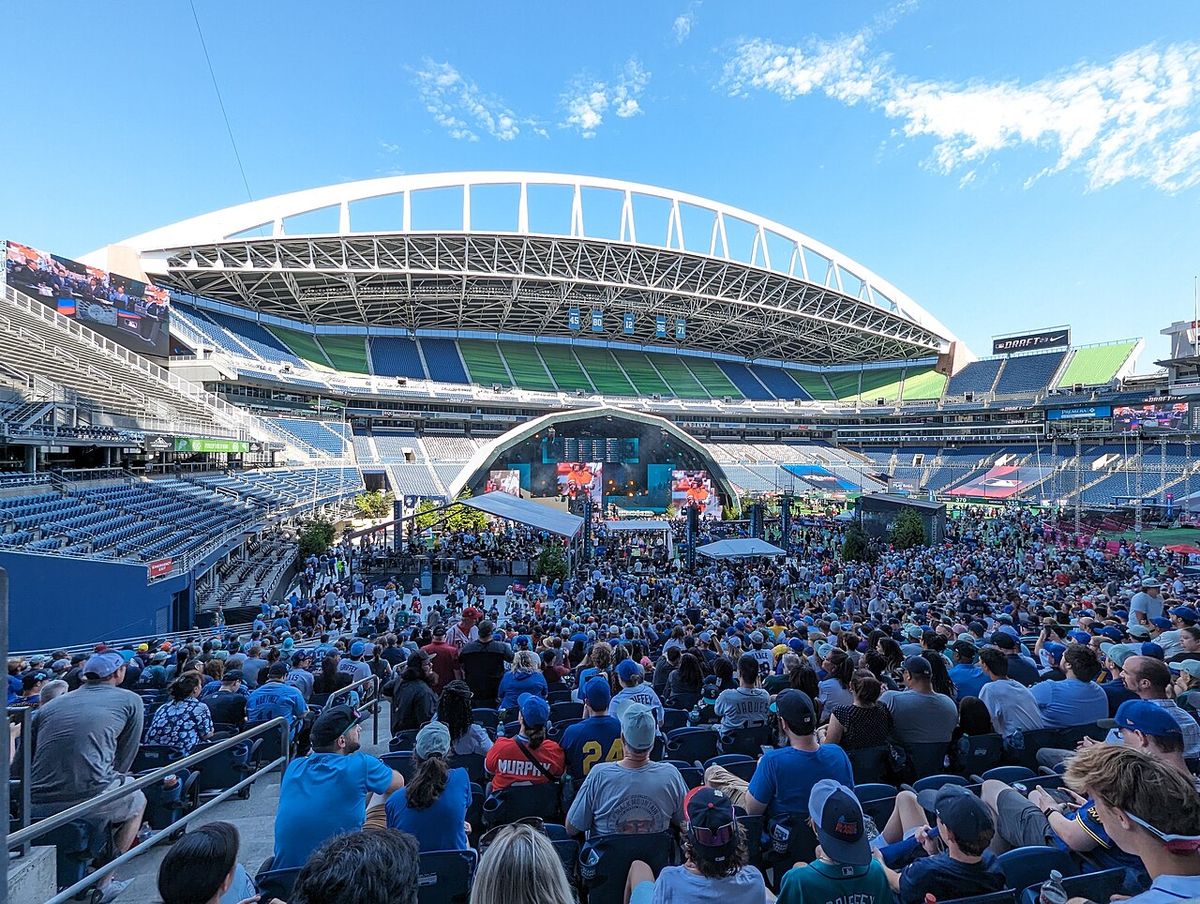
The draft's structure has undergone significant changes since its inception, beginning with a multi-draft annual schedule that was streamlined over two decades. Originally, three separate drafts were held each year: a primary June draft for new high school graduates and college seniors, a January draft for winter high school graduates, junior college players, and college dropouts, and an August draft for players in amateur summer leagues. The August draft was eliminated after only two years, while the January draft lasted until 1986, leaving the June event as the sole annual draft. The draft's length has also been substantially reduced over decades, starting as an expansive event that could last 50 rounds and produce over 1,500 selections. Until 2011, it lasted up to 50 rounds with approximately 1,500 selections, and was then trimmed to 40 rounds until 2019. A March 2020 deal between MLB and the Players Association shortened that year's draft to five rounds and permanently set the 2021 draft at 20 rounds, where it remains under the 2022 collective bargaining agreement. The draft was historically held in June but moved to July in 2021 and is now a featured event of MLB's All-Star Weekend. Media exposure has grown gradually from almost none, with the first televised draft occurring on June 7, 2007, from Disney's Wide World of Sports Complex in Florida. Since 2009, the first round has been broadcast in prime time on MLB Network from its studios in Secaucus, New Jersey, with ESPN joining the simulcast in 2020, which contrasts with the much higher profile of drafts in the NFL, NBA, and NHL.
Draft Procedures and Eligibility Rules
The draft is governed by Rule 4 of the Official Professional Baseball Rules Book, which outlines strict eligibility criteria and procedures that have been refined over time through collective bargaining. A player is eligible for the draft if they are a resident of or attend an educational institution in the United States, Canada, or a U.S. territory like Puerto Rico, and players from other countries are not subject to the draft unless they fall under that educational clause. Eligible players must never have signed a major or minor league contract, and high school players are eligible only after graduation, provided they have not attended college. Players at four-year colleges become eligible three years after first enrolling or after their 21st birthday, whichever comes first, while junior and community college players are eligible to be drafted at any time but cannot sign until their season is completed. Once drafted, a team retains exclusive negotiating rights until the signing deadline, which has been set at July 15 since 2012, replacing the old 'draft and follow' procedure that lasted until one week before the next draft. A player who does not sign may re-enter a future draft if still eligible, and a club cannot re-draft a player without the player's consent, and if passed over by every club, the player becomes a free agent who can sign with any club until one week before the next draft.
The draft order has been modified significantly by recent collective bargaining agreements, most notably with the introduction of a lottery system that began with the 2023 draft. Key elements of the current system established in the 2022 CBA include a lottery to determine the first six overall picks involving the 18 non-postseason teams, with the three worst clubs having equal odds for the first selection. Picks 7 through 18 in the first round and the first 18 picks in all subsequent rounds are set by the reverse order of the previous season's standings, with ties broken by the previous year's standings. The remaining picks are ordered by postseason results, from teams eliminated in the Wild Card Series, then Division Series, League Championship Series losers, the World Series loser, and finally the World Series winner. Revenue-sharing recipient teams are limited to receiving lottery picks in two consecutive drafts, and non-recipients can get a top six selection only once, while a lottery-ineligible, non-postseason club can select no higher than 10th overall. The draft consists of 20 rounds, plus compensatory and competitive balance picks, and trading of draft picks is heavily restricted in MLB compared to other leagues, generally limited to those awarded in the Competitive Balance Rounds.
Economic Impact and Signability
The draft's initial economic goal was to reduce the escalating signing bonuses paid to amateur players, and it achieved immediate success by eliminating bidding wars between clubs. The year before the draft, Rick Reichardt's $200,000 bonus from the California Angels set a record, but the first overall pick in 1965, Rick Monday, signed with the Kansas City Athletics for just $104,000. It took until 1979, when USC pitcher Bill Bordley received a bonus, for any drafted player to surpass Reichardt's pre-draft bonus figure. Player compensation began to climb again through the 1980s, and in 1986, Bo Jackson became the first draftee to sign a total contract worth over $1 million, leveraging his status as a top football prospect who was also the first overall NFL draft pick and was offered a $7 million contract by the Tampa Bay Buccaneers. This led to the concept of 'signability,' where teams would sometimes select a player based more on their willingness to sign for a particular amount of money than on pure talent, to avoid losing a pick entirely. A 1992 owner-led move to extend negotiating rights from one year to five was challenged by the Players Association, and an arbitrator decided any change to draft articles must be negotiated with the union, solidifying the draft's status as a subject of collective bargaining. Bonus amounts have continued to rise dramatically, with figures as high as $15 million discussed for top picks like collegiate pitcher Stephen Strasburg in June 2009, showing the draft's mixed success in long-term cost control.
Player Demographics, Age Influence, and Success Rates
The demographic profile of draftees, the influence of a player's age, and their likelihood of reaching the major leagues are defining and studied characteristics of the MLB draft. In the draft's early years, high school players dominated the selections, with only seven college players chosen in the first round between 1967 and 1971. However, college players who were drafted initially outperformed their high school counterparts by a significant margin noted by statistician Bill James, who called the gap laughably huge. By 1978, a majority of draftees had played college baseball, and that figure rose above sixty percent by 2002, though successful high school draftees became more common in later decades. A study of drafts from 1984 to 1999 concluded that by the 1990s, the production gap between college and high school players had nearly disappeared. Further research into the influence of age, segregating players by their age on draft day rather than education, suggested that very young players, defined as those younger than 17 years and 296 days, return more value than expected by their draft slots. The youngest early-round draftee since the draft's inception is Alfredo Escalera, drafted by the Kansas City Royals in the eighth round of the 2012 draft at 17 years and 114 days old, though the study did not clearly demonstrate the influence of age for players drafted in late rounds.
The draft is notably unpredictable and features a low success rate compared to other professional sports, a key reason for its lower immediate media profile alongside the fact that top picks spend years in the minors. The vast majority of selected players never appear in a single MLB game, a fact that extends to first-round picks, as only 31 of 52 first-rounders from the 1997 draft eventually made a major league appearance, and only 19 of those played in more than 100 games as of 2021. This uncertainty is starkly illustrated by the outcomes of individual rounds. In the sixth round of the 1997 draft, only five of 30 players reached the majors, all pitchers, and only Tim Hudson and Matt Wise pitched more than 40 innings. The 18th round of that same draft produced zero major leaguers, while the 19th round yielded All-Star and World Series MVP David Eckstein. The most famous example of late-round success is Hall of Famer Mike Piazza, selected in the 62nd round, 1,390th overall, in the 1988 draft. This long development arc and high attrition rate mean top MLB draftees are nearly always assigned to the minor leagues for several years, usually at Rookie or Class A levels initially, unlike top picks in the NFL, NBA, or NHL who are expected to make immediate impacts, as seen when the entire 2007 first round totaled just one inning of MLB playing time by the end of the 2008 season.
Recent Developments and Special Picks
The current draft framework, established by the 2022 collective bargaining agreement, introduced several new elements designed to address competitive balance, player development timing, and team behaviour. The Prospect Promotion Incentive (PPI) was created to discourage service time manipulation, a tactic where teams would delay promoting top prospects to gain an extra year of team control, by awarding extra draft picks if a PPI-eligible player earns a major award early in his career. The draft-and-follow procedure, which allowed teams to monitor a drafted player at junior college for a year, was reinstated specifically for players drafted after the 10th round who opt to attend junior college and are eligible to sign before the following draft. The draft lottery system, effective from the 2023 draft, represents the most significant change to the draft order in its history, moving away from a pure reverse-standings model to deter intentional losing. This system also includes specific limits on how often certain teams can receive lottery picks based on their revenue-sharing status, and within each playoff group for ordering postseason teams, clubs are sorted by revenue-sharing status and then reverse winning percentage. The table below outlines the draft's evolution in length, selections, and timing over key periods, showing its contraction and shift in the calendar.
| Period | Draft Length | Approximate Selections | Primary Month | Notes |
|---|---|---|---|---|
| 1965 to 2011 | Up to 50 rounds | ~1,500 | June | Also included January draft (until 1986) and brief August draft. |
| 2012 to 2019 | Up to 40 rounds | ~1,200 | June | January draft long eliminated. Single annual event. |
| 2021 to present | 20 rounds | ~600+ | July | Set by 2022 CBA. Held during All-Star Weekend. |
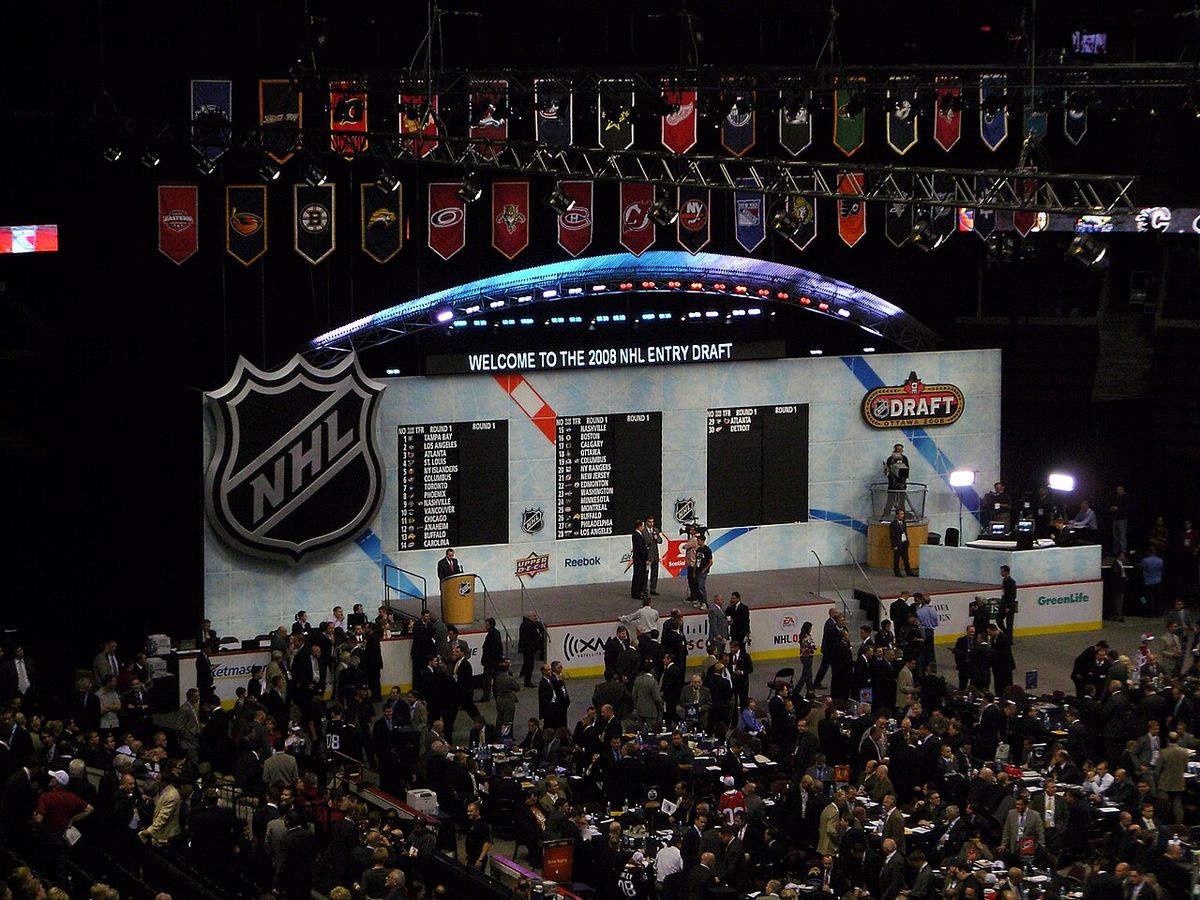
The changes to the draft order and structure reflect ongoing negotiations between Major League Baseball and the Major League Baseball Players Association. These negotiations aim to balance the needs of teams, players, and the league's overall competitive health. The draft's core function remains the distribution of amateur baseball players to MLB teams. The restrictions on pick trading and the specific lottery rules demonstrate the detailed nature of MLB's player acquisition system. This system is distinct from other North American leagues like the NFL, NHL, NBA, MLS, and CFL, which all have shorter drafts with far fewer total selections.
Questions about Major League Baseball draft
When was the first MLB draft held?
The first Major League Baseball amateur draft was held on June 8-9, 1965, in New York City. It was created to curb the spending power of wealthy teams and promote competitive balance after the record $200,000 bonus given to Rick Reichardt in 1964. With the first overall selection, the Kansas City Athletics chose outfielder Rick Monday from Arizona State University for a $104,000 bonus. The draft order was based on the reverse order of the previous season's standings, with picks alternating between the National and American Leagues, a system that remained largely in place until the 2023 lottery was introduced.
How does the MLB draft lottery work?
Starting with the 2023 draft, a lottery determines the first six overall picks. The lottery involves the 18 teams that did not qualify for the postseason in the previous year, with the three clubs with the worst records having equal odds of winning the first overall selection. The remaining first-round picks (7-18) are determined by the reverse order of the regular season standings. Postseason teams then pick in order of their playoff finish, from earliest eliminated in the Wild Card Series to the World Series winner, and within each playoff group, teams are sorted by revenue-sharing status and then reverse winning percentage. This system was introduced in the 2022 collective bargaining agreement to reduce the incentive for teams to lose games late in a season to secure a higher draft position.
Are Canadian players eligible for the MLB draft?
Yes, Canadian players are eligible for the MLB draft. Eligibility extends to any player who is a resident of, or has attended an educational institution in, the United States, Canada, or a U.S. territory like Puerto Rico. Players from other countries are considered international free agents and are not subject to the draft, unless they have attended a school in the eligible regions. This rule has provided a direct path to professional baseball for many Canadian amateur players without them having to be signed as international free agents, integrating them into the same talent pool as American prospects.
Why is the MLB draft less publicized than the NFL or NBA drafts?
The MLB draft receives less immediate media attention for several key reasons. Most top draft picks are assigned to minor league teams for several years of development and do not make an immediate major league impact, unlike in the NFL or NBA where first-rounders often start immediately, as every 2008 NFL first-round pick had played by the end of that season. The vast majority of players selected, including many first-round picks, will never play in a major league game, making the event's outcomes less immediately relevant to fans. Amateur baseball, particularly at the high school and college levels, also traditionally has a lower national profile than college football or basketball, though NCAA baseball popularity has grown in the 2000s.
What is the 'draft-and-follow' procedure?
The draft-and-follow procedure allowed a team to retain the rights to a drafted player who chose to attend a junior college, and to sign him any time until a week before the next year's draft. This gave teams an extended period to evaluate the player's development in junior college, where players are eligible to be drafted at any time but could not sign until their season was completed. The practice was largely eliminated but was reinstated in the 2022 collective bargaining agreement for players selected after the 10th round who attend junior college, allowing them to sign with their drafting club before the following draft. Notable players signed this way include Mark Buehrle, Roy Oswalt, Andy Pettitte, Jorge Posada, and Reggie Sanders.
How long is the MLB draft, and how many players are selected?
Under the current rules established by the 2022 collective bargaining agreement, the MLB draft lasts for 20 rounds, resulting in over 600 selections. This is a significant reduction from its historical length. Prior to 2012, it lasted up to 50 rounds with roughly 1,500 picks, and from 2012 to 2019 it was 40 rounds with about 1,200 selections. The draft also includes compensatory picks for teams that lose certain free agents and picks awarded in the Competitive Balance Rounds, which are the only picks generally eligible to be traded. In contrast, the NFL draft has seven rounds with 260 selections, the NHL entry draft has seven rounds with 224 selections, the MLS SuperDraft has three rounds, the CFL draft has eight rounds, and the NBA draft has only two rounds with 60 selections.
Sources and further reading
- Major League Baseball draft (Wikipedia)
- MLB Events: Draft, All-Star Game, World Series (mlb.com)
- 1st Picks Overall in the MLB June Amateur Draft (baseball-reference.com)
- MLB Draft League Informational FAQ (mlbdraftleague.com)
- The MLB Draft is now a two-day event. What it means (futurestarsseries.com)
Checked by the Garbutt Disposal desk. Last updated 2026-10-19.