Killer Kowalski
Wladek "Killer" Kowalski, born Edward Władysław Spulnik, was a Canadian professional wrestler whose 30-year career established him as one of the sport's most formidable and memorable villains. Standing 6 feet 7 inches tall and weighing 275 pounds, the Windsor, Ontario native became a major star in promotions across North America and internationally, most notably as a top antagonist to champion Bruno Sammartino in the World Wide Wrestling Federation. Kowalski's legacy extends beyond his in-ring achievements, as he became one of professional wrestling's most influential trainers after his 1977 retirement, founding a school that produced numerous future stars including Triple H and Chyna. His impact on Canadian sports entertainment is cemented by his inductions into multiple halls of fame, including the WWE Hall of Fame in 1996 and the Canadian Pro-Wrestling Hall of Fame in 2024.
Early life and entry into wrestling
Edward Władysław Spulnik was born on October 13, 1926, in Windsor, Ontario, to Polish immigrants Antoni Spulnik and Maria Borowska. He grew up with an older sister, Wanda, and a younger brother, Stanley, in a working-class household. By age 14, Spulnik had already reached a height of 6 feet 4 inches, though he was thin for his frame, which led him to begin working out at the local YMCA. He pursued higher education, majoring in electrical engineering at Assumption College, now part of the University of Windsor, while working part-time at the Ford Motor Company plant in Detroit to help pay his way. His path to wrestling began when he learned he could earn more than his $50 weekly factory wage by competing professionally, and with his athletic build, he decided to try wrestling and began attending a wrestling school. This led to his first recorded professional match on May 6, 1948, and his rise was swift, as he faced NWA World Heavyweight Champion Orville Brown by November 29 of that same year.
Rise to prominence and wrestling style
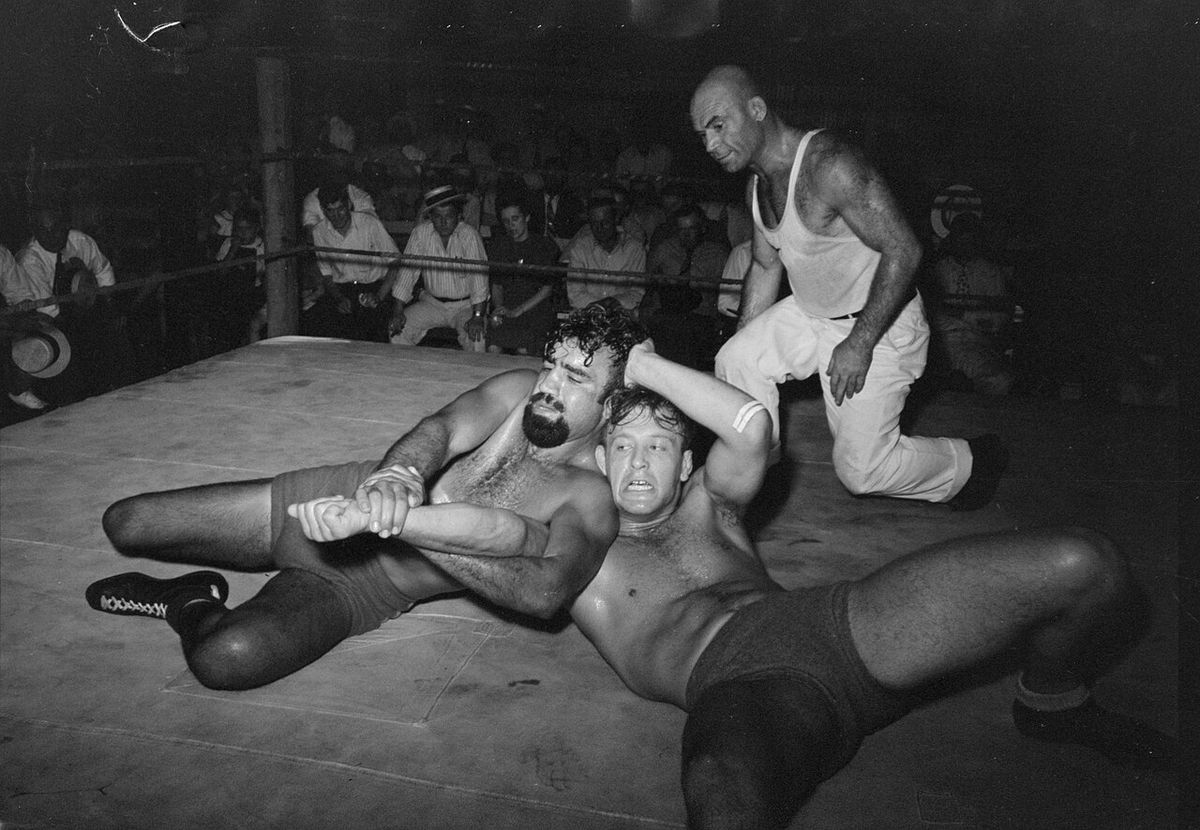
Kowalski's ascent in professional wrestling was remarkably swift, and he initially performed under names like Tarzan Kowalski and The Polish Apollo before settling on the more menacing Wladek "Killer" Kowalski, a name that played on Cold War sentiments. He stood out in his era not only for his imposing size but for a faster-paced, more agile style than many of his contemporaries, and he was predominantly a demonstrative heel, or villain, known for his intense demeanour and the feared Iron Claw submission hold. An exception was when he faced the even more reviled Buddy Rogers, during which Kowalski would adopt a more serious babyface, or hero, approach to contrast with Rogers's own villainy. Interestingly, outside the ring, he was known to be friendly and polite, a contrast that sometimes frustrated promoters who felt he broke character too easily in public. His physical presence and style made him a major draw across multiple territories, and he was a key figure in helping to establish other giants like André the Giant and Giant Baba through high-profile matches that highlighted their size.
Notable incidents and career-defining moments
Several key incidents throughout his career solidified Kowalski's reputation as a ruthless competitor and enhanced his drawing power. The most infamous occurred on October 15, 1952, during a match in Montreal against Yukon Eric, where while performing a knee drop, Kowalski accidentally ripped off a portion of Eric's already cauliflowered ear. The accidental injury was sensationalized in newspapers, which reported that Kowalski laughed at his victim in the hospital, though Kowalski later clarified they had laughed together at the absurdity of the bandages, with Eric himself later joking about sacrificing another ear for a better audience. This event sparked a long-running and profitable grudge feud across North America that lasted for several years. In late June 1958, during a match in Boston with Pat O'Connor and guest referee, former boxing champion Jack Dempsey, Kowalski accidentally kicked Dempsey in the diaphragm, sending him to the hospital, and though deemed an accident by both men, it further cemented his villainous persona. In December 1972, Kowalski achieved a significant milestone by becoming the first wrestler to pin André the Giant in North America during a "Battle of the Giants" match in Quebec City, with photographs from that match helping to establish André's reputation in American magazines. Another notable incident occurred in 1967 on Australian television, where talk show host Don Lane irritated Kowalski during an interview and was attacked with the Kowalski claw hold on live television.
Championship achievements and major feuds
Over his three-decade career, Killer Kowalski amassed an extensive list of championships across numerous territories and promotions, demonstrating his status as a top draw wherever he performed. His success was not limited to singles competition, as he also found significant accomplishment in tag teams, and he was a perennial top contender in the World Wide Wrestling Federation, engaging in a major feud with reigning champion Bruno Sammartino throughout the 1960s and 1970s. Kowalski's championship resume includes numerous regional titles that demonstrate his widespread drawing power and ability to adapt his character to different audiences. Major championships held by Killer Kowalski include the WWWF World Tag Team Championship in 1976 with Big John Studd as The Executioners, the WWWF United States Tag Team Championship in 1963 with Gorilla Monsoon, and the IWA World Heavyweight Championship in Australia five times. He also held the NWA United States Heavyweight Championship in Hawaii, the MAC World Heavyweight Championship in Montreal a remarkable 13 times, the NWA Canadian Heavyweight Championship in Calgary twice, the NWA Americas Heavyweight Championship, and the AAC World Heavyweight Championship. His tag team with Gorilla Monsoon was particularly successful, winning the United States Tag Team titles in two straight falls on Washington, D.C. television and later losing them to The Tolos Brothers in Teaneck, New Jersey in December 1963. Later, with his trainee Big John Studd, he won the WWWF World Tag Team Championship while both men wore masks as The Executioners, though they were later stripped of the titles due to interference from a third masked man during a defense against Chief Jay Strongbow and Billy White Wolf.
Career statistics and major promotions
Kowalski's career spanned from 1947 to 1977, with occasional independent appearances thereafter including a 1992 no-contest against John Tolos in Japan and his final match in 1993, a loss to Baron Von Raschke at age 66, and he is estimated to have competed in over 6,000 matches. He worked for virtually every major promotion of his era, adapting his villainous character to different territories and audiences, and his ability to headline in such a diverse array of promotions, from the northeastern WWWF to the Australian IWA, demonstrates his wide appeal as a top villain. The following table outlines his tenures and key accomplishments in several major wrestling organizations where he held significant championships or was a featured performer. He also participated in the first wrestling match televised in Canada on January 14, 1953, helping bring the sport to a broader national audience and cementing his early fame at home.
| Promotion | Key Tenure Period | Major Accomplishments |
|---|---|---|
| World Wide Wrestling Federation (WWWF) | 1960s-1970s | United States Tag Team Champion. World Tag Team Champion. Top contender to Bruno Sammartino. Managed by Red Berry |
| National Wrestling Alliance (NWA) Territories | 1948 to 1970s | Multiple regional heavyweight and tag team titles across Hawaii, Florida, Texas, Central States, and San Francisco. NWA Texas Brass Knuckles Champion twice |
| American Wrestling Association (AWA) | 1960s | Featured performer as a main event heel throughout the circuit |
| Stampede Wrestling (Calgary) | 1960s-1970s | NWA Canadian Heavyweight Champion. NWA International Tag Team Champion with Jim Wright. Hall of Fame Class of 1995 |
| International Wrestling Alliance (Australia) | 1960s-1970s | IWA World Heavyweight Champion (5 times). IWA World Tag Team Champion (4 times) with partners Skull Murphy, Bill Miller, and Mark Lewin |
| Montreal Athletic Commission | 1950s-1960s | MAC World Heavyweight Champion (13 times), dominating the Quebec wrestling scene |
| Championship Wrestling from Florida | 1960s | NWA Southern Heavyweight Champion (Florida version) once |
Post-retirement career as a trainer and later appearances
Upon retiring from full-time competition in 1977, Kowalski channeled his knowledge into teaching, founding the Killer Kowalski Institute of Professional Wrestling in Malden, Massachusetts, which later moved to North Andover. The school became one of the most respected training grounds in North America, operating for over a quarter century before he sold the rights and stepped back in 2003 due to health reasons. His legacy as a trainer is significant, with his students going on to achieve great success across multiple wrestling promotions. The list of notable wrestlers who trained under Kowalski is extensive and includes many future champions and hall of famers who began their careers under his guidance.
- Triple H, a 14-time WWE World Heavyweight Champion and executive, inducted Kowalski into the WWE Hall of Fame in 1996.
- Chyna, a groundbreaking female performer and former WWE Women's Champion.
- Big John Studd, his former tag team partner and fellow WWE Hall of Famer.
- Perry Saturn, a former ECW and WCW World Tag Team Champion.
- Matt Bloom, a former wrestler and later WWE Performance Center Head Trainer.
- Frankie Kazarian, a multiple-time X Division and Tag Team Champion.
- Tommaso Ciampa, a former NXT Champion.
- Kofi Kingston, a former WWE Champion and multiple-time tag team champion.
One of his students, Mike Hollow, later formed his own school called the Elite Pro Wrestling Training Center. This school became affiliated with WWE's Independent Development program in 2024. Kowalski remained a fixture on the Northeast independent wrestling scene, taking autograph and personal appearances. His last public appearance was on March 14, 2008, for Top Rope Promotions at an event in North Adams, Massachusetts. At that event, he came to the ring and applied his claw hold on local wrestler "Gorgeous" Gino Giovanni and was declared the winner of the segment.
Personal life, beliefs, and public persona
Outside the ring, Walter Kowalski was known as a gentle and complex individual, a stark contrast to his "Killer" persona, and he preferred to be called Walter in his later years. He was a devout Catholic for much of his life, attending mass daily, and had a keen interest in photography, publishing a book on the subject in 2001. In 1953, influenced by middle-distance runners Roger Bannister and John Landy, he adopted a strict vegetarian and later vegan diet, abstaining from meat, dairy, and eggs, and he claimed in the 1960s to be the only vegetarian professional wrestler. He remained an outspoken advocate for the lifestyle throughout his life, often joking that he would have no reason to bite off Yukon Eric's ear because he did not eat meat. Kowalski also abstained from alcohol and tobacco, and he married his longtime girlfriend, Theresa Ferrioli, on June 19, 2006, when he was 79 years old. A favourite dining spot was the Kowloon Restaurant in Saugus, Massachusetts, where a signed photograph of him remained on display, and he also made several post-retirement television and film appearances, including on Late Night with David Letterman in 1982 and in Michael Burlingame's surrealist film To a Random in 1986.
Later years, death, and honours
In his final years, Kowalski experienced escalating health problems beginning with a knee injury that required rehabilitation. After a knee injury, he was recovering in a rehabilitation centre in Everett, Massachusetts, when he suffered a heart attack on August 8, 2008, and his family was informed he would not recover. He was taken off life support on August 18, and contrary to some erroneous early reports, he died on August 30, 2008, at the age of 81, with his death widely reported across sports media. Kowalski received numerous honours during and after his career, recognizing his impact as both a performer and a trainer. These accolades span multiple organizations and countries, reflecting his international stature in the sport.
- WWE Hall of Fame, inducted in 1996 by his former student Triple H.
- Professional Wrestling Hall of Fame and Museum, inducted with the Class of 2003.
- Wrestling Observer Newsletter Hall of Fame, inducted with the Class of 1996.
- Canadian Pro-Wrestling Hall of Fame, inducted with the Class of 2024.
- National Polish-American Sports Hall of Fame, inducted on June 11, 2007.
- Cauliflower Alley Club Iron Mike Mazurki Award, received in 2002.
- Pro Wrestling Illustrated Stanley Weston Award, received posthumously in 2010.
- New England Pro Wrestling Hall of Fame, inducted with the Class of 2008.
He also won the PWI Tag Team of the Year award in 1976 with Big John Studd. He is considered one of the greatest wrestlers of all time. Kowalski competed in more than 6,000 bouts during his career. After retiring, he played a major role in shaping the industry's future through the many professional wrestlers he trained at his school.
Questions about Killer Kowalski
Where was Killer Kowalski from?
Killer Kowalski was from Windsor, Ontario, Canada. He was born there on October 13, 1926, as Edward Władysław Spulnik to Polish immigrants Antoni Spulnik and Maria Borowska. He grew up in Windsor with his sister Wanda and brother Stanley. He attended college, majoring in electrical engineering, and worked part time at a Ford Motor Company plant in Detroit before pursuing wrestling.
How did Killer Kowalski get his nickname?
Killer Kowalski's nickname was solidified by a notorious 1952 match incident. During a bout in Montreal against Yukon Eric, a knee drop accidentally tore off part of Eric's already cauliflowered ear. Although it was an accident and Kowalski even laughed with Eric in the hospital, newspapers reported he laughed at his victim, crafting a ruthless villain image. This event, following early use of the 'Killer' name around 1950, sparked a long running grudge feud that cemented his menacing persona.
What championships did Killer Kowalski win in WWE?
In the World Wide Wrestling Federation, now WWE, Killer Kowalski won two tag team championships. First, he and Gorilla Monsoon won the WWWF United States Tag Team Championship in 1963, capturing the belts in two straight falls on Washington, DC television. Later, on May 11, 1976, he won the WWWF World Tag Team Championship with Big John Studd while both were masked as The Executioners. However, they were later stripped of this title due to interference from a third Executioner during a defense.
Who did Killer Kowalski train after he retired?
After retiring in 1977, Killer Kowalski trained numerous successful wrestlers at his school in Malden, Massachusetts. His most famous pupil is Triple H, a 14 time world champion. Other notable alumni include Chyna, Big John Studd, Perry Saturn, John Kronus, Matt Bloom, Frankie Kazarian, Damien Sandow, Fandango, and Tommaso Ciampa. The school also trained Eddie Edwards, Kofi Kingston, April Hunter, and Brittany Brown, with many becoming champions in WWE and other major promotions.
Was Killer Kowalski really a vegetarian?
Yes, Killer Kowalski was a committed vegetarian and later vegan. He adopted the diet in 1953 after being influenced by middle distance runners Roger Bannister and John Landy. He did not eat meat, dairy, or eggs, and in the 1960s claimed to be the only vegetarian professional wrestler. An outspoken advocate, he also abstained from alcohol and smoking. His lifestyle choices contributed to his longevity in the physically demanding sport.
When and how did Killer Kowalski die?
Killer Kowalski died on August 30, 2008, at age 81 in Everett, Massachusetts. His health had been declining, starting with a knee injury that required rehabilitation. On August 8, 2008, he suffered a massive heart attack. After being taken off life support on August 18, he died twelve days later from complications related to the heart attack. He was survived by his wife, Theresa Ferrioli, whom he had married in 2006, and his family.
Sources and further reading
- Killer Kowalski (Wikipedia)
- Killer Kowalski (wwe.com)
- Walter “Killer” Kowalski (windsorpubliclibrary.com)
- NPASHF | Wladek “Killer” Kowalski (polishsportshof.com)
Checked by the Garbutt Disposal desk. Last updated 2026-10-27.