Georges St-Pierre
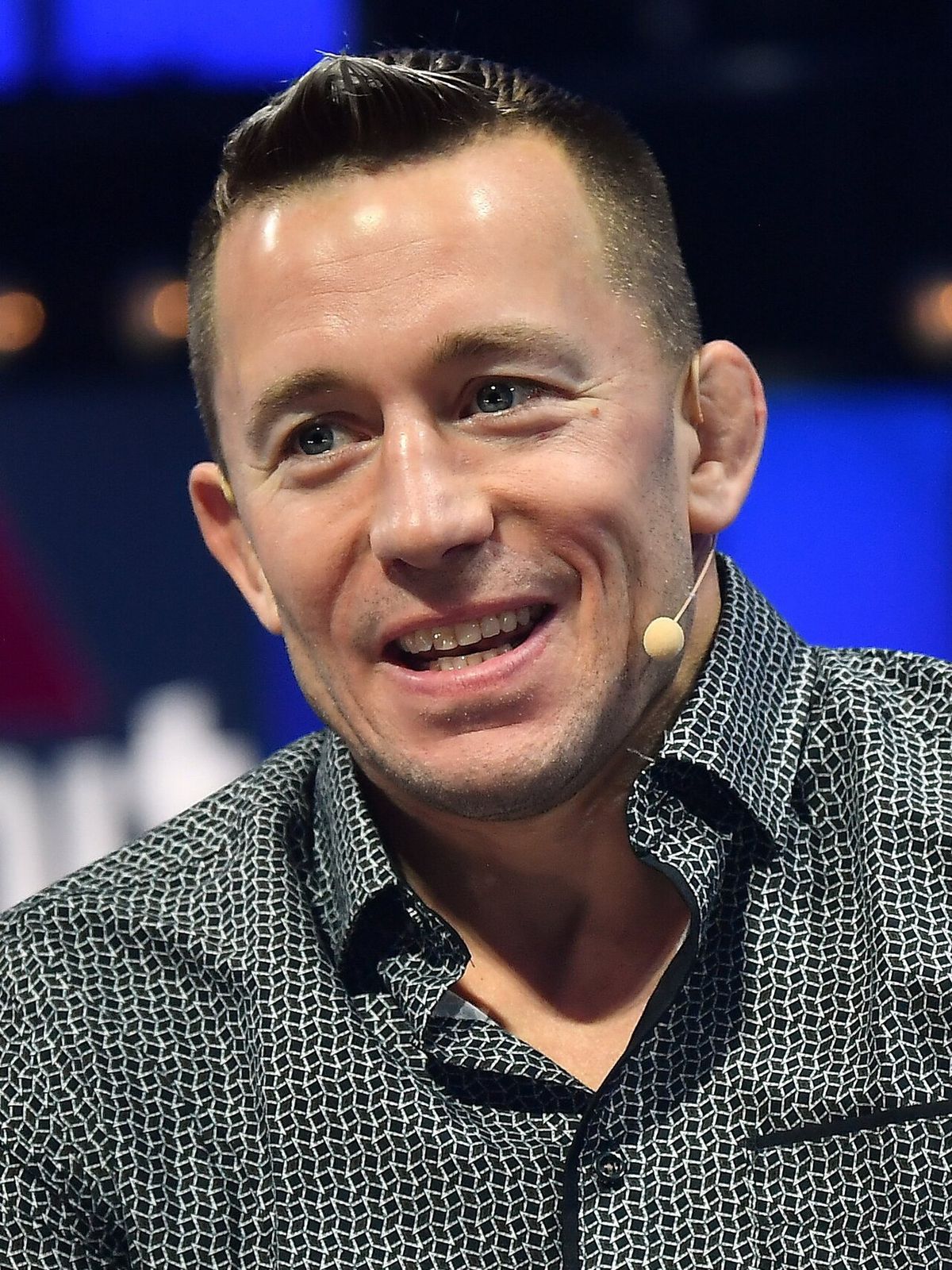
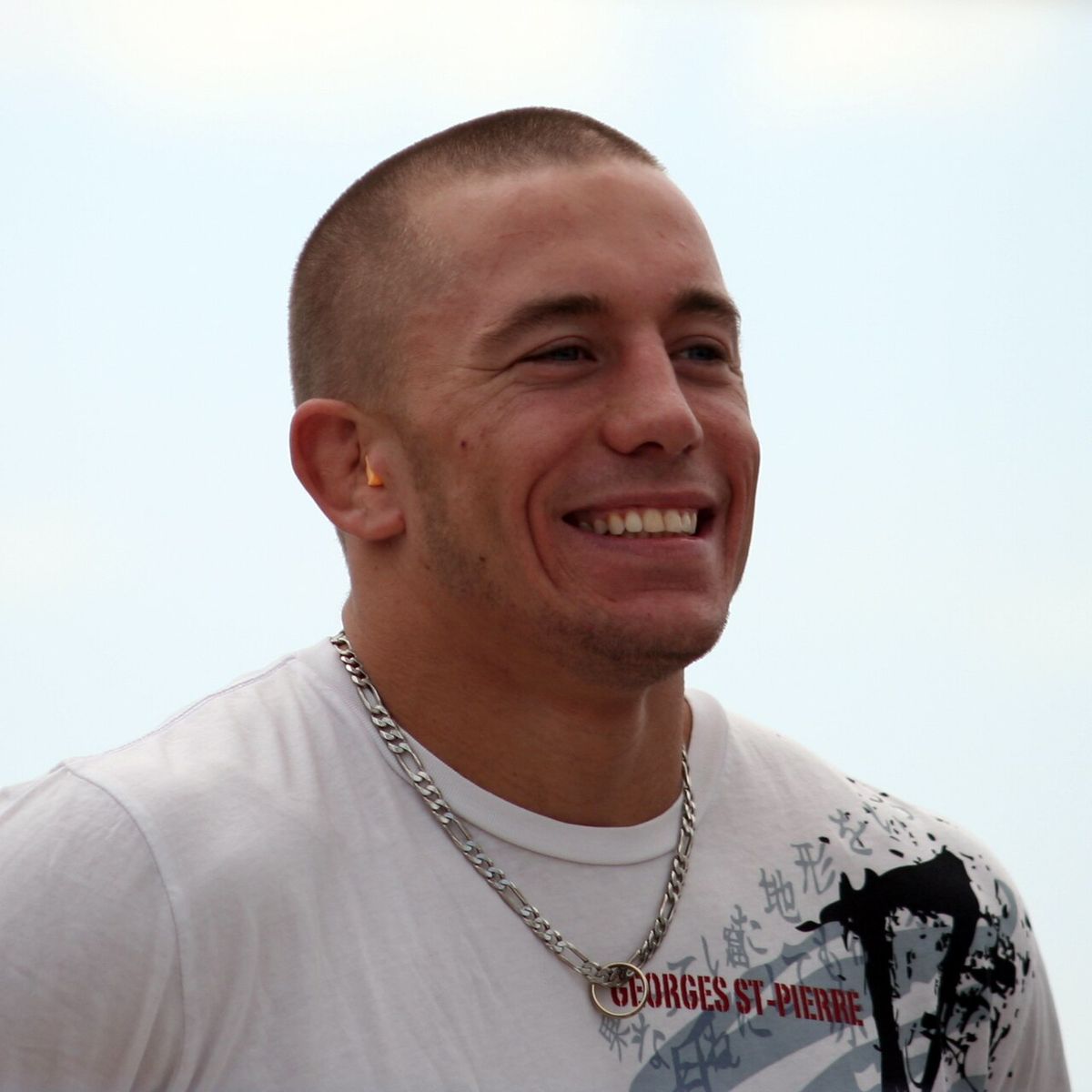
Georges St-Pierre, often referred to by his initials GSP, is a Canadian former professional mixed martial artist widely considered one of the greatest fighters in the history of the sport. Born in Saint-Isidore, Quebec, he became a two-division champion in the Ultimate Fighting Championship, holding titles in both the welterweight and middleweight divisions. His career is marked by record-setting title defences and a dominant fighting style that blended elite wrestling with precise striking. St-Pierre's achievements and sportsmanship have made him a celebrated figure in Canadian athletics and a global ambassador for mixed martial arts.
Early Life and Background
Georges St-Pierre was born on May 19, 1981, in Saint-Isidore, Quebec, to parents Roland and Pauline St-Pierre and has two younger sisters. His childhood was marked by challenges, including being bullied at school, which led him to begin training in Kyokushin Karate at the age of seven for self-defence. As a youth, he participated in various sports including hockey and skating, and he attended high school at École Pierre-Bédard, where he held the school record for chin-ups. After graduation, he enrolled in kinesiology studies at Cégep Édouard-Montpetit, financing his education by working as a bouncer at a Montreal nightclub and as a garbageman for six months. He earned a 2nd dan black belt in Kyokushin karate by age 12 and was inspired by action film star Jean-Claude Van Damme, an inspiration that later culminated in a film role alongside him. His first professional mixed martial arts fight took place when he was 20 years old.
Training and Fighting Style
Georges St-Pierre developed a formidable and well-rounded fighting style through training with a diverse array of coaches and gyms throughout his career. His foundational wrestling training began between ages 19 and 20 at the Montreal Wrestling Club under Victor Zilberman, and he continued there until his retirement, also receiving coaching from world champion wrestler Guivi Sissaouri. This intensive wrestling background became a defining feature of his game, allowing him to out-wrestle many accomplished opponents including four-time NCAA All-American Josh Koscheck. He trained extensively with members of the Canadian national wrestling team and intended to pursue a place on the team for the 2008 and 2012 Olympics, but his UFC commitments prevented this each time. St-Pierre also earned a black belt in Brazilian jiu-jitsu under Bruno Fernandes in September 2008, after receiving his brown belt from Renzo Gracie on July 21, 2006.
His striking was honed through Muay Thai training under Phil Nurse at the Wat in New York City between 2006 and 2009. For much of his championship reign, St-Pierre's primary training camp was based at the Tristar Gym in Montreal under head trainer Firas Zahabi, with strength and conditioning coached by Jonathan Chaimberg of the Adrenaline Performance Centre. He also spent significant time training at Greg Jackson's Submission Fighting Gaidojutsu school in New Mexico alongside fighters like Rashad Evans, Nate Marquardt, Keith Jardine, and Donald Cerrone. These fighters would often travel to Montreal to help him prepare for major bouts, such as before his UFC 94 fight against B.J. Penn. This collaborative and multidisciplinary approach forged St-Pierre into a dominant athlete known for his strategic fight planning, exceptional athleticism, and ability to dictate where fights took place.
UFC Career: Early Fights and First Title
His next fight in the UFC was against Jay Hieron at UFC 48, which he won via technical knockout in only one minute and 42 seconds of the first round. Despite a competitive performance, St-Pierre tapped out to an armbar with only 10 seconds remaining in the first round, suffering the first loss of his professional career. After this loss, he rebounded with a first-round kimura submission win over Dave Strasser at TKO 19 before returning to the UFC to defeat Jason Miller by unanimous decision at UFC 52. St-Pierre then faced top contender Frank Trigg at UFC 54, winning via rear-naked choke with less than a minute left in the first round. His next opponent was future lightweight champion Sean Sherk at UFC 56, whom he defeated by TKO midway through the second round, becoming the first fighter to finish Sherk. During the post-fight interview, St-Pierre went to his knees to plea for another title shot. This led to a number-one contender bout against former champion B.J. Penn at UFC 58 in March 2006, which St-Pierre won by split decision. He was scheduled for a rematch with champion Matt Hughes at UFC 63 but withdrew due to a groin injury, and was replaced by Penn. The UFC confirmed St-Pierre would get the next title shot once healed.
Winning, Losing, and Reclaiming the Welterweight Title
After Matt Hughes defeated B.J. Penn at UFC 63, St-Pierre entered the cage and stated he was 'not impressed' by Hughes's performance, a comment that caused tension. The two fought for the title at UFC 65 in November 2006, where St-Pierre won via technical knockout in the second round after a left head kick and follow-up punches, earning a Knockout of the Night award. On January 30, 2007, he signed a new six-fight deal with the UFC. His first title defence ended in a major upset at UFC 69 in April 2007, when he lost the welterweight title to Matt Serra, an 11-1 underdog, by TKO at 3:25 of the first round. St-Pierre later said personal issues, including the death of a cousin and his father's illness, affected his focus, but stated Serra was the better fighter that night.
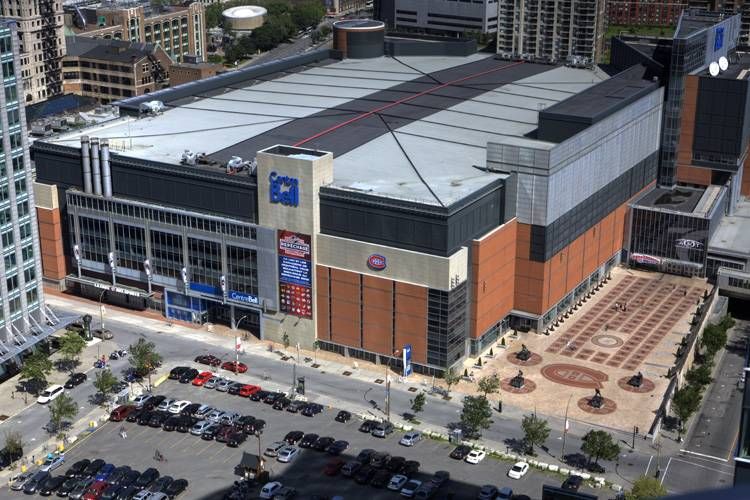
Determined to regain the championship, St-Pierre defeated Josh Koscheck by unanimous decision at UFC 74 in August 2007, outwrestling the NCAA champion. This win made him the number-one contender for the title held by Matt Serra. When Serra withdrew from UFC 79 due to a back injury, St-Pierre faced Hughes in a rubber match for the interim UFC Welterweight Championship in December 2007. St-Pierre dominated the fight, reversed the outcome of their first bout, and made Hughes submit to an armbar at 4:55 of the second round, earning a Submission of the Night award. This set up a title unification rematch with Matt Serra at UFC 83 on April 19, 2008, which was the UFC's first event in Canada, held at Montreal's Bell Centre. St-Pierre controlled the fight with takedowns and knees, forcing the referee to stop the bout in the second round when Serra could not defend himself, making St-Pierre the undisputed welterweight champion once more.
Historic Welterweight Championship Defences
Georges St-Pierre's second reign as champion featured a series of historically dominant title defences that solidified his legacy. His first defence was against Jon Fitch at UFC 87 in August 2008. Fitch was on a 16-fight win streak but St-Pierre won a unanimous decision with scores of 50-43, 50-44, and 50-44, earning a Fight of the Night award. He then faced B.J. Penn in a highly anticipated rematch at UFC 94 in January 2009, dominating the fight with takedowns and ground control until Penn's corner stopped the fight after the fourth round. The victory was somewhat overshadowed by a controversy alleging illegal application of petroleum jelly on St-Pierre's back, which was investigated but did not result in sanctions against him.
At the landmark UFC 100 event in July 2009, St-Pierre defended his title against Thiago Alves, winning by unanimous decision despite suffering a groin injury in the fourth round that did not require surgery. His next defence was against Dan Hardy at UFC 111 in March 2010, where he won by unanimous decision but was criticized for not finishing the fight despite catching Hardy in an armbar and a kimura. St-Pierre then rematched Josh Koscheck at UFC 124 in December 2010, employing a sharp boxing attack that broke Koscheck's orbital bone and swelled his eye shut, leading to another unanimous decision win and a $100,000 Fight of the Night award. His final welterweight title defence came at UFC 129 in Toronto on April 30, 2011, against Jake Shields, whom he defeated by unanimous decision. This fight ended his record streak of 33 consecutive rounds won, which had begun at UFC 74. After the fight, UFC President Dana White suggested a potential move to middleweight to face Anderson Silva, but St-Pierre expressed no desire to pursue it at that time.
- UFC 87 (August 2008): Unanimous decision win over Jon Fitch, earning Fight of the Night.
- UFC 94 (January 2009): TKO victory over B.J. Penn after four rounds.
- UFC 100 (July 2009): Unanimous decision win over Thiago Alves.
- UFC 111 (March 2010): Unanimous decision win over Dan Hardy.
- UFC 124 (December 2010): Unanimous decision win over Josh Koscheck, earning Fight of the Night.
- UFC 129 (April 2011): Unanimous decision win over Jake Shields in Toronto.
Return, Middleweight Title, and Retirement
After nearly four years away from competition, Georges St-Pierre returned to the UFC in November 2017 at UFC 217. He moved up to the middleweight division to challenge champion Michael Bisping. St-Pierre won the fight via technical submission in the third round, capturing the UFC Middleweight Championship and becoming the fourth fighter in UFC history to win titles in two weight divisions. However, he vacated the title a few weeks later due to health reasons, specifically citing ulcerative colitis. This fight marked his final appearance in the Octagon before his official retirement from mixed martial arts in February 2019. His retirement in 2013 had been as the reigning welterweight champion, holding the record for the most wins in title bouts and the second-longest combined title streak in UFC history at 2,204 days while defending his title nine consecutive times.
Career Records and Statistical Analysis
Georges St-Pierre's career is defined by a collection of UFC records that demonstrate his statistical dominance, particularly in the welterweight division. He holds the record for the most title-fight victories in UFC welterweight history with 12, and the most consecutive successful title defences in the division with 9. His tactical precision is reflected in records for the highest significant strike defence percentage (73.1 percent) and the highest takedown accuracy (73.7 percent) in UFC welterweight history. He also landed the most takedowns in welterweight history with 87. On a broader scale, St-Pierre holds the all-time UFC records for most total control time (2 hours, 42 minutes, 4 seconds) and most top position time (2 hours, 22 minutes, 5 seconds). His remarkable consistency was also demonstrated by winning 33 consecutive rounds between 2007 and 2011, a streak that ended in his fight against Jake Shields.
| Record Category | Statistic | Division/UFC Rank |
|---|---|---|
| Title Fight Wins | 12 | Welterweight Record |
| Title Defences | 9 | Welterweight Record |
| Significant Strike Defence | 73.1% | Welterweight Record |
| Takedown Accuracy | 73.7% | Welterweight Record |
| Takedowns Landed | 87 | Welterweight Record |
| Total Control Time | 2:42:04 | UFC Record |
| Top Position Time | 2:22:05 | UFC Record |
| Consecutive Rounds Won | 33 | 2007 to 2011 |
Acting Career and Media Presence
Beyond the cage, Georges St-Pierre has built a successful acting career, appearing in several film and television projects. His film debut was in the Marvel Cinematic Universe, with a cameo as the villain Batroc the Leaper in Captain America: The Winter Soldier in 2014. He later starred alongside his childhood inspiration Jean-Claude Van Damme in the martial arts film Kickboxer: Vengeance in 2016, which he described as a dream come true. Other action film roles include Cartels in 2017 and King of Killers in 2023. His public profile has also been shaped by numerous accolades, including being named Canadian Athlete of the Year by Rogers Sportsnet for three consecutive years from 2008 to 2010. In 2008, he was featured on the cover of Karaté Bushido, the oldest martial arts magazine in Europe, joining figures like Bruce Lee and Jean-Claude Van Damme. He also served as a trainer on The Ultimate Fighter 4: The Comeback in 2006, vocally supporting fellow Canadian Patrick Côté.
- Captain America: The Winter Soldier (2014), Role as Batroc the Leaper.
- Kickboxer: Vengeance (2016), Starring role with Jean-Claude Van Damme.
- Cartels (2017), Action film role.
- King of Killers (2023), Action film role.
- The Ultimate Fighter 4 (2006), Trainer on the reality television series.
- Karaté Bushido Cover (2008), Featured on the cover of the European martial arts magazine.
Recognition and Legacy in Mixed Martial Arts
Georges St-Pierre is universally regarded as one of the most accomplished and influential fighters in mixed martial arts history. Major publications and ranking systems have consistently placed him at the pinnacle of the sport. Fight Matrix lists him as the top MMA welterweight of all time and the most accomplished fighter in MMA history, while The Athletic's fighter survey voted him the greatest pound-for-pound MMA fighter in history. He was ranked as the number one welterweight in the world for several years by Sherdog and other publications. His legacy is built not only on his record-setting championship reign but also on his approach to the sport, characterized by rigorous preparation, strategic innovation, and professional conduct. For Canada, St-Pierre became a national sports icon, helping to popularize MMA across the country and inspiring a generation of athletes. His retirement as a reigning champion and his successful comeback to win a second title cemented his status as a legendary figure whose impact extends far beyond his fight statistics.
- Canadian Athlete of the Year by Rogers Sportsnet (2008, 2009, 2010).
- Ranked #1 welterweight in the world for several years by Sherdog.
- Voted greatest pound-for-pound MMA fighter in history by The Athletic's fighter survey.
- Listed as the top MMA welterweight of all time and most accomplished fighter in MMA history by Fight Matrix.
- Named to the cover of Karaté Bushido magazine in 2008.
Questions about Georges St-Pierre
How many UFC titles did Georges St-Pierre win?
Georges St-Pierre won UFC titles in two different weight divisions. He was a three-time UFC Welterweight Champion, winning the title twice and an interim title once between 2006 and 2008. In 2017, he returned from retirement to win the UFC Middleweight Championship, defeating Michael Bisping at UFC 217. This made him the fourth fighter in UFC history to become a multi-division champion.
Where did Georges St-Pierre train in Montreal?
Georges St-Pierre trained at the Tristar Gym in Montreal. His head trainer was Firas Zahabi of Zahabi MMA. His strength and conditioning coach was Jonathan Chaimberg of the Adrenaline Performance Centre in Montreal. He also trained wrestling at the Montreal Wrestling Club under Victor Zilberman.
What are some of Georges St-Pierre's most notable UFC records?
Georges St-Pierre holds several significant UFC welterweight records, including the most title fight victories with 12 and the most successful title defences with 9. He also possesses the highest significant strike defence percentage at 73.1 percent and the highest takedown accuracy at 73.7 percent. He holds the all time UFC records for most control time at 2 hours, 42 minutes, and 4 seconds and most top position time at 2 hours, 22 minutes, and 5 seconds. He additionally set a record for the most takedowns landed in the division with 87. These statistics collectively show his dominant and technically proficient fighting style throughout his championship reign.
Why did Georges St-Pierre retire?
Georges St Pierre initially retired as the reigning UFC welterweight champion in December 2013. He later returned to competition in November 2017 at UFC 217, where he defeated Michael Bisping to win the middleweight championship. However, he relinquished the middleweight title just a few weeks after winning it, citing health reasons as the primary factor. Following this, he officially retired from mixed martial arts competition. His initial retirement concluded a historic welterweight title run that included the second longest combined title streak in UFC history at 2,204 days.
What movies has Georges St-Pierre been in?
Georges St Pierre has appeared in several feature films outside of his fighting career. He acted in the superhero film Captain America: The Winter Soldier, which was released in 2014. In 2016, he starred in the martial arts film Kickboxer: Vengeance, a project he described as a dream come true due to his childhood inspiration from Jean Claude Van Damme. His filmography also includes roles in the 2017 action film Cartels and the 2023 action film King of Killers. These appearances demonstrate his involvement in the entertainment industry following his athletic achievements.
What awards did Georges St-Pierre win as a Canadian athlete?
Georges St Pierre was named the Canadian Athlete of the Year by Rogers Sportsnet. He received this prestigious national honour three consecutive times, in the years 2008, 2009, and 2010. This recognition coincided with the peak of his dominance in the Ultimate Fighting Championship, where he was the welterweight champion. During this period, he was also consistently ranked as the number one welterweight fighter in the world by publications such as Sherdog. These awards highlight his status as one of Canada's most celebrated athletes during his competitive prime.
Sources and further reading
- Georges St-Pierre (Wikipedia)
- Georges St-Pierre | UFC Champion & MMA Strategy Expert (speakerscanada.com)
- Georges St-Pierre Official Website (gspofficial.com)
- Modern Gladiator: How Georges St-Pierre Has Shaped Sport (historymuseum.ca)
Checked by the Garbutt Disposal desk. Last updated 2026-10-19.