Ice hockey at the 2010 Winter Olympics
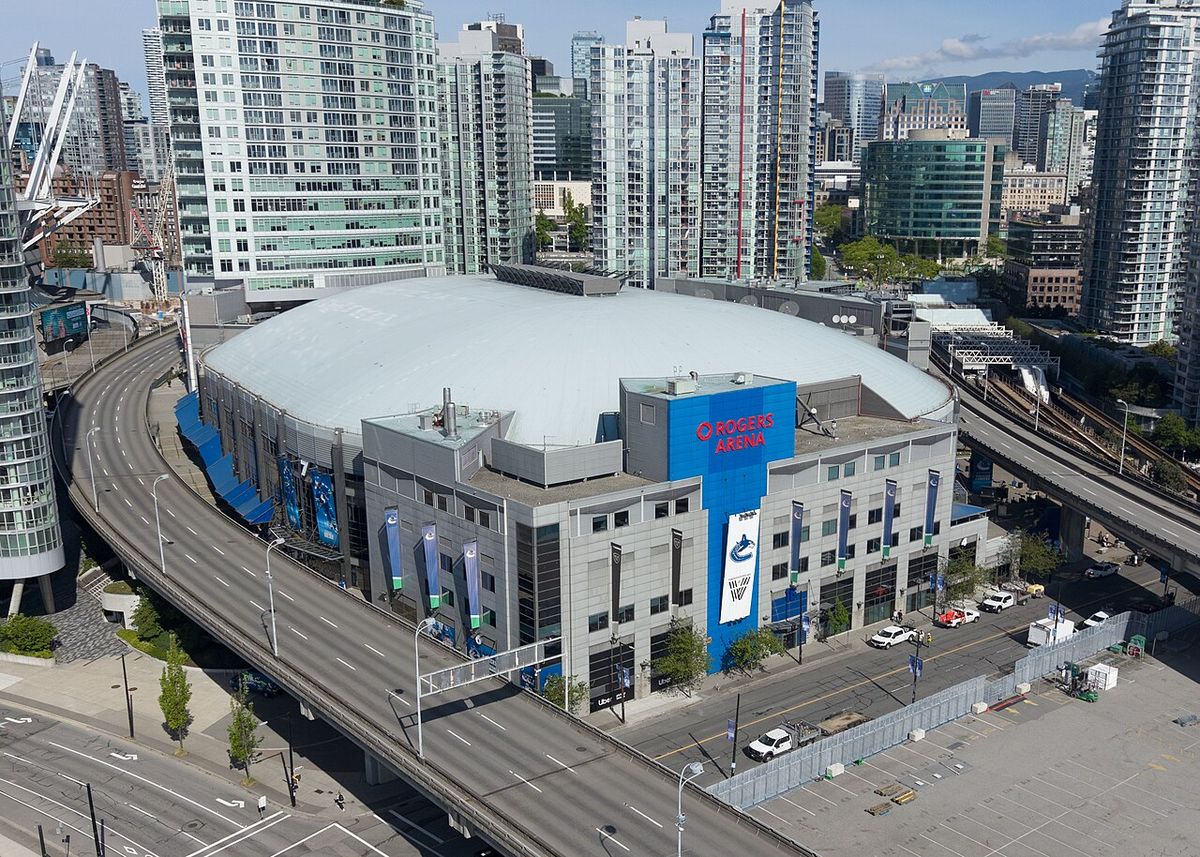
Ice hockey at the 2010 Winter Olympics was a major event of the Vancouver Games, drawing national attention with a historic double gold medal performance on home ice. The tournaments were held at two venues in Vancouver: the main 18,810-seat Rogers Arena, temporarily renamed Canada Hockey Place, and the 6,800-seat UBC Winter Sports Centre. Canada achieved a memorable sweep, winning gold in both the men's and women's tournaments, with both finals featuring victories over their rivals from the United States. The event was noted for several format changes, including the adoption of the narrower NHL-sized rink for Olympic competition for the first time.
Venues and Format Changes
The 2010 Olympic hockey tournaments were staged at two distinct venues in Vancouver, each selected for their capacity and existing infrastructure. The primary venue was the 18,810-seat Rogers Arena, home of the NHL's Vancouver Canucks, which was rebranded as Canada Hockey Place for the duration of the Games to comply with International Olympic Committee sponsorship rules. The secondary venue was the 6,800-seat UBC Winter Sports Centre, the home rink for the University of British Columbia Thunderbirds. This dual-venue setup allowed for the scheduling of multiple games while accommodating different audience sizes. The use of these existing facilities was a key factor in a significant format change for Olympic hockey.
For the first time in Olympic history, the games were played on a North American NHL-sized ice surface, measuring 61 by 26 metres. This was four metres narrower than the standard international rink size of 61 by 30 metres. This decision was primarily logistical and financial, as it eliminated the need for costly modifications to the existing arenas, saving an estimated $10 million in construction costs. The narrower rink was also expected to create a more physical, fast-paced style of play familiar to the many NHL participants. Another major change was the introduction of the four-official system, with two referees and two linesmen, for the men's tournament, mirroring the standard used in the NHL since the 2000-01 season.
The transition of Rogers Arena into an Olympic venue had a direct impact on its primary tenant, the Vancouver Canucks. To accommodate the Games, the Canucks were required to play a long series of away games, setting a record for the longest road trip in NHL history at the time with 14 consecutive games over a six-week period from January 27 to March 13, 2010. The arena itself underwent changes beyond the ice surface, as all corporate advertising was removed from the boards and seating areas were converted into press rows to meet Olympic broadcast and media requirements. These preparations highlighted the scale and significance of hosting the Olympic hockey tournaments.
Men's Tournament Structure and Qualification
The men's ice hockey tournament featured twelve national teams competing for the gold medal, with participation from the world's top professional players. Following negotiations in the National Hockey League's collective bargaining agreement, an agreement was secured to allow NHL players to participate in both the 2006 and 2010 Winter Olympics. This decision was not without controversy, as some NHL team owners expressed concerns over player fatigue and the risk of injury during the Olympic break, which could impact the remainder of the professional season. NHL Commissioner Gary Bettman acknowledged these concerns and indicated that format changes were being considered to make the tournament more manageable for all parties involved.
Qualification for the men's tournament was determined by the International Ice Hockey Federation's world ranking system. The top nine teams in the IIHF World Ranking following the 2008 IIHF World Championship earned automatic berths to the Vancouver Games. The remaining three spots in the twelve-team field were contested through a multi-stage qualification process open to all other IIHF member nations. This process began in October 2008 with a playoff for the lowest-ranked entrants, followed by a first qualification round in November for teams ranked 19th through 30th. The top three teams from that round then advanced to a second qualification round alongside teams ranked 10th through 18th, with the top three finishers from that final round securing the last Olympic spots.
The tournament format divided the twelve qualified teams into three groups of four for the preliminary round. Each team played every other team in its group once, for a total of 18 preliminary games. Following this round, all teams were ranked from one to twelve based on their results. The top four ranked teams received a bye directly to the quarterfinal round. The remaining eight teams, ranked fifth through twelfth, competed in qualification playoff games to determine the other four quarterfinalists. From the quarterfinals onward, the tournament proceeded as a single-elimination knockout bracket to determine the medal winners. Each national team roster was permitted to include 20 skaters and either two or three goaltenders.
Women's Tournament Overview
The women's ice hockey tournament at the 2010 Olympics featured a field of eight national teams, with the sport's top international talent on display. Qualification for the event followed a structure similar to the men's tournament, based on the IIHF Women's World Ranking. The top six teams in the ranking after the 2008 IIHF Women's World Championship received automatic invitations to compete in Vancouver. The remaining two spots were filled through a qualification process for lower-ranked nations. This process began with a first qualification round in September 2008 for teams ranked 13th and below, with the winners advancing to a second round alongside teams ranked seventh through twelfth.
The eight qualified teams were split into two groups of four for the preliminary round, where each team played three games against their group opponents. Upon completion of the preliminary stage, the top two teams from each group advanced to the medal round, which consisted of semifinals and the gold and bronze medal games. The four teams that did not advance to the medal round played in a separate classification bracket to determine final standings from fifth to eighth place. Rosters for the women's tournament allowed for greater flexibility, with teams permitted to carry between 15 and 18 skaters in addition to two or three goaltenders. The women's competition continued to use the traditional three-official system of one referee and two linesmen, as the IIHF determined the four-official system was not yet necessary for the women's international game.
Medal Results and Historical Context
The 2010 Olympic hockey tournaments culminated in a decisive demonstration of Canadian hockey prowess, with the host nation capturing gold in both the men's and women's events. In the men's final, Canada defeated the United States 3-2 in a thrilling contest that became a defining moment in Canadian sports history. The women's final also featured a Canada-USA matchup, with Canada emerging victorious to claim the top spot on the podium. Finland secured the bronze medal in both tournaments, defeating Slovakia in the men's third-place game and Sweden in the women's bronze medal game. This double bronze achievement highlighted the consistent strength of Finnish hockey programs at the international level.
The 2010 Games also marked a personal milestone for several veteran players. Finnish forwards Jere Lehtinen and Teemu Selänne made their fifth Olympic appearance in Vancouver, joining a very small group of ice hockey players to have competed in five Olympic Games. At the time, only five other players had achieved this feat: Udo Kießling, Petter Thoresen, Raimo Helminen, Dieter Hegen and Denis Perez. Raimo Helminen was the sole player to have appeared in six Olympics, a feat Selänne would later match at the 2014 Sochi Games. The participation of such seasoned athletes added a layer of historical significance to the competition.
The legacy of the 2010 finals has endured, with the Canada-USA rivalry remaining a focal point of international hockey. This was notably echoed in the 2026 Winter Olympics in Milano Cortina, where the two nations met again in the men's gold medal game. In that rematch, the United States defeated Canada 2-1 in overtime to win the championship, while Finland once again claimed the bronze medal, this time with a 6-1 victory over Slovakia. The format for the 2026 men's tournament was noted to be similar to the structure used successfully in Vancouver, including a final round with qualification playoffs.
Uniforms and Event Details
The visual identity of the hockey tournaments was shaped by specially designed uniforms for all participating nations. The official uniforms were produced by designer Kent Angus, who collaborated with each national federation to create distinctive jerseys. A key design philosophy was the incorporation of national motifs as "discovery pieces," which were detailed elements visible upon close inspection but not necessarily from a distance. This approach aimed to blend national symbolism with high-performance athletic wear, creating a unique aesthetic for each team on the ice.
The 2010 Winter Olympics featured a full slate of ice sports, with hockey being one of the centrepiece events alongside curling, figure skating, and short-track speed skating. The Paralympic Winter Games, held subsequently, also featured ice sledge hockey as a premier competition. The success of the hockey events in Vancouver helped solidify the sport's status as a major draw for the Olympic Games, contributing to strong television ratings and ticket sales. The use of the NHL-sized rink and the high level of play from the world's best professionals created a tournament that was both fast-paced and intensely physical, meeting the expectations of a knowledgeable Canadian and international audience.
Key Tournament Statistics and Participants
The men's tournament featured a diverse group of nations, with teams qualifying from Europe, North America, and beyond. The automatic qualifiers based on the 2008 world rankings included traditional hockey powers alongside emerging programs. The qualification playoffs ensured a global representation in the final field of twelve. The women's tournament, with its eight-team format, included the world's most established women's hockey nations, with Canada and the United States continuing their dominance at the Olympic level.
- The men's tournament used a 12-team format with three preliminary groups.
- The women's tournament used an 8-team format with two preliminary groups.
- Finland won bronze medals in both the men's and women's competitions.
- The ice surface was 26 metres wide, the NHL standard, instead of the international 30 metres.
- The men's tournament introduced the four-official (two-referee) system.
- Teemu Selänne and Jere Lehtinen achieved their fifth Olympic appearances.
- The Vancouver Canucks played a 14-game road trip to vacate their arena for the Olympics.
The integration of NHL players was a defining characteristic of the men's event, bringing the highest level of star power and intensity to the Olympic stage. While concerns about player workload and injury were present, the agreement to allow their participation ensured that the tournament featured the best possible calibre of play. The subsequent 2026 Olympic results, where the United States and Canada met again in the final, demonstrate the lasting competitive framework and rivalry established in tournaments like Vancouver 2010. The schedule for future Olympics, such as the 2026 Games where women's hockey begins on February 5 and men's hockey on February 11, continues to follow the successful model of a compact, high-stakes tournament.
Questions about Ice hockey at the 2010 Winter Olympics
Where were the ice hockey events held during the 2010 Vancouver Olympics?
The ice hockey events were held at two venues in Vancouver. The primary venue was Rogers Arena, home of the NHL's Vancouver Canucks, which was temporarily renamed Canada Hockey Place for the Games. The secondary venue was the UBC Winter Sports Centre at the University of British Columbia. Rogers Arena seated 18,810 spectators, while the UBC venue had a capacity of 6,800.
Why was the ice rink size different at the 2010 Olympics?
For the first time in Olympic history, the hockey tournaments were played on a North American NHL-sized rink, measuring 61 by 26 metres. This was four metres narrower than the standard international rink. The change was made for practical and financial reasons, as it allowed the use of existing arenas without costly modifications, saving an estimated $10 million. It also created a more physical style of play familiar to the many NHL participants.
Did NHL players participate in the 2010 Olympic hockey tournament?
Yes, NHL players participated in the men's tournament at the 2010 Winter Olympics. This was made possible by an agreement reached within the National Hockey League's collective bargaining agreement, which covered both the 2006 and 2010 Games. Some NHL team owners opposed this participation due to concerns about player injury and exhaustion, which had occurred during the 2006 Olympics. NHL commissioner Gary Bettman noted that format changes were being discussed to make the tournament easier for all involved.
What was the significance of Jere Lehtinen and Teemu Selänne at the 2010 Olympics?
Jere Lehtinen and Teemu Selänne made their fifth Olympic appearance at the 2010 Vancouver Games, becoming only the sixth and seventh hockey players to compete at five Olympics. At the time, Raimo Helminen was the only ice hockey player to have competed at six Olympics, but Teemu Selänne would later join that group during the 2014 Sochi Olympics. Their participation highlighted remarkable longevity in international hockey. They were part of the Finnish team that won the bronze medal in both the men's and women's tournaments, albeit against different opponents. This achievement placed them among a very elite group of Olympic hockey veterans.
How did the change to an NHL-sized rink at the 2010 Olympics save money?
Using the narrower NHL-sized ice rink, measuring 61 metres by 26 metres, saved an estimated $10 million in construction costs. This decision allowed the use of existing venues like Rogers Arena without requiring costly modifications to widen the ice surface to the international standard. The savings came from avoiding the need to alter the arena's permanent infrastructure. The smaller rink size allowed for more spectator seating, increasing attendance capacity for the games. This practical change was a significant financial consideration for the Games organizers.
What was the four official system used in the men's tournament, and was it used for the women's event?
The 2010 Olympics was the first to use the four official system, with two referees and two linesmen, during the men's hockey tournament. This system was already standard in the NHL and had been adopted by the IIHF for major men's championships in 2008. However, the women's tournament in Vancouver continued to use the standard three official system with one referee and two linesmen. The IIHF stated that the four official system was not currently needed in women's international hockey. This difference highlighted the separate developmental paths of the officiating standards for the men's and women's games at the time.
Sources and further reading
- Ice hockey at the 2010 Winter Olympics (Wikipedia)
- Hockey Schedule - 2026 Winter Olympics, Team Canada (olympic.ca)
- 2026 Winter Olympics men's hockey schedule (nhl.com)
Checked by the Garbutt Disposal desk. Last updated 2026-10-24.